


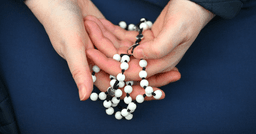

This article is adapted from the preface to A Benedictine Education (Cluny Media), which presents two essays by John Henry Newman on St. Benedict and Benedictine schools. Josef Pieper begins his magnum opus, Leisure, the Basis of Culture, as St. Thomas Aquinas might have done: with an objection. Many will argue, he says, that now (that is, post-war Europe) is not the time to talk about leisure. After all, “our hands are full and there is work for all.” On the contrary, he answers, it is precisely in this period of civilizational rebuilding that we must begin by restoring the meaning of leisure. The same argument might be made of the Benedictine life today. Now, some might argue, is not the time to retreat from the world. Now is the time to go forth, to engage, to confront. Like with Pieper’s leisure, the reality is more complex, even paradoxical: Just as the difficult work of rebuilding of Western civilization requires a recovery of leisure as its source of vitality, so a broader evangelical engagement with secular society demands the cloister. In his essay on “The Mission of St. Benedict,” St. John Henry Newman argues that the fruit of the cloister, the heart of the Benedictine life, is the cultivation of a certain spiritual disposition which he calls “poetic.” It is this Benedictine poetic vision, he argues, which transformed civilization once—and has the power to do so again. For Newman, poetry expresses a way of seeing the world. Newman writes that poetry “demands, as its primary condition, that we should not put ourselves above the objects in which it resides, but at their feet…. Poetry [addresses] the imagination and affections; it leads to admiration, enthusiasm, devotion, love.” Poetic perception is the receptive attitude of mind, which, formed in silence, and undertaken in charity, is capable of apprehending the whole of reality. This attitude of contemplation, which informs the poetic disposition, is at the heart of the Christian life. As executive director of Portsmouth Institute for Faith and Culture, a Benedictine center for the Catholic intellectual and contemplative life at Portsmouth Abbey and Saint Louis Abbey (English Benedictine Congregation monastic houses in the United States), and a teacher of humanities at Portsmouth Abbey School in New England, I have a deep interest in a renewal of what I call the “Benedictine principle” in the life of the Church, rooted in monastic humanism, lectio divina, and the liturgy. These three activities, which inform the whole Benedictine way of life, tap a source on which Newman drew in articulating his understanding of Benedictine poetry. Monastic Humanism and Poetic Vision One means for recovering the poetic disposition is through what Benedictine scholar Jean Leclercq, O.S.B. calls monastic humanism. In Love of Learning and Desire for God, Leclercq writes that monastic humanism is a “humanism wholly inspired by classical antiquity, a humanism whose touchstone is Christ crucified, risen from the dead, who by His example and His grace makes us renounce evil in order to lead us to the heavenly city.” Further, Leclercq writes that the “Benedictine life shows that grammar [or literature] can—in no insignificant sense—lead to God.” This anagogical interpretation of literature, in which the written word has the power to pull the reader up into the divine and direct him towards his end, is at the heart of the poetic life of the Benedictine. Reflecting on Newman’s understanding of Benedictine poetry, André Gushurst-Moore argues that “a poetic view of the world is a sacramental view.” Monastic humanism develops in the student the capacity of perceive poetically, which is to say, sacramentally. The sacramental, poetic view of the world allows the student to participate more deeply in the Incarnation and thus the ultimate reality of existence. Gushurst-Moore continues: “Unless our education is founded in the sacramental sense of the created world, we shall not enable persons or the culture to see things as they really are.” Poetic perception enables the student to perceive things as they really are, to grasp the sacramental view of creation, and to thus become more humane. The poetic life is uniquely possible in a Catholic environment, where we that see Christ, through His Incarnation, “is all and is in all” (Col. 3:11). Thus, all creation, all poiesis, becomes sacramentalized, charged with God’s grace. Through this encounter with God’s grace in literature, and through an exploration into the truth, goodness, and beauty of the created order, we allow ourselves to be transformed—to experience the Benedictine vow of conversatio morum, or what the Gospels call metanoia. Lectio Divina and the Poetic Life The monastic practice of lectio divina, or divine reading, is a prayerful reading of Scripture, wherein the reader listens to the Logos, the Divine Word, speaking directly to him or her. Lectio divina is fundamentally poetic in that it is, in Gushurst-Moore’s words:
8:44 AM
Benedictine Poetry and the Restoration of Christian Culture
The “Benedictine principle” in the life of the Church is rooted in monastic humanism, lectio divina , and the liturgy. These three activities, which inform the whole Benedictine way of life, tap a source on which Newman drew in articulating his understanding of Benedictine poetry.
Christopher Fisher


7 min read



Already a subscriber? Sign in
5freearticles every month
Continue reading with a free account. No card needed.
- Five free articles every thirty days, on any device you sign in on
- The Catholic Herald newsletter, every morning
- Subscribe whenever you like for everything: every article and the magazine
Related articles
 Newsroom
Church leaders urge Drumcree dialogue: ‘Too much is at stake’
The Catholic and Church of Ireland Archbishops of Armagh have urged a renewed commitment to peace and reconciliation amid the Drumcree stand-off
Corrie Douglas-Young Newsroom
Thousands of Irish children to join global Rosary campaign
Corrie Douglas-Young Newsroom
TikTok priest urges young people to stand with persecuted Christians
Nathalie Raffray Newsroom
Baby born at 25 weeks reunites with neonatologist two years after leaving hospital
The Catholic Herald Newsroom
Joe Biden honoured by Planned Parenthood after defending abortion rights
Christine Rousselle
subscribe to the catholic herald today
Our best content is exclusively available to our subscribers. Subscribe today and gain instant access to expert analysis, in-depth articles, and thought-provoking insights—anytime, anywhere. Don’t miss out on the conversations that matter most.
Subscribe



