

The bishop of Springfield, Illinois, has issued a letter aimed at preventing "irregular practices" at funeral services, reiterating Church teaching on visitations, eulogies and cremation.
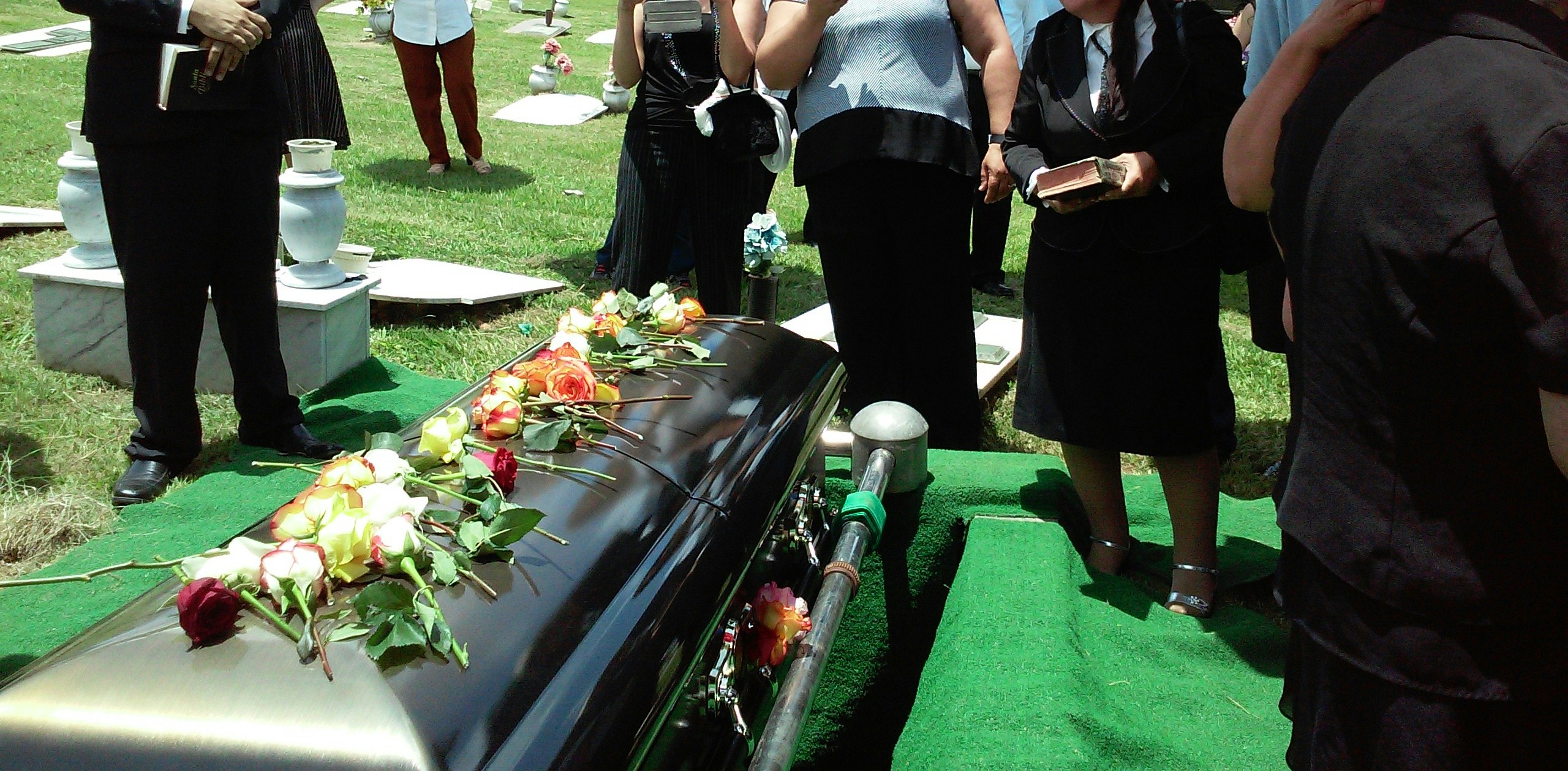
There are three parts to the Christian Funeral Rites according to the Order of Christian Funerals, Bishop Thomas Paprocki of Springfield wrote in a letter recently published on the diocesan website. These are the Vigil for the Deceased, which ordinarily takes place the evening before the Funeral Liturgy; the Funeral Liturgy itself; and the Rite of Committal.
"All three Stations of the Funeral Rites are intricately connected to each other and together form the whole Order of Christian Funerals," he wrote.
In recent years, however, there have been "liturgical anomalies" associated with funerals, particularly visitations held in church immediately before the Funeral Mass and inappropriate eulogies during the liturgy, Paprocki said.
"As of July 1, 2026, visitation will not be permitted in church on the day of the funeral liturgy. The vigil, by definition, is the night before, so the vigil prayers will be prayed then by the priest or deacon even if there is no public visitation. In such cases, it would be fitting at least for the immediate family members to join the priest or deacon in the vigil prayers," he wrote.
The new policy does not prevent families from gathering at a funeral home before the Funeral Mass or from holding a wake or viewing there, he added.
"In fact, the Order of Christian Funerals has a brief prayer service called Transfer of the Body to the Church or to the Place of Committal. Since a priest or deacon is not usually available at the funeral home to lead this prayer service immediately prior to the funeral liturgy in the church, these prayers at the funeral home may be offered by the funeral director, a member of the parish staff, or a relative or friend of the deceased," he wrote.
Alternatively, the transfer prayers could take place in the church narthex, where the building's design permits, Paprocki said.
"Either way, the symbolism of this procession of bringing the body of the deceased into the church is a reminder of when the deceased person first entered the church. Upon arrival at the church entrance, the casket or urn is sprinkled with holy water as a reminder of the waters of baptism. The casket is then covered with a white pall or cloth as a reminder of the baptismal garment that symbolizes putting on the life of Christ," he wrote.
Paprocki also addressed the distinction between eulogies and the "words of remembrance" permitted by the Order of Christian Funerals.
He noted that the word "eulogy" comes from the Greek meaning "good word" and ordinarily refers to "speech or writing praising a person who has recently died".
Although the Order of Christian Funerals permits "speaking in remembrance of the one who died", it does not permit eulogies during the Funeral Mass, he said.
"To speak in remembrance of the deceased is to speak about the faith-life of the one who died and to give praise to God. A eulogy makes the person being praised the main focus of attention," he wrote.
Paprocki added that "too often people speaking at the end of a Funeral Mass say things that are very inappropriate. Even if the remarks are suitable words of remembrance, family members are often overcome with grief and have a hard time getting through their remarks."
Under the new diocesan policy, words of remembrance must be submitted to the parish pastor at least three days before the funeral and may only be read by the priest or deacon during any of the three stations of the funeral rites.
"If deemed appropriate by the family, words of remembrance or even a eulogy may be given by someone other than the priest or deacon in other gatherings, such as at the meal following the committal service. This should not, however, immediately precede or follow any of the Christian funeral rites," he wrote.
Paprocki also reiterated the Church's teaching on cremation and the committal of cremated remains.
While cremation is permitted, he wrote, "all of the cremated remains of the deceased person's body must be interred following the Rite of Committal".
"At no time and in no way shall the cremated remains be divided, separated, or interred in more than one place. Since the Rite of Committal is an essential component of Catholic Funeral Rites, our diocesan policy requires that interment of cremated remains should ordinarily take place within 30 days following the funeral rites," he wrote.
Paprocki is not the only bishop to have recently clarified diocesan procedures regarding funerals and cremation.
In May, Bishop Robert McManus of Worcester, Massachusetts, issued a decree titled On the Proper Disposition of Cremated Remains.
"Although cremation is now permitted in the Church, it does not enjoy the same value as burial of the body. The Church clearly prefers and urges that the body of the deceased be present for the funeral rites since the presence of the human body better expresses the values which the Church affirms in those rites," he wrote.
McManus reiterated the Church's teaching that cremated remains may not be separated, scattered or divided.
"If the Catholic Church's desire concerning cremation is not respected, public funeral rites may risk not being celebrated," he wrote. "This is up to the discretion of the pastor at the parish where the funeral is to be celebrated."