February 12, 2026

The Bible-bashing founding fathers

Jonathan Wright
More
No items found.
Related
Min read
share

Reading the Bible with the Founding Fathers
by Daniel Dreisbach, OUP, £20

Talk to the wrong American political pundit and you may come away with the impression that the nation’s founding fathers had little interest in religion and wanted to banish faith from the public sphere. Nothing could be further from the truth.

As Daniel Dreisbach’s outstanding new book demonstrates, Scripture was central to 18th-century political discourse in America – providing imagery, rhetorical flourishes and, crucially, insights into all manner of philosophical and intellectual conundrums.
When the founding fathers wanted to discuss the nature of political authority, legal codes, the hallmarks of the good citizen or the competent ruler, and the very nature of liberty itself, they frequently opened their Bibles. Or, rather, they didn’t have to, because most of them knew much of it by heart.

This, as Dreisbach stresses, is not to suggest that every luminary during the period was a passionate Christian. For some, the Bible’s influence was stylistic rather than theological and, while many saw the Bible as divinely inspired, others preferred to treat it as a moral lodestone.

The basic point, though, is that we should not assume that Enlightenment postures and unalloyed rationalism were the only games in town. One scholar has done the maths and, in a survey of political tracts between 1760 and 1805, a full third of identifiable references are to the Bible.

Dreisbach examines how specific scriptural texts directly guided debate about the nature of patriotism and freedom, America’s status as a favoured, protected nation, and the legitimacy of resistance to tyrannical rule.

These are interlaced with a series of vignettes – the best parts of the book – where we encounter pivotal moments at which the fledgling republic’s religious obsessions were hard to ignore. Benjamin Franklin is to be found pleading for the introduction of prayers at the 1787 Constitutional Convention – if God was in charge of providence it was best to keep him on side.

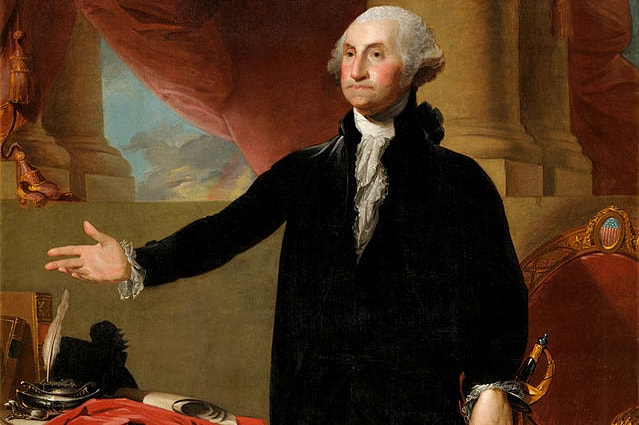
George Washington is shown at the first presidential inauguration – an event dripping with religious themes and symbolism – and Washington’s lifelong affection for particular verses is teased out. Apparently, Micah 4:4 was always his favourite: “But they shall sit every man under his vine and under his fig tree; and none shall make them afraid: for the mouth of the Lord of hosts hath spoken it.” This encapsulated Washington’s version of the American Dream, one rooted in security, domestic contentment and self-sufficiency.

The biggest surprise of all, though, is provided by Dreisbach’s discussion of the nation’s Great Seal. The final version, with which we’re all familiar, shows the eagle with arrows and an olive branch in its talons and the famous motto E pluribus unum – out of many, one.

Before all that, however, other contenders had been in the mix and some of them might not be what you’d expect. Franklin suggested “Rebellion to Tyrants is Obedience to God”, while Thomas Jefferson proposed a decidedly biblical image: the children of Israel being guided through nights in the wilderness by a pillar of fire.

This doesn’t mean that Jefferson wasn’t critical of organised religion upon occasion, or that he didn’t talk about the corruption of biblical purity, but like all of his contemporaries he was shaped by a culture in which scriptural ideas and images were all-pervasive.

Perhaps John Adams, the second president, put it best. He had spent many years studying other religions “as well as my narrow sphere, my straitened means and my busy life would allow me; and the result is, that the Bible is the best book in the world. It contains more of my little philosophy than all the libraries
I have seen.”

It is hard to imagine that he would have been terribly concerned about a little of that Bible creeping into America’s public schools.

Reading the Bible with the Founding Fathers
by Daniel Dreisbach, OUP, £20

Talk to the wrong American political pundit and you may come away with the impression that the nation’s founding fathers had little interest in religion and wanted to banish faith from the public sphere. Nothing could be further from the truth.

As Daniel Dreisbach’s outstanding new book demonstrates, Scripture was central to 18th-century political discourse in America – providing imagery, rhetorical flourishes and, crucially, insights into all manner of philosophical and intellectual conundrums.
When the founding fathers wanted to discuss the nature of political authority, legal codes, the hallmarks of the good citizen or the competent ruler, and the very nature of liberty itself, they frequently opened their Bibles. Or, rather, they didn’t have to, because most of them knew much of it by heart.

This, as Dreisbach stresses, is not to suggest that every luminary during the period was a passionate Christian. For some, the Bible’s influence was stylistic rather than theological and, while many saw the Bible as divinely inspired, others preferred to treat it as a moral lodestone.

The basic point, though, is that we should not assume that Enlightenment postures and unalloyed rationalism were the only games in town. One scholar has done the maths and, in a survey of political tracts between 1760 and 1805, a full third of identifiable references are to the Bible.

Dreisbach examines how specific scriptural texts directly guided debate about the nature of patriotism and freedom, America’s status as a favoured, protected nation, and the legitimacy of resistance to tyrannical rule.

These are interlaced with a series of vignettes – the best parts of the book – where we encounter pivotal moments at which the fledgling republic’s religious obsessions were hard to ignore. Benjamin Franklin is to be found pleading for the introduction of prayers at the 1787 Constitutional Convention – if God was in charge of providence it was best to keep him on side.

George Washington is shown at the first presidential inauguration – an event dripping with religious themes and symbolism – and Washington’s lifelong affection for particular verses is teased out. Apparently, Micah 4:4 was always his favourite: “But they shall sit every man under his vine and under his fig tree; and none shall make them afraid: for the mouth of the Lord of hosts hath spoken it.” This encapsulated Washington’s version of the American Dream, one rooted in security, domestic contentment and self-sufficiency.

The biggest surprise of all, though, is provided by Dreisbach’s discussion of the nation’s Great Seal. The final version, with which we’re all familiar, shows the eagle with arrows and an olive branch in its talons and the famous motto E pluribus unum – out of many, one.

Before all that, however, other contenders had been in the mix and some of them might not be what you’d expect. Franklin suggested “Rebellion to Tyrants is Obedience to God”, while Thomas Jefferson proposed a decidedly biblical image: the children of Israel being guided through nights in the wilderness by a pillar of fire.

This doesn’t mean that Jefferson wasn’t critical of organised religion upon occasion, or that he didn’t talk about the corruption of biblical purity, but like all of his contemporaries he was shaped by a culture in which scriptural ideas and images were all-pervasive.

Perhaps John Adams, the second president, put it best. He had spent many years studying other religions “as well as my narrow sphere, my straitened means and my busy life would allow me; and the result is, that the Bible is the best book in the world. It contains more of my little philosophy than all the libraries
I have seen.”

It is hard to imagine that he would have been terribly concerned about a little of that Bible creeping into America’s public schools.

subscribe to
the catholic herald

Continue reading your article with a subscription.
Read 5 articles with our free plan.
Subscribe

subscribe to the catholic herald today

Our best content is exclusively available to our subscribers. Subscribe today and gain instant access to expert analysis, in-depth articles, and thought-provoking insights—anytime, anywhere. Don’t miss out on the conversations that matter most.
Subscribe