

Public trust in clergy has fallen substantially over the past 30 years, while trust in other professions has risen, according to a new poll. An Ipsos Mori survey of 998 British adults found that 65 per cent said they trusted priests and clergy to tell the truth – down 20 per cent from 1983, and down four per cent since last year. Bobby Duffy, director of the Social Research Institute at Ipsos Mori, said the clergy had shown the most notable decline: they were “the most trusted profession when we started the series in 1983 and have fallen behind seven other groups, including scientists and, for the first time in this latest survey, the ordinary man or woman in the street.” The figures mean that clergy are the 10th most trusted profession in Britain, ranking below television newsreaders, weather forecasters, nurses and doctors. Despite the drop, more people said they trusted clergy than not. Thirty per cent said they did not trust members of the clergy to tell the truth. Among all demographic groups, clergy retained a higher level of trust than distrust, achieving high ratings among the over-65s (73 per cent), people in the highest social grades (75 per cent), people with degrees (69 per cent) and people in rural areas (70 per cent). Young people born in 1996 or later were also more likely to trust the clergy than those born between 1980 and 1995. Priests also ranked above politicians, who scored 17 per cent, and journalists, who were on 27 per cent. Business leaders scored 36 per cent. At the other end of the scale, 85 per cent trusted professors and 83 per cent trusted scientists. The police were on 74 per cent. Fr Alexander Lucie-Smith, writing at CatholicHerald.co.uk, said that, along with the sexual abuse scandal, social change may account for some of the fall in clergy status, as they were “no longer the only highly educated men in their communities”. He also noted that Britain was “historically an anti-clerical country”, adding: “The bitter dregs of the Reformation live on in [people’s] residual dislikes.”
12:00 PM
Britons ‘trust weather forecasters more than priests’
Staff writers


3 min read



Already a subscriber? Sign in
5freearticles every month
Continue reading with a free account. No card needed.
- Five free articles every thirty days, on any device you sign in on
- The Catholic Herald newsletter, every morning
- Subscribe whenever you like for everything: every article and the magazine
Related articles
 Newsroom
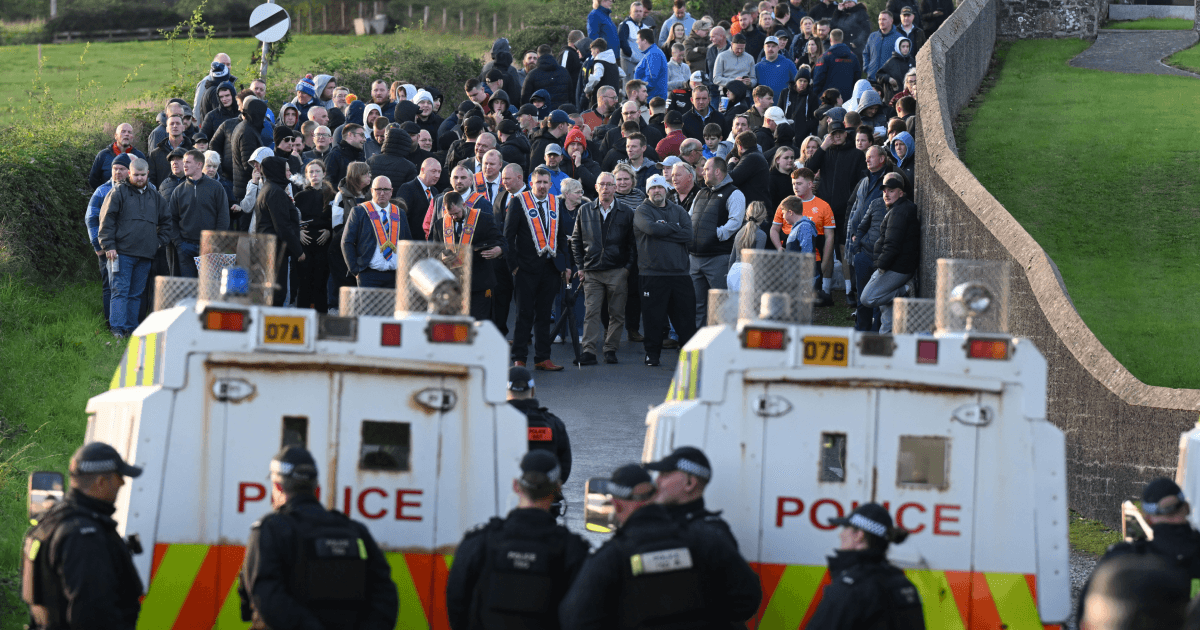
Church leaders urge Drumcree dialogue: ‘Too much is at stake’
The Catholic and Church of Ireland Archbishops of Armagh have urged a renewed commitment to peace and reconciliation amid the Drumcree stand-off
Corrie Douglas-Young Newsroom
Thousands of Irish children to join global Rosary campaign
Corrie Douglas-Young Newsroom
TikTok priest urges young people to stand with persecuted Christians
Nathalie Raffray Newsroom
Baby born at 25 weeks reunites with neonatologist two years after leaving hospital
The Catholic Herald Newsroom
Joe Biden honoured by Planned Parenthood after defending abortion rights
Christine Rousselle
subscribe to the catholic herald today
Our best content is exclusively available to our subscribers. Subscribe today and gain instant access to expert analysis, in-depth articles, and thought-provoking insights—anytime, anywhere. Don’t miss out on the conversations that matter most.
Subscribe



