




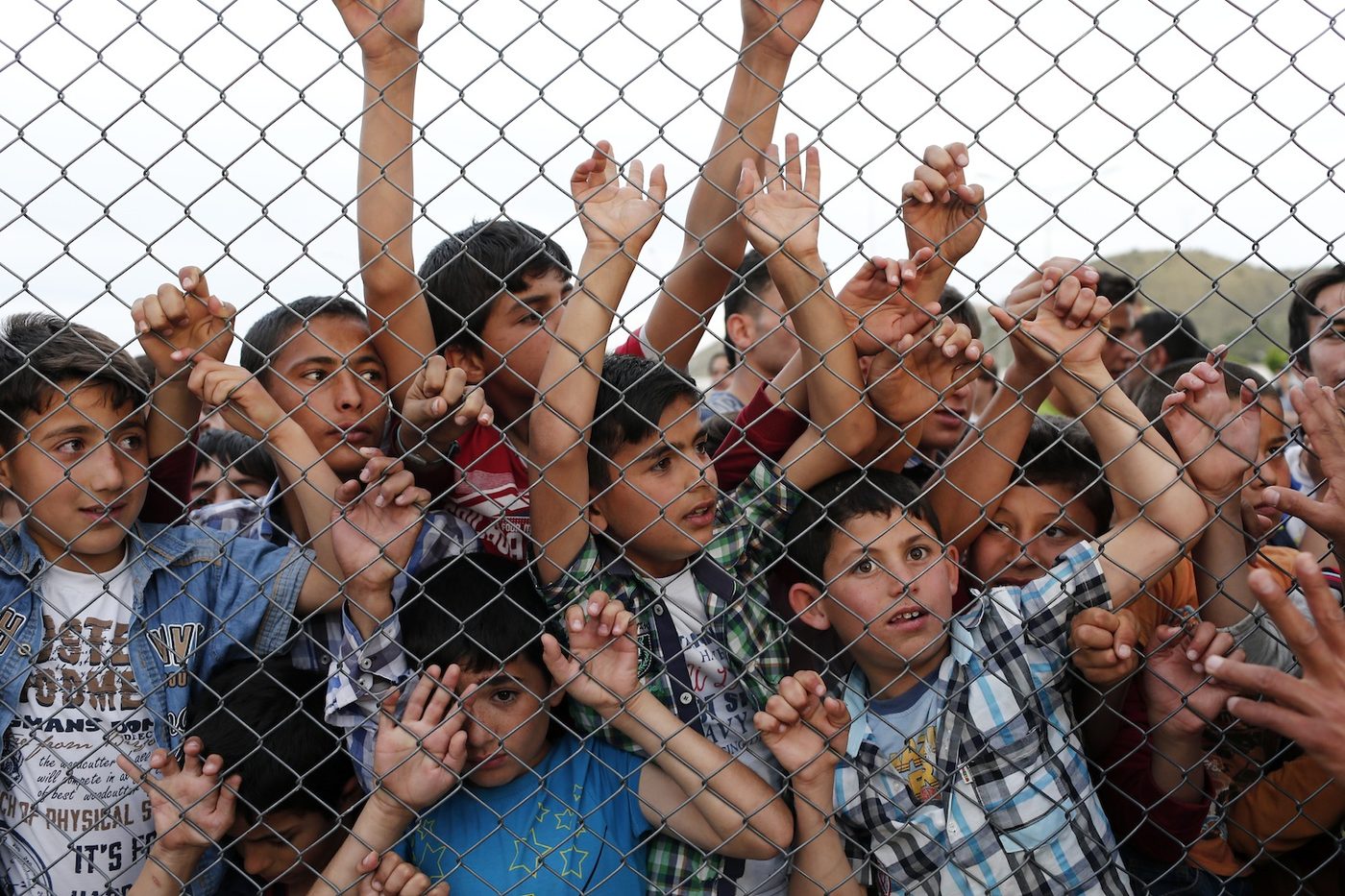
Cardinal Vincent Nichols of Westminster has welcomed a U-turn by the Government over the resettlement of child refugees. He said he was “very happy” with an announcement by David Cameron that Britain will accept an unspecified number of unaccompanied children who arrived in the European Union from Syria. Under pressure from Parliament, Mr Cameron said Britain would not only take in 3,000 children from refugee camps in the Middle East, but that children registered in Greece, Italy or France before March 20, the date when an EU deal with Turkey to return migrants took effect, would also be eligible for resettlement in Britain. The Government will not take in migrant children who arrive after that date because it does not want to encourage human trafficking, he said. Cardinal Nichols, president of the bishops’ conference, suggested the Government had struck the right balance. He said: “I am very happy that the Government is extending an offer of sanctuary to a greater number of children fleeing conflict, while continuing to combat the evils of human trafficking. The UK’s response to the refugee crisis is improving the lives of thousands. I encourage the Catholic community to keep on playing its part through working with local authorities, being generous with time and resources, and extending the hand of welcome to refugees arriving here.” Days earlier, Cardinal Nichols had used a homily at an annual diocesan Mass for migrants to urge Catholics to protest against immigration policies that could put the lives of children at risk. “While it is right to keep silent when children are asleep, it is never right to stay silent when they are perishing at sea or at risk in hostile camps,” Cardinal Nichols said at the Mass. “From those who deal in creating fear of migrant people and who seek to profit from that fear, whether financially or politically, we ask for a more responsible leadership, a leadership that looks at all that we gain as well as the problems we confront,” the cardinal said. The Archbishop of Westminster told the congregation that London “would not function” without the “great contribution” of its migrant communities. But he suggested that new policies aimed at restricting immigration meant that Britain could not show greater hospitality to refugees even if its citizens wanted to. In an allusion to the EU deal with Turkey to expel migrants, he criticised “international plans that often seem to treat people purely as problems or even as packages to be sent from place to place”. He said: “We hope the way in which governments respond to the immense challenge which faces us will take more seriously the personal generosity of so many, in this country too, who are willing to welcome refugees and desperate migrants and yet are hindered from doing so by policies shaped more by caution and fear. “We hear reports of sadness, dismay, frustration, anger, rejection and humiliation, from Iraq and Jordan, to Libya and Calais,” he said. “Yes, this is ‘a vale of tears’ as both the Mediterranean and the Aegean Seas become, in the Holy Father’s words, graveyards for children, the elderly and their families.”
1:00 PM
Cameron’s U-turn on refugees welcomed
Staff Reporter

5 min read



Already a subscriber? Sign in
5freearticles every month
Continue reading with a free account. No card needed.
- Five free articles every thirty days, on any device you sign in on
- The Catholic Herald newsletter, every morning
- Subscribe whenever you like for everything: every article and the magazine
Related articles
 Newsroom
Church leaders urge Drumcree dialogue: ‘Too much is at stake’
The Catholic and Church of Ireland Archbishops of Armagh have urged a renewed commitment to peace and reconciliation amid the Drumcree stand-off
Corrie Douglas-Young Newsroom
Thousands of Irish children to join global Rosary campaign
Corrie Douglas-Young Newsroom
TikTok priest urges young people to stand with persecuted Christians
Nathalie Raffray Newsroom
Baby born at 25 weeks reunites with neonatologist two years after leaving hospital
The Catholic Herald Newsroom
Joe Biden honoured by Planned Parenthood after defending abortion rights
Christine Rousselle
subscribe to the catholic herald today
Our best content is exclusively available to our subscribers. Subscribe today and gain instant access to expert analysis, in-depth articles, and thought-provoking insights—anytime, anywhere. Don’t miss out on the conversations that matter most.
Subscribe



