




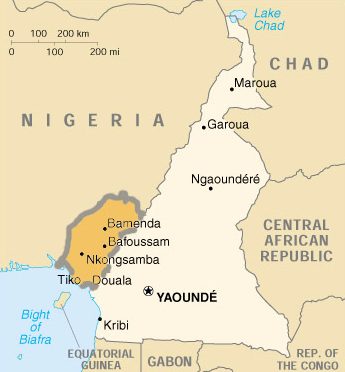
The ‘Anglophone crisis’ is pitting bishops against the nation’s unbending president It had been hoped that October elections might create a better climate for negotiations between Cameroon’s government and separatists in its English-speaking areas. These hopes appear to have been dashed. The 85-year-old president, Paul Biya, has so far pursued a hardline military response against rebels. Far from being punished at the ballot box, he was awarded 71 per cent of votes, enabling him to begin a seventh term after 36 years in power. His closest challenger, Maurice Kamto, scored just 14 per cent, according to official figures. The country’s Catholic Church has raised doubts, however. “One has the impression election results are decided before voting takes place,” Archbishop Samuel Kleda, president of the bishops’ conference, told a press conference in the capital, Yaoundé. “I’m looking at the Anglophone zone, where the percentages for the party in power were very high. At a moment when it wasn’t possible to mount a campaign here, where do these percentages come from?” Archbishop Kleda said it “posed a serious problem” that 89 per cent of voters in Extreme-Nord province were said to have supported Biya, despite extreme poverty, adding that measures should now be taken to reform electoral law before ballots next year. Catholics account for a third of Cameroon’s 24.8 million inhabitants, with Protestants and Muslims each making up a quarter. Army units have been deployed since 2016 in the Anglophone north-west and south-west regions, where separatists have declared an independent state, “Ambazonia”. In May the bishops’ conference condemned “inhuman, blind, monstrous violence” in these regions and said mediation was urgently needed to avoid “a useless and senseless civil war”. Meanwhile, Caritas Internationalis said at least 172,000 people had fled “running battles” between soldiers and pro-independence fighters, adding that “whether a person speaks English or French has become a reason to kill”. Last month the bishops’ conference said it had deployed 231 election observers across Cameroon, but added that 42 had been forced by safety fears to withdraw from Anglophone areas, while others were barred by “vigilante committees”. The report said no voting provisions were made for those displaced by violence, while “flagrant breaches” included registering deceased or absent voters. The bishops said the country’s constitutional court had been “hasty” in approving the election results and appealed to its “high responsibility in reflecting and respecting the choice of the Cameroonian people”. At least 40 opposition supporters were arrested at a protest in Douala, with a further 16 detained during a sit-in outside Yaoundé’s Notre Dame cathedral. In a Sunday commentary, the bilingual Journal du Cameroun said the country was destined for seven more years of “government characterised by inertia, paralysis, negligence and abandonment”. Jonathan Luxmoore
12:30 PM
Cameroon: Non, merci
Jonathan Luxmoore

3 min read



Already a subscriber? Sign in
5freearticles every month
Continue reading with a free account. No card needed.
- Five free articles every thirty days, on any device you sign in on
- The Catholic Herald newsletter, every morning
- Subscribe whenever you like for everything: every article and the magazine
Related articles
 Newsroom
Church leaders urge Drumcree dialogue: ‘Too much is at stake’
The Catholic and Church of Ireland Archbishops of Armagh have urged a renewed commitment to peace and reconciliation amid the Drumcree stand-off
Corrie Douglas-Young Newsroom
Thousands of Irish children to join global Rosary campaign
Corrie Douglas-Young Newsroom
TikTok priest urges young people to stand with persecuted Christians
Nathalie Raffray Newsroom
Baby born at 25 weeks reunites with neonatologist two years after leaving hospital
The Catholic Herald Newsroom
Joe Biden honoured by Planned Parenthood after defending abortion rights
Christine Rousselle
subscribe to the catholic herald today
Our best content is exclusively available to our subscribers. Subscribe today and gain instant access to expert analysis, in-depth articles, and thought-provoking insights—anytime, anywhere. Don’t miss out on the conversations that matter most.
Subscribe



