December 9, 2025

Cancer, conversion, and the quiet necessity of daily Mass

Min read
share

I never knew my grandfather, Guy, but reading his surviving journals and hearing stories of his life make me wish I had. He was a dedicated antiquarian who collected old spearheads and bayonets, donating many artefacts to the Sligo County Museum to help get it going. It is claimed he started fencing in Ireland (perhaps in a mirror) bringing the sport into practice here. He was known to quote historic figures to his children in answer to pleas for practical advice; barking Napoleonic sayings of dubious helpfulness, and then demanding the cowering youth name the origin of the quote. He built his own radios, his children made gunpowder (which I’m sure he liked). He was educated in the Lycée Henri IV in Paris, and as he watched the Mass celebrated there each morning, he decided to convert to Catholicism.

That last part was how my father put it to me. I have no evidence as to what brought my grandfather into the Church. Diaries from his younger years as he travelled through Europe complained of the inaccessibility of Catholic worship. But in his complaining I suspect his Protestant instincts were being outweighed by his antiquarian interests and depth in history. He visited Europe’s dowry of churches and looked on, as he had done throughout his young adult years, at the Mass. Over the abyss of time, I can sense the slow burning, which would become a longing, to step quietly into Peter’s boat.

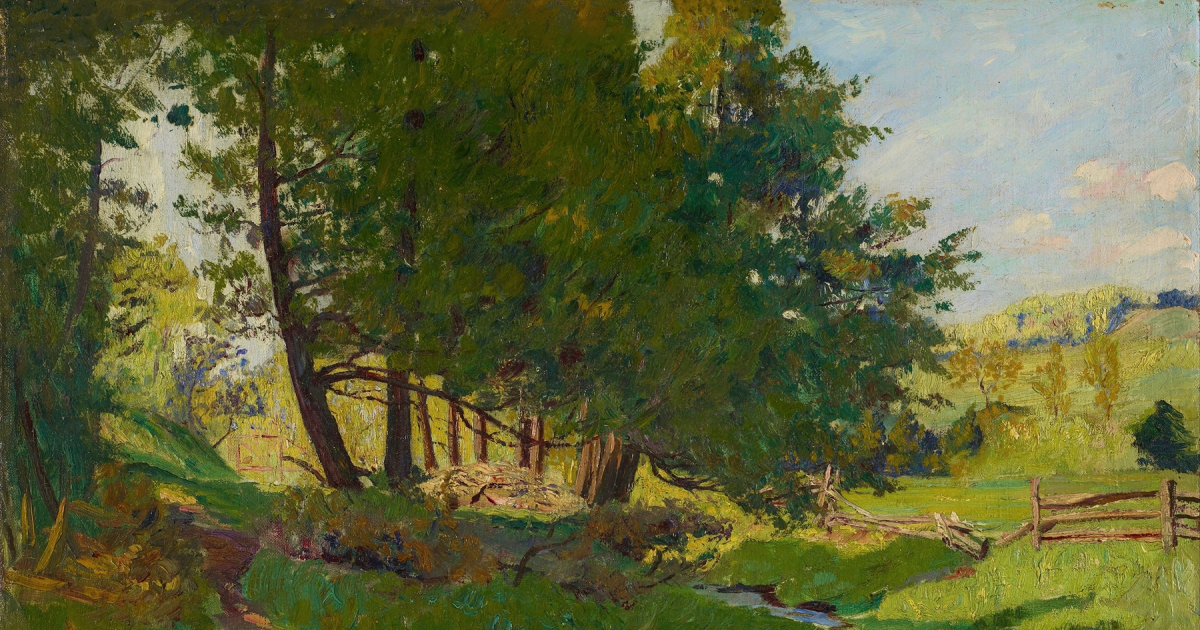
Then there is the story of his own father, Frederick, who, independently of his son, also converted. My father attributed this decision to the intercession of the Poor Clare nuns, but it’s unclear to me what he meant. It might have been that his wife had become very ill and had been institutionalised, and he had sought prayer. But some profound conviction came over Frederick, which was grounded, so it seemed, in suffering. The only thing I have of his is a painting of a Devonshire summer, which must have been home to him: a mighty oak tree, the sun touching the gable wall of a farmhouse, the pale summer sky touching a body of water at the paddock, and a dusty yellow lane leading off somewhere well known to him.

I reflect that none of my forebears’ experience is like my own. My uncle, an horologist and fond gentleman, recently glided into our household in his immaculate suit and told me how very English we should all feel, we Perrems. But as an Irishman whose ancestry is lodged away in the world of the past — lost coats of arms and memories that are not my own — I do not feel anything of this. I do not feel English, but, as I did not say to my uncle, I do feel Catholic. And it is this connection to Frederick and Guy, to my own father Peter, for which I am actually grateful. It is the only way I have of knowing what they thought of the world, in the end. It rings true as the destination they chose, for themselves and for the rest of us who followed.

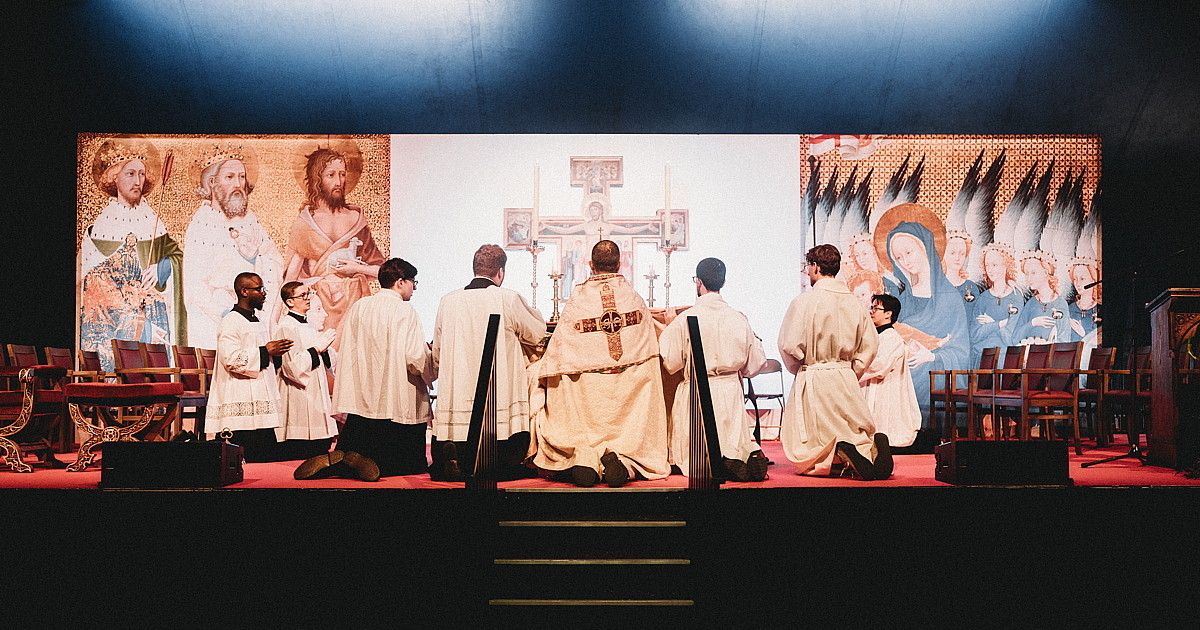
This history has begun to feel more real to me over time. I have begun this year to attend Mass each day. Two years ago, I had viral meningitis, and was unable, for a time, to form a complete thought without feeling like a drunk and having to lie down (I am somewhat better, according to my wife and children, but perhaps still wish to lie down too much). This past summer, I had a return of cancer, leading me to treatment and more of the sort of embarrassing journey of frailty and reliance on others that can come unexpectedly. But in the midst of my ongoing travails and the growing sense of my own wounds, I have found myself drawn constantly to a desire to be in the presence of the Eucharist.

It is difficult to sum up the feeling one has, as a person whose malfunctioning body stutters forth, that there is a real person who is constantly suffering too, and whom one can visit. But that is the feeling; it is a kind of longing, a mourning, a silence, a homecoming — trundling into the church each day. Without being there, I am grateful from head to toe for my life, darling wife, seven children, and the gift of the day — however many days there might be. But such a day feels as if I have passed a beautiful garden and have not stopped to ask the gardener to let me walk round. Or, perhaps, that I’m below decks and can’t see the sunshine and feel the air, even for a few minutes.

I feel sure, then, that I can now notice daily Mass-goers in the shops and about the place. You find them smiling at the till when they don’t need to. They are the old ladies who turn back and tell you to go around them in a corridor, as they don’t want to slow you down. They are always laughing at themselves. They are comfortable with their wounds; they somehow use them to love other people. They are not waiting for the world to do anything more for them; they have a homestead somewhere and a place to belong. It is, as I now see, the only real place, or the place which is most real: that spot where we stand in silence. It is the same place my grandfather stood, and where I long to stand. I still wish I had met him, but I know where he stood, now, and where he finished the journey. It is enough.
I never knew my grandfather, Guy, but reading his surviving journals and hearing stories of his life make me wish I had. He was a dedicated antiquarian who collected old spearheads and bayonets, donating many artefacts to the Sligo County Museum to help get it going. It is claimed he started fencing in Ireland (perhaps in a mirror) bringing the sport into practice here. He was known to quote historic figures to his children in answer to pleas for practical advice; barking Napoleonic sayings of dubious helpfulness, and then demanding the cowering youth name the origin of the quote. He built his own radios, his children made gunpowder (which I’m sure he liked). He was educated in the Lycée Henri IV in Paris, and as he watched the Mass celebrated there each morning, he decided to convert to Catholicism.

That last part was how my father put it to me. I have no evidence as to what brought my grandfather into the Church. Diaries from his younger years as he travelled through Europe complained of the inaccessibility of Catholic worship. But in his complaining I suspect his Protestant instincts were being outweighed by his antiquarian interests and depth in history. He visited Europe’s dowry of churches and looked on, as he had done throughout his young adult years, at the Mass. Over the abyss of time, I can sense the slow burning, which would become a longing, to step quietly into Peter’s boat.

Then there is the story of his own father, Frederick, who, independently of his son, also converted. My father attributed this decision to the intercession of the Poor Clare nuns, but it’s unclear to me what he meant. It might have been that his wife had become very ill and had been institutionalised, and he had sought prayer. But some profound conviction came over Frederick, which was grounded, so it seemed, in suffering. The only thing I have of his is a painting of a Devonshire summer, which must have been home to him: a mighty oak tree, the sun touching the gable wall of a farmhouse, the pale summer sky touching a body of water at the paddock, and a dusty yellow lane leading off somewhere well known to him.

I reflect that none of my forebears’ experience is like my own. My uncle, an horologist and fond gentleman, recently glided into our household in his immaculate suit and told me how very English we should all feel, we Perrems. But as an Irishman whose ancestry is lodged away in the world of the past — lost coats of arms and memories that are not my own — I do not feel anything of this. I do not feel English, but, as I did not say to my uncle, I do feel Catholic. And it is this connection to Frederick and Guy, to my own father Peter, for which I am actually grateful. It is the only way I have of knowing what they thought of the world, in the end. It rings true as the destination they chose, for themselves and for the rest of us who followed.

This history has begun to feel more real to me over time. I have begun this year to attend Mass each day. Two years ago, I had viral meningitis, and was unable, for a time, to form a complete thought without feeling like a drunk and having to lie down (I am somewhat better, according to my wife and children, but perhaps still wish to lie down too much). This past summer, I had a return of cancer, leading me to treatment and more of the sort of embarrassing journey of frailty and reliance on others that can come unexpectedly. But in the midst of my ongoing travails and the growing sense of my own wounds, I have found myself drawn constantly to a desire to be in the presence of the Eucharist.

It is difficult to sum up the feeling one has, as a person whose malfunctioning body stutters forth, that there is a real person who is constantly suffering too, and whom one can visit. But that is the feeling; it is a kind of longing, a mourning, a silence, a homecoming — trundling into the church each day. Without being there, I am grateful from head to toe for my life, darling wife, seven children, and the gift of the day — however many days there might be. But such a day feels as if I have passed a beautiful garden and have not stopped to ask the gardener to let me walk round. Or, perhaps, that I’m below decks and can’t see the sunshine and feel the air, even for a few minutes.

I feel sure, then, that I can now notice daily Mass-goers in the shops and about the place. You find them smiling at the till when they don’t need to. They are the old ladies who turn back and tell you to go around them in a corridor, as they don’t want to slow you down. They are always laughing at themselves. They are comfortable with their wounds; they somehow use them to love other people. They are not waiting for the world to do anything more for them; they have a homestead somewhere and a place to belong. It is, as I now see, the only real place, or the place which is most real: that spot where we stand in silence. It is the same place my grandfather stood, and where I long to stand. I still wish I had met him, but I know where he stood, now, and where he finished the journey. It is enough.

share

subscribe to the catholic herald today

Our best content is exclusively available to our subscribers. Subscribe today and gain instant access to expert analysis, in-depth articles, and thought-provoking insights—anytime, anywhere. Don’t miss out on the conversations that matter most.
Subscribe