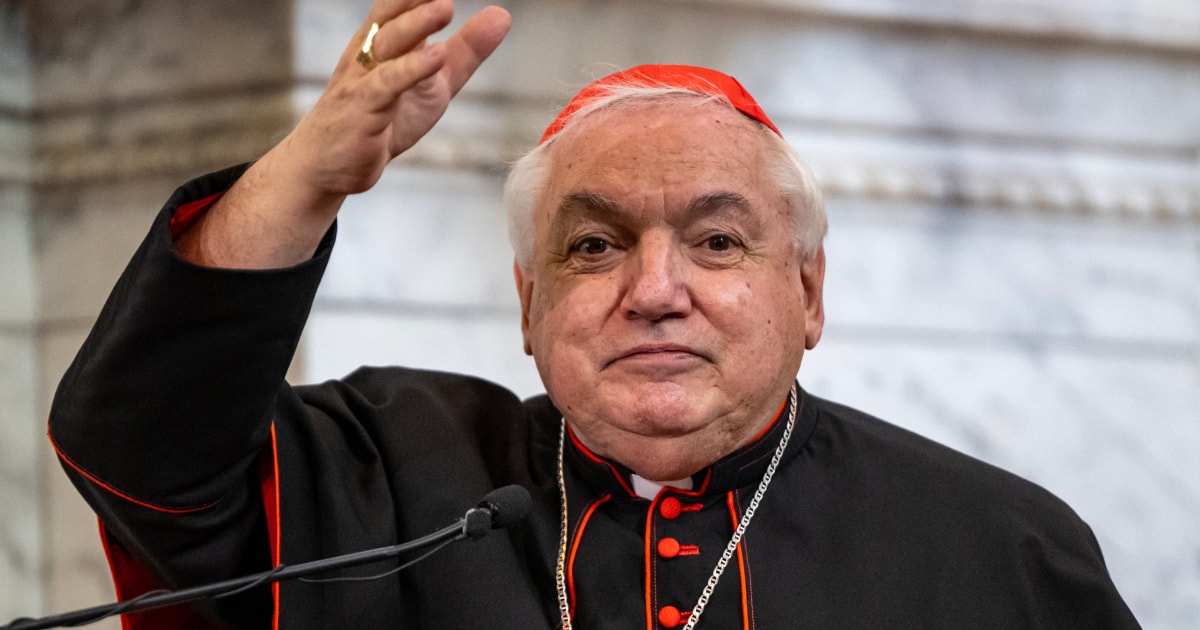


Cardinal Jean-Marc Aveline has urged continued dialogue between Rome and the Society of Saint Pius X.
The cardinal said he was left with “mostly sadness” following the announcement that the Society will proceed with episcopal consecrations on 1 July.
In an Easter interview with KTO, the Archbishop of Marseille said, “I am convinced that only dialogue allows us to continue proclaiming the Gospel,” as he addressed the prospect of further strain in relations between the Holy See and the FSSPX.
The interview also turned to the situation in France, where the growth of communities attached to the older liturgical forms has become an increasing pastoral reality. Cardinal Aveline referred to a letter sent to the French bishops concerning “the growth of communities linked to the Vetus Ordo” and said bishops should “generously include the faithful attached to the Tridentine Rite”.
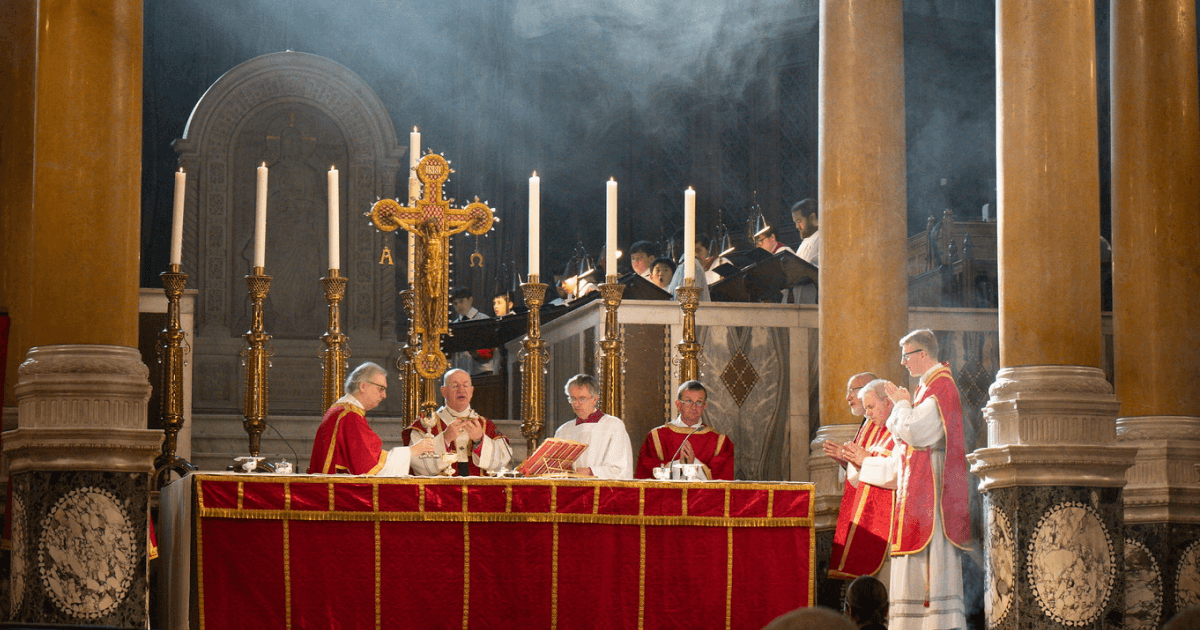
He added that such an approach could encourage “a new perspective from each of us on the other, with a greater understanding of each other’s sensibilities”, and said this in turn could “allow brothers, enriched by their diversity, to welcome one another”.
Cardinal Aveline said the attraction to the traditional liturgy should be received with openness rather than suspicion. “This ‘expressed need’ must be ‘first and foremost welcomed; it is not a matter of judging it, or of saying that they should go here or do it that way’,” he said. He continued, “Pastoral concern consists of welcoming what the Spirit says to these young people, to these individuals, and at the same time explaining what tradition is, which goes back to the most recent councils,” adding that “a council does not abolish previous councils”.
The cardinal also confirmed that a possible visit by Pope Leo XIV to France in autumn 2026 had been discussed. “I hope that autumn will be the right time,” he said, indicating that conversations with the Pope had already taken place.
Addressing the question of the TLM directly from Rome, Cardinal Aveline pointed to a letter sent by Cardinal Pietro Parolin to the French bishops’ conference. “The letter we received says what we are already doing,” he said. “Moreover, the encouragements always go in the direction of what we have begun to work on together, since a link has obviously been established between the episcopal conference of each country and the Holy See, and we move forward together.”
He added: “Indeed, in this letter, the question of liturgy is also addressed, but liturgy and tradition, because the question is not solely a liturgical one. It is a question that touches on the very idea of tradition in the Church, on what it signifies.” He said the bishops had already begun to address the issue collectively, noting that “we had a first session on this theme at that plenary assembly, and we will have others as our assemblies proceed, to express our pastoral concern toward all those who, because of the spiritual thirst that drives them, often”.
On the question of the relationship between the Second Vatican Council and earlier traditions, Cardinal Aveline said there was no necessary contradiction. “Not necessarily if you consider that every council corresponds to a moment in history, responds to questions, and does not abolish previous councils,” he said. “It is simply the continuation of an hermeneutic of continuity. And this hermeneutic of continuity assumes that we take the whole continuity.”
The question of the Society of Saint Pius X is particularly pertinent in France, with the country being by far the group’s largest district. The Society is responsible for 46 priories, 186 chapels, three retreat centres and 63 schools across France, more than double the numbers found across the entirety of Asia and Africa.
The Society’s leadership is also heavily represented by priests from France, with the group’s founder, Archbishop Marcel Lefebvre, and one of the bishops he consecrated, bishop Bernard Tissier de Mallerais, both from the country. The former Second Assistant General, Fr Alain-Marc Nély, also served as prior of the SSPX in Marseille, Cardinal Aveline’s own diocese.