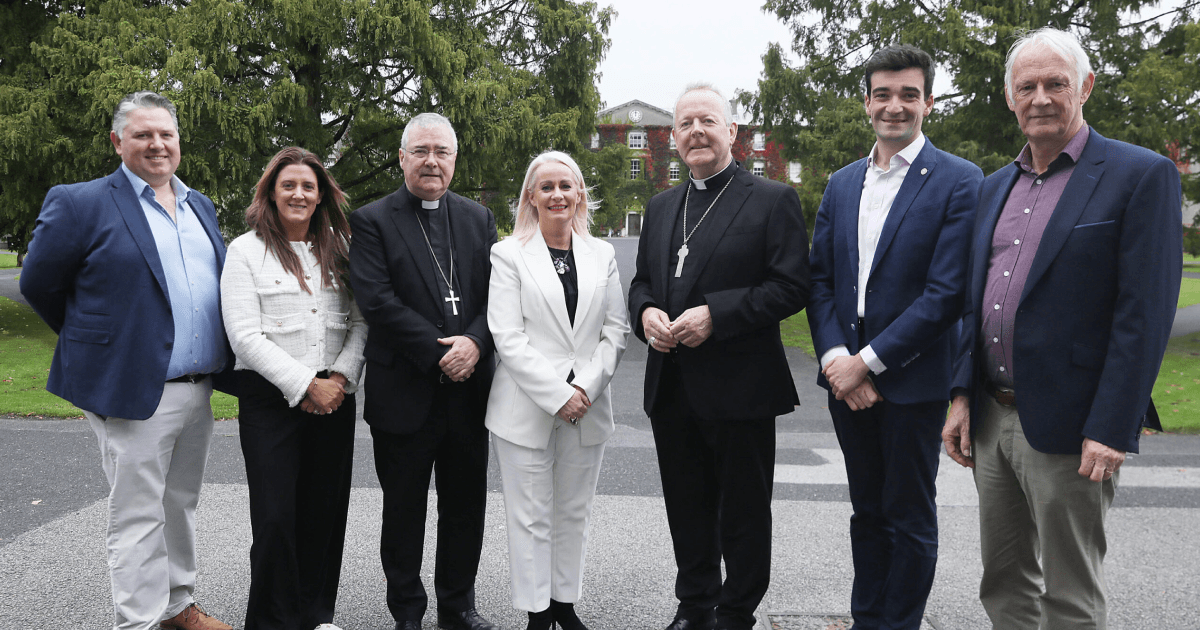
The Catholic Herald was invited to attend the inauguration of the Apostolic Mission of the Apostolic Visitation of Europe and the United Kingdom for the Syro-Malankara Catholic Church, held in Coventry on the 5th of December.
During the ceremony, the Syro-Malankara Catholic Church formally inaugurated the appointment of His Excellency Bishop Kiriakose Osthathios as the new Apostolic Visitor for Europe and the UK. The inauguration was attended by a distinguished assembly, including the Syro-Malankara Member of Parliament Sojan Joseph of Ashford, the Deputy Lord Mayors of Coventry, several Syro-Malankara bishops and eparchial representatives from India, and a number of interfaith leaders from across the UK.
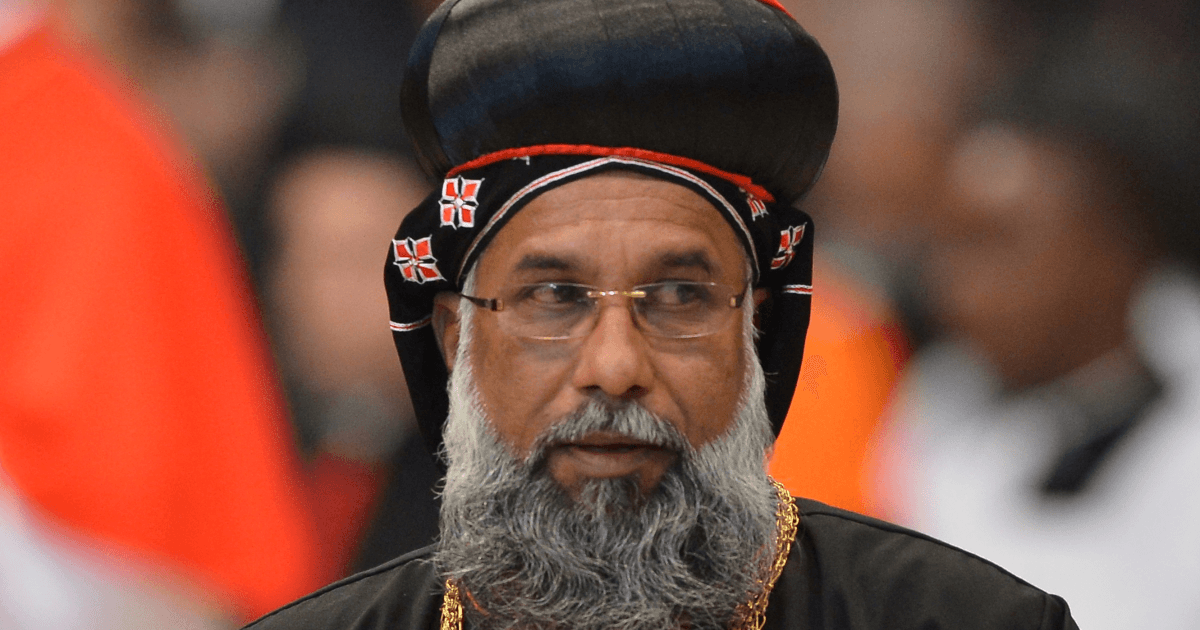
The most anticipated guest of the evening was His Beatitude Cardinal Baselios Cleemis, Major Archbishop-Catholicos of the Syro-Malankara Catholic Church. Before the programme, the Catholic Herald was granted an exclusive audience with His Beatitude, who spoke at length about the Church and migration, the recent conclave, the doctrinal note on the Marian title of “Co-redemtrix”, and the battle for tradition.
CH: Your Beatitude, you are here in England today for the Syro-Malankara event, which has drawn faithful from across the UK. Could you share with our readers what brought you here, why this event is significant for the Malankara Catholic community abroad, and what message you hope to offer the faithful during this visit?
HB: We have communities spread throughout the country, coordinated effectively by our priests with the support of the local bishops. Having petitioned the Holy See for a new canonical structure to strengthen and regularise these communities, we are grateful that the Holy Father, Pope Leo XIV, has graciously appointed an Apostolic Visitator, resident in the United Kingdom and entrusted with responsibility for the whole of Europe. Ecclesiastically, it is a moment of great significance to have the presence of a successor of the Apostles, a bishop charged with overseeing the pastoral activities, apostolates, and evangelical mission of the Apostolic Malankara Catholic Church. It is therefore a deeply joyful occasion for us, marking a meaningful step from the Holy See as we continue to live our traditions and fulfil our vocation.
CH: Your Beatitude, you are here in England today for the Syro-Malankara event, which has drawn faithful from across the UK. Could you share with our readers what brought you here, why this event is significant for the Malankara Catholic community abroad, and what message you hope to offer the faithful during this visit?
HB: We have communities spread throughout the country, coordinated effectively by our priests with the support of the local bishops. Having petitioned the Holy See for a new canonical structure to strengthen and regularise these communities, we are grateful that the Holy Father, Pope Leo XIV, has graciously appointed an Apostolic Visitator, resident in the United Kingdom and entrusted with responsibility for the whole of Europe. Ecclesiastically, it is a moment of great significance to have the presence of a successor of the Apostles, a bishop charged with overseeing the pastoral activities, apostolates, and evangelical mission of the Apostolic Malankara Catholic Church. It is therefore a deeply joyful occasion for us, marking a meaningful step from the Holy See as we continue to live our traditions and fulfil our vocation.
CH: Today’s gathering here in England has brought clergy, lay leaders and political community representatives from across the country. From your perspective, why is this event particularly important at this moment for the Catholic Church in England and Wales?
HB: As you all know, immigration is a lived reality for many today. A significant number of our faithful are now coming into the European context, particularly here in England, with many young people migrating in search of new opportunities. It is our shared responsibility to care for them, strengthening them to meet the challenges of life and equipping them to live as true disciples of Christ. Pastorally, we accompany our people: wherever they go, we go with them, supporting and guiding them. This forms an essential part of our pastoral commitment to the faithful. That is why today we mark an important and meaningful moment. At the same time, it is representative of the character of our bishops, our clergy, our lay faithful, and our friends here in the UK who are present for this great event.
CH: In the UK, many would argue that there has been too much immigration, and Pope Leo recently said outside Castel Gandolfo that countries have the right to control their borders and that the Catholic Church is not calling for an open-border system. How can we mix our Christian duty to protect migrants while maintaining sovereignty over the number of people we let in? What would you say, Your Beatitude?
HB: On the one hand, there must be openness, fraternity, and fellowship with the entire human family. Those who wish to come, or who have a grave reason to come, should find a spirit of welcome. It is an openness — an opening — and, I must say, an open-minded attitude towards those we call “foreigners.” At the same time, it is the responsibility of every country to ensure that safety and safeguarding measures remain intact. These two principles do not contradict each other — not when love survives everything. And that is the key.
We see a growing Indian Catholic community in Britain: Syro-Malabar, Syro-Malankara, Latin, and other rites of our rich Indian Catholic heritage. The question we might ask is: what role can this community play in revitalising parish life and strengthening family and community structures in British society? Each community, each tradition, brings a unique gift. Each is endowed with a particular vocation and a mission.
For us as Syro-Malankara Catholics, our mission is clear: to build communion, to foster unity among Christians, and to keep open a sincere dialogue with people of other faiths. This is a special task, a mission — even a gift — given to our community, to live what Jesus asked of us: to speak, to listen, to bring the Good News, and to be instruments of peace and unity.
I believe our presence in this great country should strengthen that same vision: to stand on the side of peace and unity, to work for peaceful solutions, and to bring people together — for the good of the nation, the Church, and the whole human family in the kingdom of God. Therefore, it is significant that every community — not only Catholics, but all communities — seeks to fulfil the mission entrusted to them. We are called to bring unity among the people.
CH: You were a participant — a cardinal elector — in the last papal conclave, a process Catholics watched with awe and curiosity. Could you share any reflections, within what is permissible, about the spiritual atmosphere and the sense of responsibility? Or about any movements of grace you witnessed during the conclave?
HB: It was a deeply satisfying moment in my life as a bishop and as a cardinal, knowing that I could once again take part in choosing the successor of Saint Peter, the head of the Apostolic College. For me, this was the second time: first in electing Pope Francis, and now Pope Leo XIV. I consider it a rare gift and a blessing to have lived this experience.
The atmosphere of those days — the pre-conclave, the conclave itself, and the days that followed — was filled with mixed emotions, all of which gave a profound sense of fulfilment. You feel the weight of a great mission: choosing someone who must live, who must lead, and who must love not only the Church, but the entire human family. That is why we call him pontifex: the bridge-builder, the one who brings worlds together.
Now we have Pope Leo XIV, and I feel nourished by the process: by coming to know so many brothers in the College of Cardinals, and by witnessing first-hand the priorities the Church must uphold in today’s world. And, in our own limited ways, we do this fully aware that we are assisted by the Holy Spirit in choosing, as we say, the best available to lead the Church in this present moment.
It is a spiritual moment, a classical event, a historic moment in one’s life, rare and truly significant. Electing the successor of Saint Peter is always a mixed reality: joining the Holy Spirit, discerning His promptings, thinking with the Church, and looking forward to a more unified world.
And now, we have chosen a new Pope.
CH: There have been many reports, speculations, and conflicting narratives circulating this year about what influenced the conclave and how certain candidates emerged. For example, many people spoke of Cardinal Dolan being the “kingmaker.” Without violating the secrecy of the process, are you able to offer any clarifying thoughts on whether these outside commentaries capture anything true about the dynamics or the supposed factionalisation of the cardinals?
HB: I can frankly share with you one important thing: nobody asked me to vote for any particular person. Just to give you the gist of it, this already shows how the process unfolded. When you understand it as a spiritual movement — a spiritual initiative — you begin to see how one listens to the promptings of the Holy Spirit. You look towards Him, the Lord. You look towards your brethren: what do they feel? Then you return to yourself: what does my conscience, my spirituality, ask me to do? For me, that was the process.
It was never a matter of someone coming to me saying, “This is our priority, this is the man.” You are given wisdom, you are given prudence, you are given discernment to recognise what the Church needs today — what kind of Petrine ministry is required, not only for your own faith community but for the whole of humanity.
This led me to reflect on the best possible choice. And I responded to that challenge — in my conscience.
CH: Cardinal Fernández’s recent doctrinal note discouraging the use of the title “Co-Redemptrix” for Our Lady has caused significant discussion and pain among the faithful attached to the Church’s Marian traditions and titles. From your perspective as the head of the Syro-Malankara Church, with its rich tradition of Marian devotion, how do you interpret the note and do you believe it was pastorally helpful?
HB: As you rightly said, I come from an Eastern Catholic tradition. From the Apostolic times, and particularly from the fourth century onwards, we inherit the West Syrian tradition. In this tradition, we honour the Blessed Mother as the Mother of God — in Syriac we say Yoldath Aloho, the Mother of God. But we have never called her “co-redeemer,” because there is only one Redeemer: the Son of God, Jesus Christ.
What we do confess is that she is the best model — the best humanity can offer in following God’s word. “Here I am. Here is the handmaid of the Lord. Be it done unto me according to your word.” She is the perfect model for us to imitate.
Yet the Eastern Churches, and indeed the broader Catholic tradition, have never used the title “co-redeemer” for the Blessed Mother. Why then is there a need for clarification on this point? It is because many opinions have been shared — many suggestions from various groups of Catholic faithful — proposing that she be proclaimed as co-redeemer. And so the Church has a responsibility to clarify such matters and say clearly what she truly teaches.
Jesus Christ is the only Redeemer. At the same time, we honour the Blessed Mother as the one chosen by the Father to give Jesus His human form. And indeed, we continue to call her “Blessed Mother.”
CH: Many Catholics have expressed their deep hurt following the restrictions placed upon the 1962 Missal. While you belong to the Eastern Church with its own venerable liturgical patrimony, what is your view on the situation and how do you think the Church can reconcile its call for unity?
HB: Rather than commenting on what I personally feel about the Tridentine Mass and its present situation, I would instead speak about what we do. As Eastern Catholics, we celebrate the Holy Eucharist in a joyful way.
For us, the Holy Eucharist is a profound witness not only to the death and resurrection of Christ, but to the whole sweep of salvation: from creation itself to His coming again to judge the living and the dead. The entire saving act of God is present. And we celebrate it with joy.
It remains a mystery — mysterium fidei. But it is a mystery given to us through symbols, for our deeper understanding. And when you delete or omit the symbolic expressions of devotion to the Almighty, you reduce the mystery to mere principles and theories.
In the liturgy of the East — in our methodology, our modes of celebration — I would say this: we joyfully celebrate what we pray and what we believe. And that, I think, is a principle worth following.
The celebration of God’s saving acts in history — that is the heart of the Eucharist.
CH: Your Beatitude, as someone who leads a Church that has preserved the ancient liturgical, monastic, and apostolic tradition, even amid modern pressures, what message would you offer Catholics?
HB: Tradition is not to be kept in the museum. Tradition is something that affects you because you are not the product of today alone. You are a continuation of many, many generations. Tradition is not something that we simply received and placed somewhere. Tradition is something to which you add your own contributions today, and that will become tomorrow’s tradition. In a sense, being faithful to what has been given to you, you add something close to that legacy, and then it is handed on to the next generation. And this is what we have always tried to do in the East: received, flourished, and then handed over. Keeping that tradition means respect for life.
When you have respect for life, you will not abandon your brothers and sisters around you. You have a responsibility to take care of the images of God visible around you.
This is what it means to be “pro-life.” Tradition will bring you to the culture of life.


.jpg)

.jpg)