
April 13, 2026

Cardinal Hollerich suggests female subdiaconate

The Catholic Herald
More
Related
Min read
share

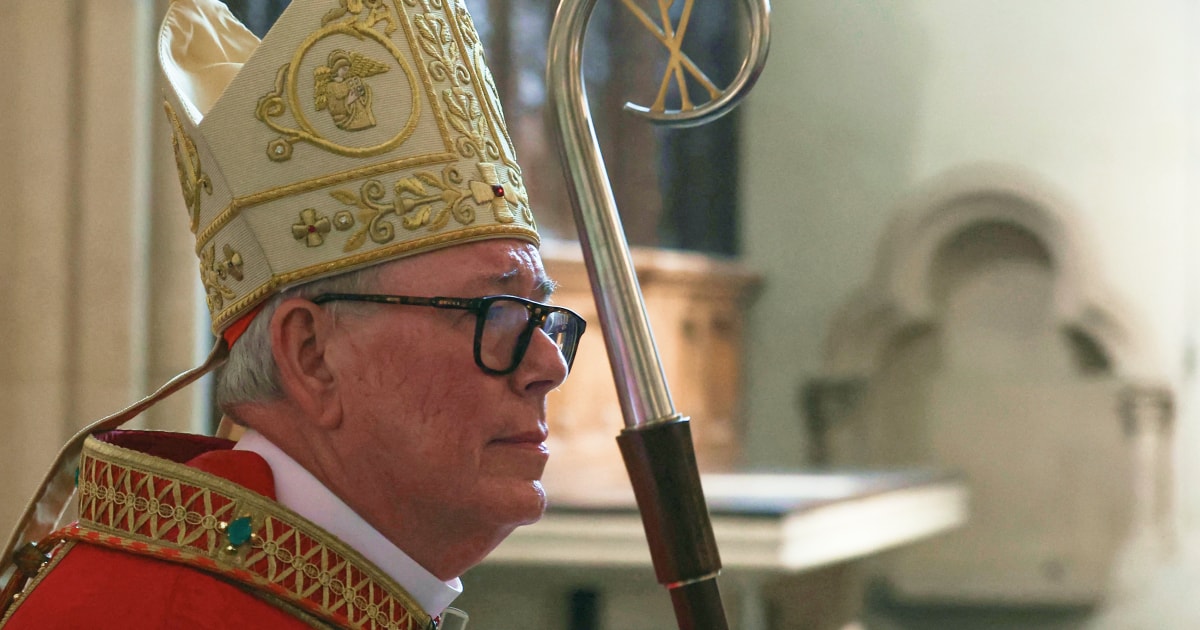
Cardinal Jean-Claude Hollerich has said that any move towards the ordination of women would “currently” risk dividing the Catholic Church, but did not rule out the possibility of female subdeacons.

In an interview published by Vatican News on April 10, the Archbishop of Luxembourg pointed to the experience of the Anglican Communion as a warning against unilateral decisions on ministry. Referring to developments following the appointment of Sarah Mullally, he suggested that disputes over ordained ministry had already shown their capacity to create lasting division.
According to the cardinal, questions concerning access to ordained ministry cannot be resolved at a local or regional level. “It should always be done in dialogue with the Bishop of Rome, who is in charge of unity, and it should be well thought out. It should not be rushed just for doing it,” he said.

He made clear that the discussion presently concerns the possibility of women being ordained as deacons and that any development must be understood in a long term context. “The issue in question is about deacons’ ordination and the action is long term,” he said, underlining that no immediate change is under consideration.

The interview followed the publication of the report of Study Group No. 5 on “Women’s participation in the life and leadership of the Church”, issued by the General Secretariat of the Synod as part of the ongoing synodal process. Cardinal Hollerich, who serves as the General Relator of the Synod on Synodality, described the report as “a big step”.

“It is a big step,” he said, adding: “It is so important that women feel that they are welcome in the Church, not just for filling up the benches in the church, but to fully participate in the life of the Church, to fully participate in the mission of the Church.”

The cardinal also addressed remarks he had previously made at the University of Bonn, where he said: “I cannot imagine, in the long term, how a Church can survive, if half of the People of God suffer because they have no access to ordained ministry.” In the Vatican News interview, he clarified that this statement referred specifically to the question of the diaconate and to a long term perspective.

He emphasised that the synodal process is still in a phase of identifying questions rather than reaching conclusions. “The identification of issues is an important part of the process,” he said, indicating that discussion on the role of women remains open.

At the same time, Cardinal Hollerich acknowledged a sense of frustration among many women in the Church, particularly among younger generations. “I feel that, not just women who have studied theology, but when I am with young people, I can feel that many of the girls of our youth are sad because they feel that they are not completely recognised by the Church,” he said. “And that makes me sad as a pastor.”

He pointed to a number of practical steps already being taken to expand women’s roles in the life of the Church without touching on ordained ministry. These include appointments to senior positions within dioceses and within the Roman Curia, as well as greater involvement in pastoral leadership and formation.

In his own archdiocese of Luxembourg, he said that women serve as episcopal delegates responsible for key areas including consecrated life, the social sector and education, as well as participating in the formation of clergy. Such developments, he suggested, demonstrate that increased participation does not depend solely on ordination.

“I could also imagine a subdiaconate for women,” he said. “While this would not involve ordination, it would still represent participation in the liturgy and assist with the Church’s diaconal ministry.”

The cardinal further noted that differences in culture may lead to varying approaches at the local level in relation to non ordained ministries. “There can be different speeds in the local churches, because it’s part of the culture and the place women have in that culture,” he said. However, he distinguished this from ordained ministry, which he said requires universal agreement.

Continue reading with a free account

Create a free account to read up to five articles each month
Create free account

You have # free articles remaining this month.

Subscribe to get unlimited access.
Sign up

subscribe to the catholic herald today

Our best content is exclusively available to our subscribers. Subscribe today and gain instant access to expert analysis, in-depth articles, and thought-provoking insights—anytime, anywhere. Don’t miss out on the conversations that matter most.
Subscribe