January 13, 2026
January 13, 2026

Cardinal Roche’s consistory document on the Traditional Latin Mass revealed

Min read
share

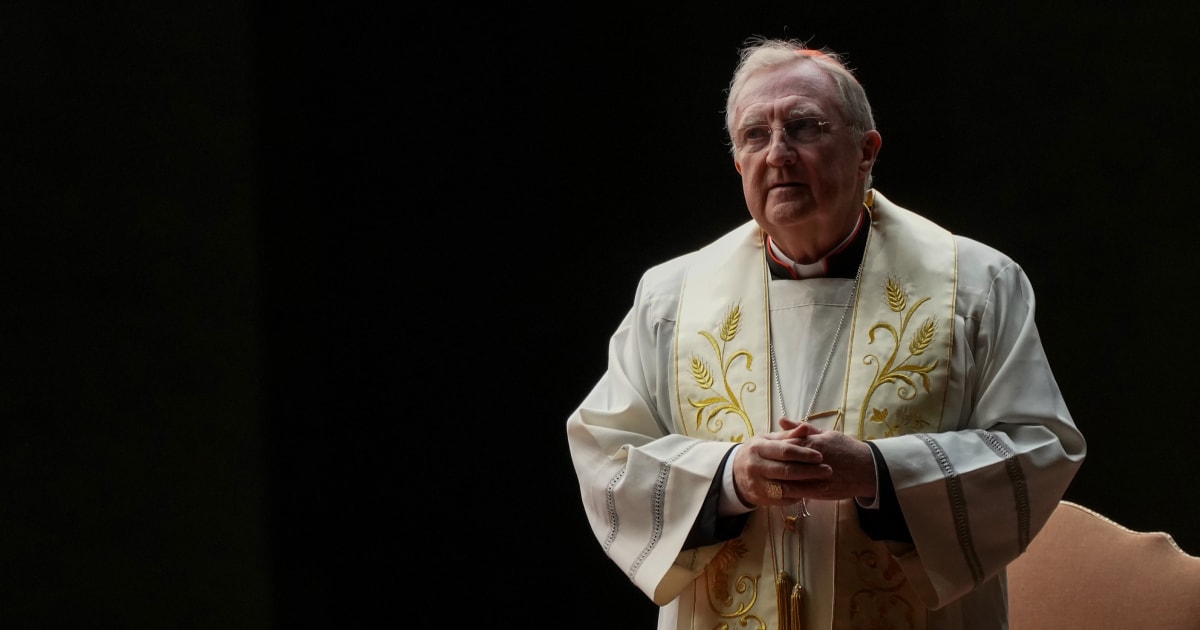
A document sharply critical of the Tridentine Latin Mass, authored under the authority of Cardinal Arthur Roche in his capacity as Prefect of the Dicastery for Divine Worship and the Discipline of the Sacraments, has been published by journalists Diane Montagna and Nico Spuntoni following its circulation to cardinals during the Extraordinary General Consistory held in Rome from 7 to 8 January.

The text, dated 8 January 2026, was previously shared privately with members of the College of Cardinals. The document sharply criticises the continued use of the Tridentine Latin Mass, setting out a forceful defence of the post–Vatican II liturgical reform and rejecting any return to the pre-conciliar Roman Rite as a normative option for the Church. Its publication confirms The Catholic Herald’s earlier report that a document addressing the Tridentine Latin Mass formed part of the consistory.
It sets out a comprehensive theological and historical defence of the post-conciliar liturgical reform and explicitly rejects any return to the pre-Vatican II form of the Roman Rite as a normative option for the Church.

The text frames its argument within the language of the Second Vatican Council, stating that liturgical reform must be grounded in “careful theological, historical, and pastoral reflection” so that “sound tradition may be retained, and yet the way remain open to legitimate progress”. This principle, drawn directly from Sacrosanctum Concilium, is presented as the key lens through which the entire question of the liturgy should be understood.

The document asserts that reform has always been part of the Church’s liturgical life, declaring: “In the life of the Church, the liturgy has always undergone reforms.” It traces this development from the early Christian use of Greek to Latin, through the medieval sacramentaries, the reforms following the Council of Trent, and finally to the changes mandated by the Second Vatican Council. “The history of the liturgy,” it states, “is the history of its continuous ‘reforming’ in a process of organic development.”

Addressing the Tridentine reform directly, the document recalls the actions of St Pius V following the Council of Trent, emphasising that his intention was the preservation of unity. Citing Quo primum, it notes that the Pope affirmed that “as in the Church of God there is only one way of reciting the psalms, so there ought to be only one rite for celebrating the Mass”.

The text argues that unity and reform are inseparable from the ritual nature of the liturgy itself. “The need to reform the liturgy is strictly tied to the ritual component,” it says, adding that rites necessarily include cultural elements “that change in time and places” while enabling participation in the unchanging paschal mystery.

In a passage quoting Pope Benedict XVI, the document rejects any understanding of tradition as fixed or inert. “Tradition is not the transmission of things or words, a collection of dead things,” it states, but rather “the living river that links us to the origins, the living river in which the origins are ever present”. On this basis, the text insists that the liturgical reform mandated by Vatican II “is not only in full syntony with the true meaning of Tradition, but constitutes a singular way of putting itself at the service of the Tradition”.

The document repeatedly warns against separating tradition from reform. “Maintaining solid tradition and opening the way to legitimate progress cannot be understood as two separable actions,” it says, arguing that without progress tradition risks becoming lifeless, while progress without tradition degenerates into “a pathological search for novelty”.

Pope Francis’s teaching features prominently throughout the text. Referring to his 2024 address to the Dicastery for Divine Worship, the document quotes the Pope as saying that “without liturgical reform, there is no reform of the Church”. It describes the reform of the liturgy as a task of “spiritual, pastoral, ecumenical, and missionary renewal”.

The text also acknowledges shortcomings in the reception of the reform, stating plainly that “the application of the reform suffered and continues to suffer from a lack of formation”. It calls for renewed liturgical formation, particularly in seminaries, so that the faithful may encounter the liturgy as “the summit and source” of Christian life.

The most direct treatment of the Tridentine Latin Mass appears in the later sections of the document. It states that the continued use of older liturgical books was, from the pontificate of St John Paul II onwards, “a concession that in no way envisaged their promotion”. Referring explicitly to Traditionis custodes, it explains that Pope Francis permitted the restricted use of the 1962 Missal in order to “point the way to unity in the use of the liturgical books promulgated” after Vatican II.

The document insists that the Missal of Paul VI, promulgated “in accordance with the decrees of the Second Vatican Council”, constitutes “the sole expression of the lex orandi of the Roman Rite”.

Quoting Pope Francis directly, the text rejects the idea that disputes over the liturgy are matters of taste or preference. “The problematic is primarily ecclesiological,” the Pope is cited as saying. “I do not see how it is possible to say that one recognises the validity of the Council … and at the same time not accept the liturgical reform born out of Sacrosanctum Concilium.”

The document’s argument does not merely reaffirm Vatican II; it advances a particular interpretation of the Council, one that collapses continuity into compliance and treats plurality within the Roman tradition as a wound to be cauterised. The text opens by placing everything under Sacrosanctum Concilium and repeatedly cites its key phrase that “sound tradition may be retained, and yet the way remain open to legitimate progress”. That sentence is unobjectionable in itself. Yet the document uses it as a lever: “maintaining solid tradition” and “opening the way to legitimate progress” are presented as inseparable, while warning that without progress tradition becomes “a collection of dead things”.

The difficulty is not the claim that organic development exists, but the insinuation that those who plead for inheritance over novelty are pleading for death. The text’s own quotation of Benedict XVI cuts both ways: “Tradition is not the transmission of things or words, a collection of dead things,” but “the living river that links us to the origins”. A living river has banks; it is not a canal dug anew each decade.

In paragraph 1, the document argues that the liturgy “has always undergone reforms” and calls the story of worship a “continuous ‘reforming’ in a process of organic development”. Here the tone is set. Reform is not described as an occasional remedy for corruption or accretion, but as the normal mode of liturgical life. This is a significant emphasis, because it predisposes the reader to see resistance not as prudence but as denial of history.

Paragraph 2 appeals to St Pius V and quotes Quo primum, “there ought to be only one rite for celebrating the Mass”. That is deployed to support unity, yet the irony is plain. The Roman Church long maintained unity without abolishing venerable uses, and Quo primum itself is historically associated with the protection of the Tridentine Mass. Paragraph 3 insists that the need to reform is “strictly tied to the ritual component” and that rites have cultural elements “that change in time and places”. The point at issue is not whether culture touches rites, but whether the rite’s internal logic and inherited sacral language may be treated as merely cultural and therefore disposable.

Paragraphs 6 and 9 tighten the argument by quoting Pope Francis’s refrain that “without liturgical reform, there is no reform of the Church”, and then, more starkly, “We cannot go back to that ritual form which the Council Fathers … felt the need to reform”. This is no longer an historical observation; it is a prohibition cast as principle. The document also admits, in paragraph 8, that implementation “suffered and continues to suffer from a lack of formation”. That concession is decisive. If the reform’s reception has been afflicted by formation failures for sixty years, the pastoral instinct should be to ask what in the reform itself fostered fragility, and what in the older rite preserved clarity. Instead, the text moves swiftly to discipline.

Paragraph 10 describes the 1962 Missal as “a concession that in no way envisaged their promotion” and reiterates that the reformed books are “the sole expression of the lex orandi of the Roman Rite”. Paragraph 11 then frames the dispute as fundamentally ecclesiological: “The problematic is primarily ecclesiological.” This is the crux. The document seeks to make attachment to the older liturgy function as a proxy for rejecting the Council, so that a liturgical question becomes a loyalty test. Yet the Church has never required that every Catholic embrace every reform with the same spiritual fruitfulness, still less that legitimate diversity be treated as disunity.

Importantly, as Nico Spuntoni, Vatican correspondent for Il Giornale, has noted, the report concludes by citing the controversial apostolic letter Desiderio desideravi, asserting that “it would be banal to read the tensions, unfortunately present around the celebration, as a simple divergence in sensibilities towards a ritual form. The problem is first and foremost ecclesiological. I do not see how one can recognise the validity of the Council … and not welcome the liturgical reform born of Sacrosanctum Concilium.”

This position, however, is not shared by former Ecclesia Dei communities, many of which have consistently affirmed their loyalty to the Council. What they contest is not Vatican II itself, but the claim that the Council’s liturgical directives were faithfully implemented in the decades that followed. In this light, the document stands at odds with the interpretation advanced by some ultra-progressive commentators, who have suggested that only conservative cardinals sought to raise the liturgical question during the consistory.

A document sharply critical of the Tridentine Latin Mass, authored under the authority of Cardinal Arthur Roche in his capacity as Prefect of the Dicastery for Divine Worship and the Discipline of the Sacraments, has been published by journalists Diane Montagna and Nico Spuntoni following its circulation to cardinals during the Extraordinary General Consistory held in Rome from 7 to 8 January.

The text, dated 8 January 2026, was previously shared privately with members of the College of Cardinals. The document sharply criticises the continued use of the Tridentine Latin Mass, setting out a forceful defence of the post–Vatican II liturgical reform and rejecting any return to the pre-conciliar Roman Rite as a normative option for the Church. Its publication confirms The Catholic Herald’s earlier report that a document addressing the Tridentine Latin Mass formed part of the consistory.
It sets out a comprehensive theological and historical defence of the post-conciliar liturgical reform and explicitly rejects any return to the pre-Vatican II form of the Roman Rite as a normative option for the Church.

The text frames its argument within the language of the Second Vatican Council, stating that liturgical reform must be grounded in “careful theological, historical, and pastoral reflection” so that “sound tradition may be retained, and yet the way remain open to legitimate progress”. This principle, drawn directly from Sacrosanctum Concilium, is presented as the key lens through which the entire question of the liturgy should be understood.

The document asserts that reform has always been part of the Church’s liturgical life, declaring: “In the life of the Church, the liturgy has always undergone reforms.” It traces this development from the early Christian use of Greek to Latin, through the medieval sacramentaries, the reforms following the Council of Trent, and finally to the changes mandated by the Second Vatican Council. “The history of the liturgy,” it states, “is the history of its continuous ‘reforming’ in a process of organic development.”

Addressing the Tridentine reform directly, the document recalls the actions of St Pius V following the Council of Trent, emphasising that his intention was the preservation of unity. Citing Quo primum, it notes that the Pope affirmed that “as in the Church of God there is only one way of reciting the psalms, so there ought to be only one rite for celebrating the Mass”.

The text argues that unity and reform are inseparable from the ritual nature of the liturgy itself. “The need to reform the liturgy is strictly tied to the ritual component,” it says, adding that rites necessarily include cultural elements “that change in time and places” while enabling participation in the unchanging paschal mystery.

In a passage quoting Pope Benedict XVI, the document rejects any understanding of tradition as fixed or inert. “Tradition is not the transmission of things or words, a collection of dead things,” it states, but rather “the living river that links us to the origins, the living river in which the origins are ever present”. On this basis, the text insists that the liturgical reform mandated by Vatican II “is not only in full syntony with the true meaning of Tradition, but constitutes a singular way of putting itself at the service of the Tradition”.

The document repeatedly warns against separating tradition from reform. “Maintaining solid tradition and opening the way to legitimate progress cannot be understood as two separable actions,” it says, arguing that without progress tradition risks becoming lifeless, while progress without tradition degenerates into “a pathological search for novelty”.

Pope Francis’s teaching features prominently throughout the text. Referring to his 2024 address to the Dicastery for Divine Worship, the document quotes the Pope as saying that “without liturgical reform, there is no reform of the Church”. It describes the reform of the liturgy as a task of “spiritual, pastoral, ecumenical, and missionary renewal”.

The text also acknowledges shortcomings in the reception of the reform, stating plainly that “the application of the reform suffered and continues to suffer from a lack of formation”. It calls for renewed liturgical formation, particularly in seminaries, so that the faithful may encounter the liturgy as “the summit and source” of Christian life.

The most direct treatment of the Tridentine Latin Mass appears in the later sections of the document. It states that the continued use of older liturgical books was, from the pontificate of St John Paul II onwards, “a concession that in no way envisaged their promotion”. Referring explicitly to Traditionis custodes, it explains that Pope Francis permitted the restricted use of the 1962 Missal in order to “point the way to unity in the use of the liturgical books promulgated” after Vatican II.

The document insists that the Missal of Paul VI, promulgated “in accordance with the decrees of the Second Vatican Council”, constitutes “the sole expression of the lex orandi of the Roman Rite”.

Quoting Pope Francis directly, the text rejects the idea that disputes over the liturgy are matters of taste or preference. “The problematic is primarily ecclesiological,” the Pope is cited as saying. “I do not see how it is possible to say that one recognises the validity of the Council … and at the same time not accept the liturgical reform born out of Sacrosanctum Concilium.”

The document’s argument does not merely reaffirm Vatican II; it advances a particular interpretation of the Council, one that collapses continuity into compliance and treats plurality within the Roman tradition as a wound to be cauterised. The text opens by placing everything under Sacrosanctum Concilium and repeatedly cites its key phrase that “sound tradition may be retained, and yet the way remain open to legitimate progress”. That sentence is unobjectionable in itself. Yet the document uses it as a lever: “maintaining solid tradition” and “opening the way to legitimate progress” are presented as inseparable, while warning that without progress tradition becomes “a collection of dead things”.

The difficulty is not the claim that organic development exists, but the insinuation that those who plead for inheritance over novelty are pleading for death. The text’s own quotation of Benedict XVI cuts both ways: “Tradition is not the transmission of things or words, a collection of dead things,” but “the living river that links us to the origins”. A living river has banks; it is not a canal dug anew each decade.

In paragraph 1, the document argues that the liturgy “has always undergone reforms” and calls the story of worship a “continuous ‘reforming’ in a process of organic development”. Here the tone is set. Reform is not described as an occasional remedy for corruption or accretion, but as the normal mode of liturgical life. This is a significant emphasis, because it predisposes the reader to see resistance not as prudence but as denial of history.

Paragraph 2 appeals to St Pius V and quotes Quo primum, “there ought to be only one rite for celebrating the Mass”. That is deployed to support unity, yet the irony is plain. The Roman Church long maintained unity without abolishing venerable uses, and Quo primum itself is historically associated with the protection of the Tridentine Mass. Paragraph 3 insists that the need to reform is “strictly tied to the ritual component” and that rites have cultural elements “that change in time and places”. The point at issue is not whether culture touches rites, but whether the rite’s internal logic and inherited sacral language may be treated as merely cultural and therefore disposable.

Paragraphs 6 and 9 tighten the argument by quoting Pope Francis’s refrain that “without liturgical reform, there is no reform of the Church”, and then, more starkly, “We cannot go back to that ritual form which the Council Fathers … felt the need to reform”. This is no longer an historical observation; it is a prohibition cast as principle. The document also admits, in paragraph 8, that implementation “suffered and continues to suffer from a lack of formation”. That concession is decisive. If the reform’s reception has been afflicted by formation failures for sixty years, the pastoral instinct should be to ask what in the reform itself fostered fragility, and what in the older rite preserved clarity. Instead, the text moves swiftly to discipline.

Paragraph 10 describes the 1962 Missal as “a concession that in no way envisaged their promotion” and reiterates that the reformed books are “the sole expression of the lex orandi of the Roman Rite”. Paragraph 11 then frames the dispute as fundamentally ecclesiological: “The problematic is primarily ecclesiological.” This is the crux. The document seeks to make attachment to the older liturgy function as a proxy for rejecting the Council, so that a liturgical question becomes a loyalty test. Yet the Church has never required that every Catholic embrace every reform with the same spiritual fruitfulness, still less that legitimate diversity be treated as disunity.

Importantly, as Nico Spuntoni, Vatican correspondent for Il Giornale, has noted, the report concludes by citing the controversial apostolic letter Desiderio desideravi, asserting that “it would be banal to read the tensions, unfortunately present around the celebration, as a simple divergence in sensibilities towards a ritual form. The problem is first and foremost ecclesiological. I do not see how one can recognise the validity of the Council … and not welcome the liturgical reform born of Sacrosanctum Concilium.”

This position, however, is not shared by former Ecclesia Dei communities, many of which have consistently affirmed their loyalty to the Council. What they contest is not Vatican II itself, but the claim that the Council’s liturgical directives were faithfully implemented in the decades that followed. In this light, the document stands at odds with the interpretation advanced by some ultra-progressive commentators, who have suggested that only conservative cardinals sought to raise the liturgical question during the consistory.

share

subscribe to the catholic herald today

Our best content is exclusively available to our subscribers. Subscribe today and gain instant access to expert analysis, in-depth articles, and thought-provoking insights—anytime, anywhere. Don’t miss out on the conversations that matter most.
Subscribe