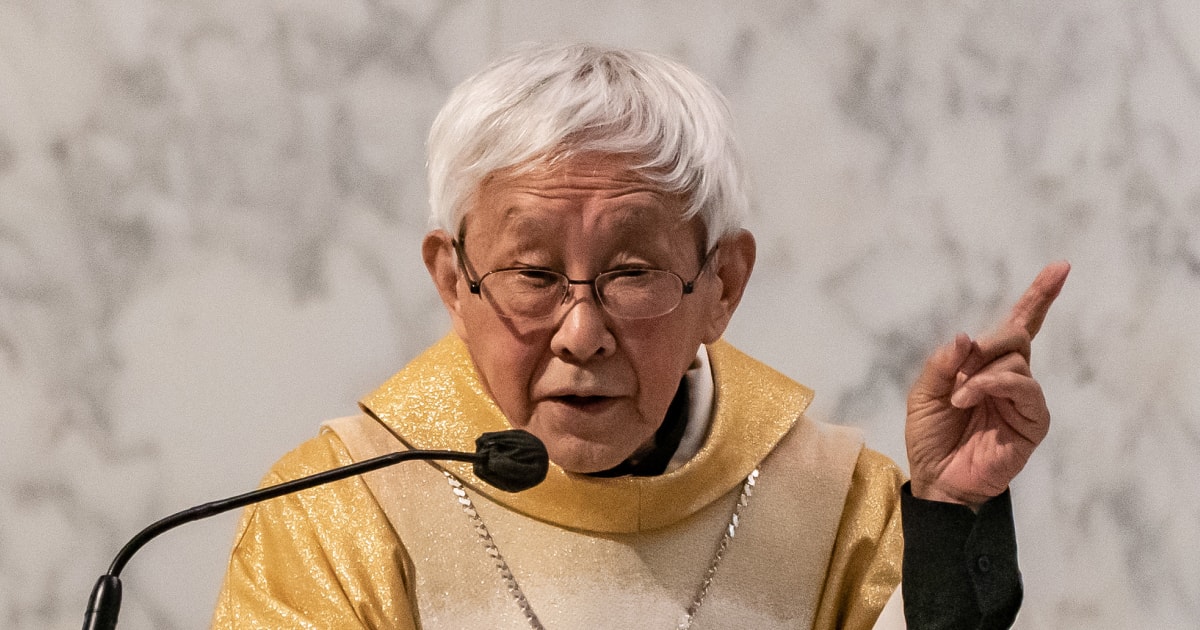
Cardinal Joseph Zen arrived in Rome this week to take part in the first extraordinary consistory of cardinals convened by Pope Leo XIV, marking a rare public appearance by the 93-year-old bishop emeritus of Hong Kong, whose freedom of movement has been sharply curtailed since his arrest under Hong Kong’s National Security Law.
The Holy Father received Cardinal Zen in a private audience on the morning of the consistory, regarded as symbolically significant given the cardinal’s long and often strained relationship with the previous pontificate.
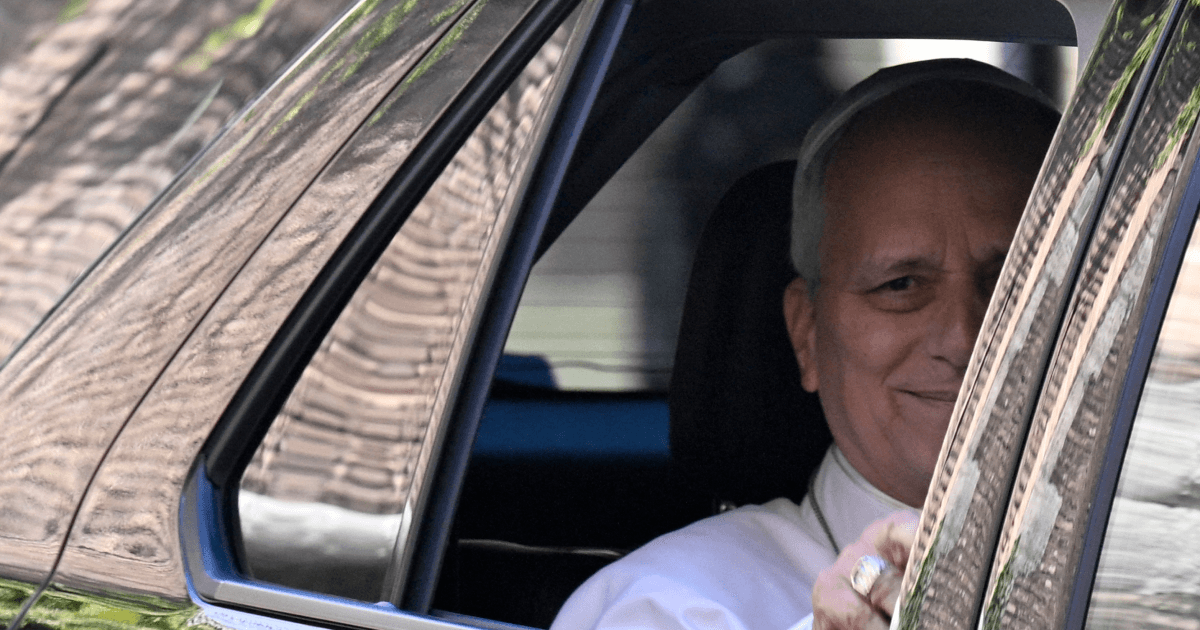
The veteran Salesian was able to travel only after receiving permission from the Hong Kong authorities. Since 2022, he has faced legal restrictions following his arrest in connection with a humanitarian fund that provided assistance to pro-democracy protesters. Police charged him and several others with collusion with foreign forces, an allegation he has consistently rejected. He was later convicted of a lesser offence and fined, while remaining free on bail. His passport has been periodically confiscated and temporarily returned by the courts to allow strictly limited travel, including attendance at the funerals of Benedict XVI and Pope Francis.
The private audience with Leo XIV came ahead of an extraordinary consistory held over 7 and 8 January, attended by around 170 cardinals. Although members of the Sacred College were initially informed that four topics would be addressed, they were told upon arrival that time constraints would limit discussion to two. The cardinals selected the Synod and synodality, and the mission of the Church in light of Francis’s 2013 apostolic exhortation Evangelii Gaudium.
Cardinal Zen delivered a brief but stark intervention that sharply criticised the Synod on Synodality, a multi-year process that ran from 2021 to 2024. Speaking during the closed-door session, the Hong Kong cardinal addressed the accompanying note issued by Pope Francis to the synod’s final document and questioned both the method and the theological assumptions underpinning the process.
“The ironclad manipulation of the process is an insult to the dignity of the bishops,” Cardinal Zen told the consistory, adding that “the continual reference to the Holy Spirit is ridiculous and almost blasphemous.” He warned that constant appeals to the Spirit risked implying that He could be expected to contradict “what he inspired in the Church’s two thousand year tradition.”
The cardinal directly challenged the claim that the synodal process represented authentic listening and discernment. “Has the Pope been able to listen to the entire People of God?” he asked. “Do the lay people present represent the People of God?” Turning to the role of bishops, he continued: “Have the bishops elected by the episcopate been able to carry out a work of discernment, which must surely consist in disputation and judgement?”
Cardinal Zen also objected to what he described as a bypassing of episcopal authority. Referring to Francis’s assertion that the Pope listens directly to the People of God, he asked whether this was truly “the appropriate interpretative framework for understanding hierarchical ministry.” His remarks echoed long-standing concerns that synodality, as practised in recent years, risks weakening the doctrinal and governing role of bishops as successors of the apostles.
A substantial portion of the intervention focused on the ambiguous status assigned to the synod’s final document. Cardinal Zen noted that Pope Francis described the text as magisterium that “commits the Churches to make choices consistent with what is stated in it,” while also insisting that it was “not strictly normative” and open to differing applications. Quoting the papal note, the cardinal highlighted passages stating that “unity of teaching and practice is certainly necessary in the Church, but this does not preclude various ways of interpreting some aspects of that teaching,” and that different regions may seek solutions suited to their own cultures and traditions.
In response, Cardinal Zen posed a series of pointed questions. “Does the Holy Spirit guarantee that contradictory interpretations will not arise,” he asked, “especially given the many ambiguous and tendentious expressions in the document?” He warned that a process of local experimentation and testing could lead to fragmentation unless there was clear episcopal judgement. He also questioned whether the Secretariat of the Synod or the Roman Curia would be competent to adjudicate such developments, asking whether they would be “more competent than the bishops to judge the different contexts of their Churches.”
Drawing the argument outward, the cardinal warned of parallels with divisions in other Christian communities. “If the bishops believe themselves to be more competent,” he said, “do the differing interpretations and choices not lead our Church to the same division found in the Anglican Communion?” He later returned to the theme in remarks on ecumenism, pointing to what he described as the “dramatic rupture of Anglican communion” and asking whether Rome should look to the Archbishop of Canterbury, who he said now represents only a small minority of Anglicans, or to the Global Anglican Future Conference, which he noted retains a much larger share.
Relations with the Orthodox Churches were also raised. Cardinal Zen argued that Orthodox bishops would never accept what he termed “Bergoglian synodality,” insisting that for them synodality means the real authority of the Synod of Bishops acting together. “Pope Bergoglio has exploited the word synod,” he said, “but has made the Synod of Bishops, an institution established by Paul VI, disappear.”
Cardinal Joseph Zen’s intervention in Rome is not only regarding synodality or procedure. It concerns whether the Church believes that doctrinal coherence and episcopal responsibility are goods worth defending, even when doing so is costly to Cardinal Zen’s personal safety. The Church’s credibility depends on whether she can resist being shaped by the logic of power, whether secular or ecclesial, and instead remain faithful to the truth entrusted to her. Seen in this light, Cardinal Zen’s struggle is not divided between Hong Kong and Rome. It is a single fight, waged on two fronts, against the same temptation to sacrifice truth for quiet.
For decades, Cardinal Zen has spoken plainly about the dangers of accommodation with an authoritarian state that demands silence in exchange for tolerance. His arrest in 2022 under the National Security Law, his conviction on a lesser charge, and the continuing restrictions on his movement have made him a symbol of moral resistance well beyond the boundaries of the local Church. At ninety-three, he travels not only as a political actor but as a clergyman who has learned, at personal cost, what happens when persecution begins.
That experience explains the severity of his words in Rome. When Cardinal Zen warned the consistory of what he called the “ironclad manipulation” of the synodal process and described the repeated invocation of the Holy Spirit as “ridiculous and almost blasphemous”, he was not engaging in rhetoric; rather, he was naming a pattern he recognises, one he has seen both in Hong Kong politics and within the Church.
The cardinal’s critique also reveals why the extraordinary consistory matters for the average lay person. If the Church teaches that a document is magisterial but “not strictly normative”, authoritative yet open to divergent interpretation, then unity becomes procedural rather than theological. Zen’s warning that such ambiguity risks repeating the fractures of Anglicanism is not a casual comparison.
There is something bracing about seeing an elderly cardinal, and also a statesman, fighting what appear to be unwinnable battles. His Eminence knows he cannot reverse China’s policies by himself, nor can he reshape the Church by force of will. The force of his witness lies in his awareness that the struggle for freedom and the struggle for doctrinal clarity are inseparable.