



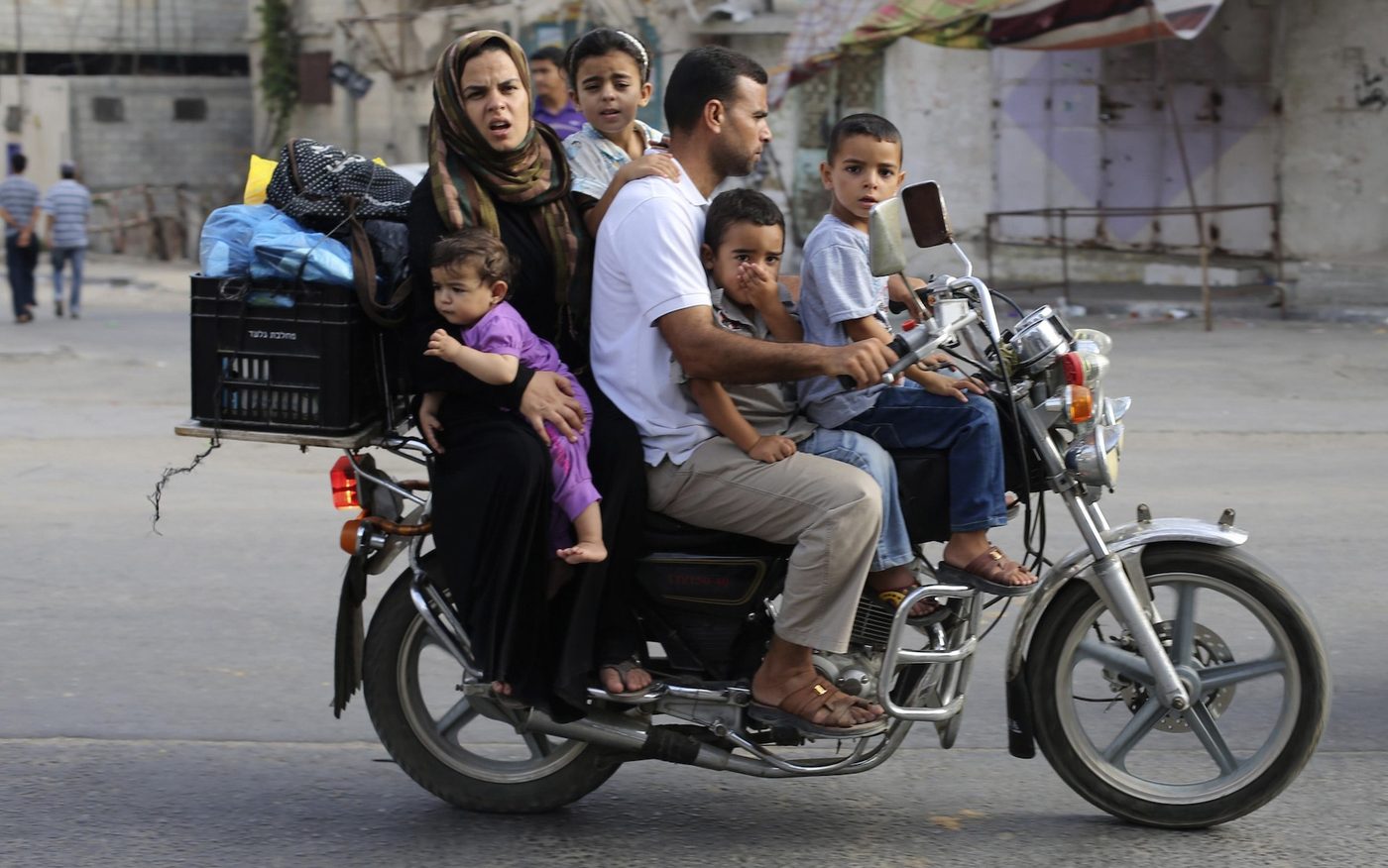
A top Catholic charity official described Gaza as a "complete catastrophe" after nearly four weeks of fighting between Israel and the Palestinian militant Hamas. "Gaza is on the brink of collapse at this point," said Matthew McGarry, who directs the Catholic Relief Services' (CRS) operations in Gaza, the West Bank and Jerusalem. He spoke to Catholic News Service in a phone interview from Jerusalem on Monday. Despite the "extremely dangerous and challenging situation" in Gaza, CRS humanitarian aid is being still delivered to thousands, McGarry said. Several calls for humanitarian cease-fires have largely gone unheeded by both sides, while a number of UN facilities sheltering Palestinians were shelled. More than 1,800 Palestinians, most of them civilians, have been killed and more than a quarter of the impoverished enclave's 1.8 million residents displaced, according to Gazan officials. More than 60 Israeli soldiers have been killed in the Israeli operation, Protective Edge, seeking to destroy underground tunnels built by Hamas to carry out terrorist attacks in the Jewish state. "Humanitarian workers are at risk. We had to limit our movements quite a bit," McGarry said of the bombardments. Despite the constraints on movement, he said, "our teams have been able to move a good deal of humanitarian assistance." Distribution of 2,500 household emergency kits were underway to 15,000 people around the Gaza City area, including the heavily bombarded Gaza district of Shijaiyah, less than a mile from the Israeli border, and other northern cities, such as Beit Lahiya. In addition, CRS has distributed "household kits, hygiene items, kitchen sets and some water storage containers to 500 households, a little over 1,000 people at this point," McGarry said. CRS, the US bishops' international relief and development agency, also helped facilitate the delivery of three truckloads of medical supplies, equipment and some medicines to the Anglican Al-Ahli Arab Hospital in Gaza. McGarry said plans included distributing additional medical supplies and equipment to the Caritas clinics and to Al-Ahli hospital. Often, reaching out to assist people has been at enormous risk to the CRS staff, he said. "It's truly difficult. We have 15 Gazan staff. Half had to flee their homes because of damage and the high volume of airstrikes," McGarry said. "It's extremely dangerous. It's very stressful. It's a very hard time. We have great, heroic staff but the situation has placed tremendous demands on them -- on their personal and professional lives," he added. "We have staff whose relatives have died from debris and shrapnel from airstrikes." Often the teams work under extremely difficult conditions with little access to drinking water or power in Gaza. The only electric power plant in the strip was disabled in late July. McGarry said once a calmer environment settles on Gaza and people start to move, CRS plans to assist with badly needed water and sanitation work at centers for displaced families. "If the conditions in Gaza become slightly favorable, we will scale up accordingly," he said. "In the last weeks, there were expectations that things would get better but those expectations have been consistently disappointed with the situation getting worse, to the point that Gaza is on the brink of collapse." Gaza has been subject to a seven-year economic blockade, which Israel imposed after Hamas took over the Gaza Strip from the Palestinian Fatah party.
10:48 AM
Catholic charity: 'Gaza on the brink of collapse'
CRS currently delivering humanitarian aid to thousands of Gazans
Catholic News Service

4 min read



Already a subscriber? Sign in
5freearticles every month
Continue reading with a free account. No card needed.
- Five free articles every thirty days, on any device you sign in on
- The Catholic Herald newsletter, every morning
- Subscribe whenever you like for everything: every article and the magazine
Related articles
 Newsroom
Church leaders urge Drumcree dialogue: ‘Too much is at stake’
The Catholic and Church of Ireland Archbishops of Armagh have urged a renewed commitment to peace and reconciliation amid the Drumcree stand-off
Corrie Douglas-Young Newsroom
Thousands of Irish children to join global Rosary campaign
Corrie Douglas-Young Newsroom
TikTok priest urges young people to stand with persecuted Christians
Nathalie Raffray Newsroom
Baby born at 25 weeks reunites with neonatologist two years after leaving hospital
The Catholic Herald Newsroom
Joe Biden honoured by Planned Parenthood after defending abortion rights
Christine Rousselle
subscribe to the catholic herald today
Our best content is exclusively available to our subscribers. Subscribe today and gain instant access to expert analysis, in-depth articles, and thought-provoking insights—anytime, anywhere. Don’t miss out on the conversations that matter most.
Subscribe



