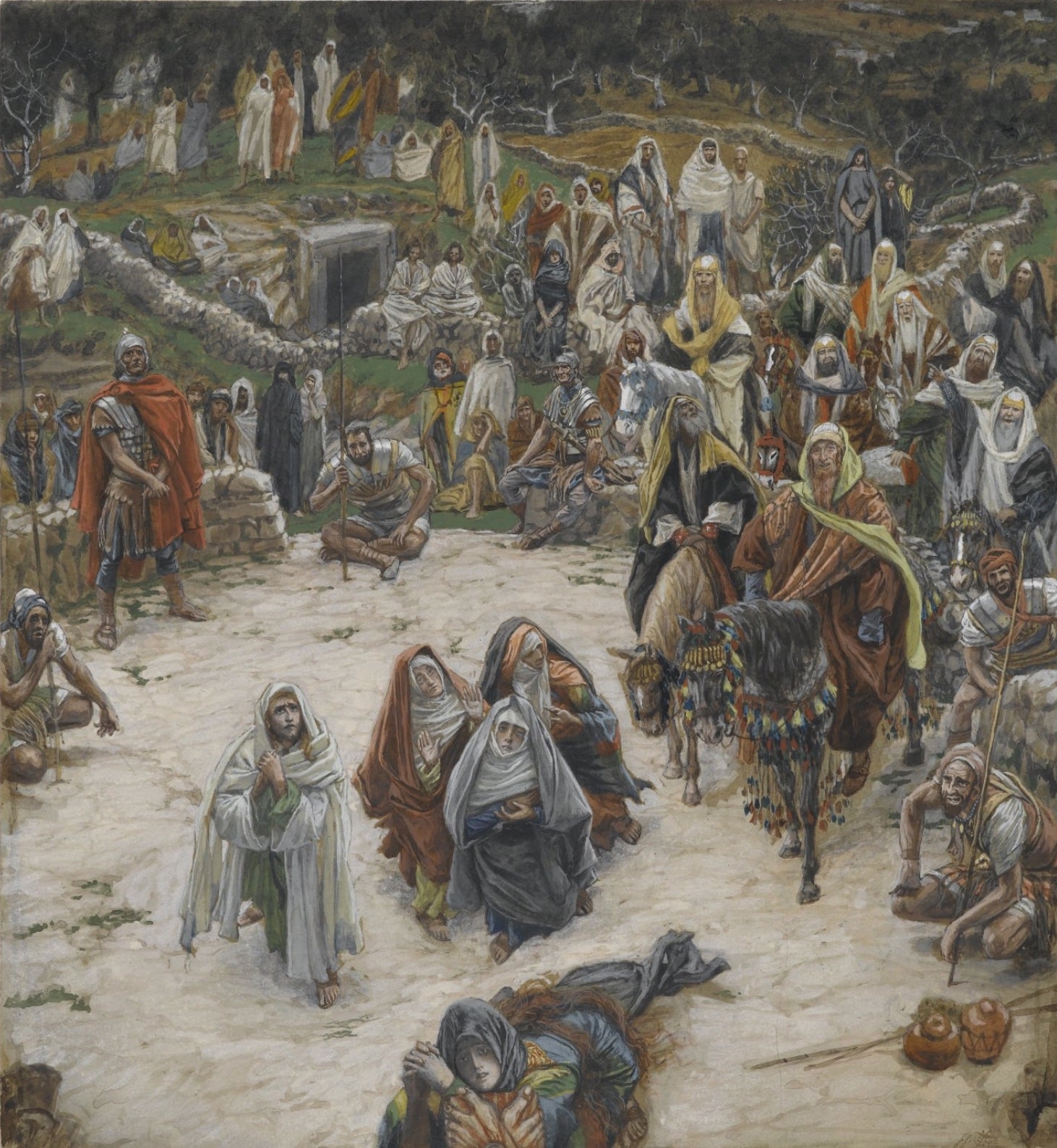





Fully appreciating the Catholic content in the art of the Frenchman James Tissot (1836 –1902) may be a matter of faith.
His 365 illustrations showing the Life of Christ won gratitude from pious viewers for their didactic, completist virtues. When first exhibited together in Paris, according to The Magazine of Art in 1895, “women were seen to sink down on their knees as though impelled by a superior force, and literally crawl round the rooms in this position, as though in adoration”.
Yet equally intense was the negative response from friends and colleagues, some motivated by envy at Tissot’s commercial success from reproduction and exhibition rights. They had delighted in Tissot’s previous incarnation as a high-society bon vivant, producing paintings of elegant ladies lolling about Paris in diverse graceful poses.