

Few matters have divided British Catholics in such complex and interesting ways as the EU referendum. It is not surprising, of course, that the faithful should feel a special connection to the post-war European project. Catholics, after all, led efforts to promote unity as Berlin, Warsaw and London lay in ruins. The EU’s founding fathers – Konrad Adenauer, Alcide De Gasperi and Robert Schuman – were men of profound faith who strove to build a new European order based on the principles of Catholic social teaching. But a sizeable number of Catholics today believe that the EU long ago tore up what remained of its Catholic roots. They regard it as an aggressively secular force that seeks to undermine Catholic values from Lisbon to Lublin. Yet it’s simplistic to suggest that Catholics are merely divided over whether the EU is today a vehicle for Catholic social teaching or secular imperialism. There is another, seldom acknowledged element that makes the Catholic Brexit debate so highly charged: history. British Catholics retain the memory of horrific persecution, of accusations of loyalty to a “foreign power” (the pope) and of exclusion from the Establishment. These memories are present, in subtle ways, whenever Britain’s Catholics discuss the referendum. Alongside these distinctively Catholic issues, the faithful naturally share the concerns of fellow Britons about healthcare, education, the economy, security and democracy. The stakes are exceedingly high: the outcome will shape the future for generations of Britons as yet unborn. That is why we have devoted this week’s issue (as well as two other cover stories this year) to the vote on June 23. We recognise that, while it is not our place to advise readers how to vote, we have a responsibility to ensure that Catholics are as well informed as possible. We have therefore sought out the most prominent and eloquent Catholic proponents of both leaving and remaining. On the leave side, we have Jacob Rees-Mogg, Sir William Cash and Iain Duncan Smith. On the remain side are Lord Deben, Fr Ashley Beck and Thérèse Coffey. For good measure, the economist Philip Booth discusses the Catholic case for sitting on the fence. We understand that many readers will, by now, be suffering from referendum fatigue. Some will feel that neither side has conducted the debate in an especially high-minded way. They may object to the sly use of statistics, scaremongering and dog whistles. We hope this edition will serve as an antidote to these poisons, offering a serious, passionate and, above all, Catholic discussion of the most important political decision Britons have faced for decades.
1:00 PM
Catholics for and against
The Catholic Herald

5 min read



Already a subscriber? Sign in
5freearticles every month
Continue reading with a free account. No card needed.
- Five free articles every thirty days, on any device you sign in on
- The Catholic Herald newsletter, every morning
- Subscribe whenever you like for everything: every article and the magazine
Related articles
 Newsroom
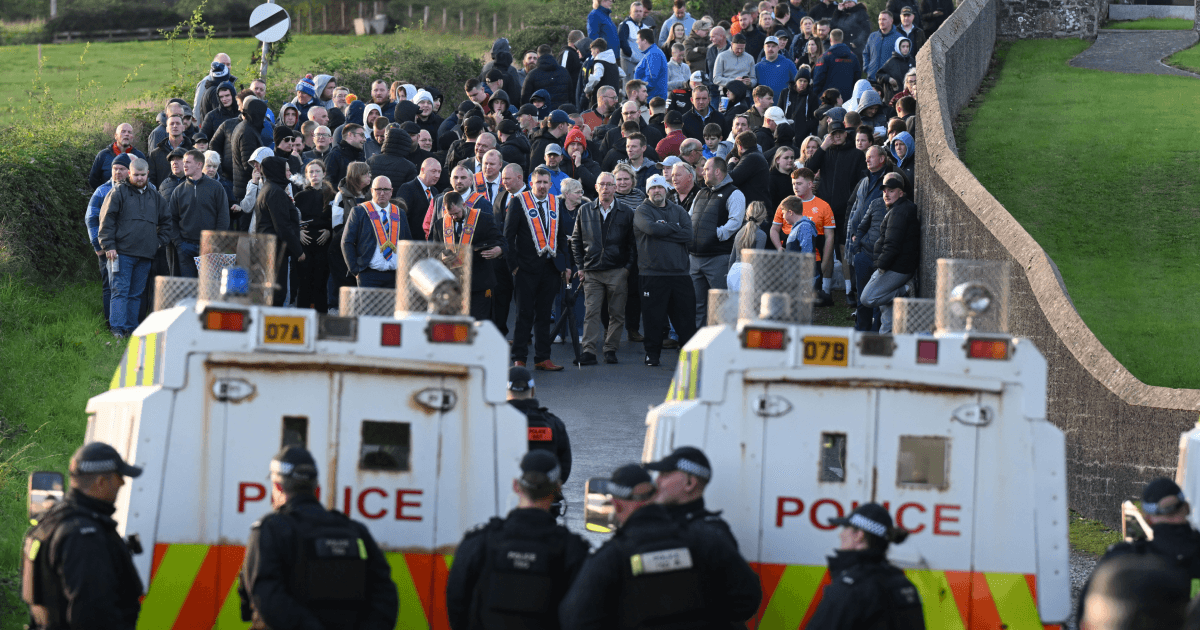
Church leaders urge Drumcree dialogue: ‘Too much is at stake’
The Catholic and Church of Ireland Archbishops of Armagh have urged a renewed commitment to peace and reconciliation amid the Drumcree stand-off
Corrie Douglas-Young Newsroom
Thousands of Irish children to join global Rosary campaign
Corrie Douglas-Young Newsroom
TikTok priest urges young people to stand with persecuted Christians
Nathalie Raffray Newsroom
Baby born at 25 weeks reunites with neonatologist two years after leaving hospital
The Catholic Herald Newsroom
Joe Biden honoured by Planned Parenthood after defending abortion rights
Christine Rousselle
subscribe to the catholic herald today
Our best content is exclusively available to our subscribers. Subscribe today and gain instant access to expert analysis, in-depth articles, and thought-provoking insights—anytime, anywhere. Don’t miss out on the conversations that matter most.
Subscribe



