




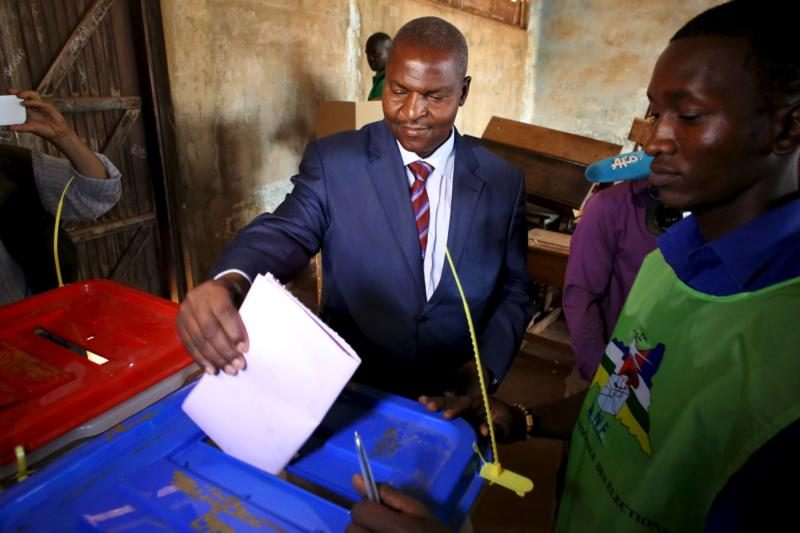
The head of the Central African Republic bishops' conference said the country's new president has a "real chance" of restoring peace and paid tribute to Pope Francis for helping create conditions for stable elections. "We couldn't have found a better person to take the bull by the horns and begin repairing our country's fractures," said Archbishop Dieudonne Nzapalainga of Bangui. "He's someone who truly knows the country and is served with good advisers. This election has encouraged us to place hope in the future and put aside our past of firearms, machetes and terrible destruction." In mid-February, former Prime Minister Faustin-Archange Touadera won 63 percent of votes in the mid-February ballot. He will be installed as president on March 30. In a February 29 interview with Catholic News Service, Archbishop Nzapalainga said healing divisions and overcoming mistrust needed someone with a "clear understanding" of the Central Africa Republic and the will to act decisively. "I believe the new president will gather our people from east and west, north and south, reconciling them with themselves and others," the archbishop said. "I also believe he'll make justice possible for the victims of violence, enabling us to stand upright again and work together." Archbishop Nzapalainga also said the election's peaceful outcome owed much to a November visit by Pope Francis. "Since the Holy Father's visit, we've felt a wind of change blowing through our country -- there's been a total turnaround," Archbishop Nzapalainga added. "He came as a messenger of mercy and urged reconciliation in our communities. This summons to peace and forgiveness was heard by former enemies and combatants and has now become something real, giving the new president a real chance for peace." Catholics make up a third of the 4.4 million inhabitants of the Central African Republic, where a rebel Seleka movement, led by Arab-speaking Islamists, suspended the constitution in March 2013 after ousting President Francois Bozize. French and African peacekeepers drove back the rebels in January 2014. The Bangui-born Touadera, a former mathematics lecturer, served as prime minister in 2008-2013 under Bozize. The election to replace interim President Catherine Samba-Panza was repeatedly postponed because of violence in the country, one of Africa's poorest. One-fifth of the population has fled to escape violence between mainly Muslim and Christian militias. In his interview, Archbishop Nzapalainga said he believed the Pope's two-day visit, which included interfaith prayers in Bangui's central mosque, had been a "decisive, catalyzing moment" by enabling divided communities to come together. "Muslims and Protestants helped make this pilgrimage a success, by gathering around the pope," the archbishop told CNS. "The bell of dialogue and negotiation has since been ringing loud and clear, along with the bell of compromise, consensus and development. This is what we all voted for." Bishop Juan Aguirre Munos of Bangassou told the Vatican-based Fides news agency on February 25 that he also believed Touadera's election had enabled Central Africans to see "light at the end of the tunnel" and created a real prospect of leading the country "out of the abyss." However, he added that his diocese was now threatened by guerrilla groups from the Uganda-based Lord's Resistance Army, who had "plundered villages, destroyed barns and forced young people to carry stolen goods," while abducting local inhabitants and treating them "like animals."
2:04 PM
Central African archbishop: President has 'real chance' of restoring peace
Archbishop Dieudonne Nzapalainga praised Pope Francis for helping create conditions for stable elections
Catholic News Service

3 min read



Already a subscriber? Sign in
5freearticles every month
Continue reading with a free account. No card needed.
- Five free articles every thirty days, on any device you sign in on
- The Catholic Herald newsletter, every morning
- Subscribe whenever you like for everything: every article and the magazine
Related articles
 Newsroom
Church leaders urge Drumcree dialogue: ‘Too much is at stake’
The Catholic and Church of Ireland Archbishops of Armagh have urged a renewed commitment to peace and reconciliation amid the Drumcree stand-off
Corrie Douglas-Young Newsroom
Thousands of Irish children to join global Rosary campaign
Corrie Douglas-Young Newsroom
TikTok priest urges young people to stand with persecuted Christians
Nathalie Raffray Newsroom
Baby born at 25 weeks reunites with neonatologist two years after leaving hospital
The Catholic Herald Newsroom
Joe Biden honoured by Planned Parenthood after defending abortion rights
Christine Rousselle
subscribe to the catholic herald today
Our best content is exclusively available to our subscribers. Subscribe today and gain instant access to expert analysis, in-depth articles, and thought-provoking insights—anytime, anywhere. Don’t miss out on the conversations that matter most.
Subscribe



