
The unwilling poster figure of the 2017 white nationalist rally in Charlottesville has publicly recounted his conversion to Catholicism after abandoning the extremist politics that first brought him notoriety.
Writing in an opinion piece for the US journal Crisis Magazine, Peter Cytanovic reflects on his past as one of the most recognisable faces of the “Unite the Right” rally held in Charlottesville, Virginia, in August 2017. A photograph of him, taken while he was shouting during a torch-lit march, circulated widely in the international media and became, in his words, “part of the visual shorthand for white supremacy in contemporary America”.
Cytanovic was 20 at the time the image was captured. He is now 29 and a doctoral candidate in politics at the Catholic University of America, where he studies the political philosophy of labour.
“I invite the reader to Google my name,” he begins. “There is a strong possibility that you have encountered my photograph at some point, as it has become part of the visual shorthand for white supremacy in contemporary America.”
“Despite the passage of time,” he writes, “many continue to see me only through that image.” For that reason, he says, “I have decided it is finally time to tell my conversion story: how I became Catholic and how I found joy after the despair. My name is Lazarus, and this is the story of my journey to Christ and rebirth.”
Cytanovic describes his decision to attend the rally as “not a single, isolated act; rather, it was the culmination of years of poor choices”. Raised in a financially strained but loving home, he says he sensed injustice in the poverty around him but “did not have the language or moral formation to articulate what made it unjust”. He was not religious. “Both my parents were born Catholic but left the Faith,” he writes. “I was a ‘none’ who was culturally Christian as a vague abstraction.”
In the summer of 2017 he joined Identity Evropa, an identitarian movement active in the United States at the time. He says that even during his political radicalisation he would sometimes pass a cathedral near campus and admire its beauty, and on occasion attend Mass when invited by friends in a pro-life group, though without belief.
The Charlottesville rally marked what he describes as a turning point. The photograph taken of him during the march captured, he writes, years of anger “in a single frame”.
In the aftermath, as public condemnation mounted, he says he came to recognise what he describes as a persistent inner call. “As the weight of those consequences fell upon me, I finally understood what that quiet voice had been. It was Christ, calling me to Him.” That autumn he entered the Rite of Christian Initiation of Adults. “After the rally, I realised that unless I changed course, I would destroy myself.”
He was received into the Catholic Church at Easter 2018. “When I was received into the Church the following Easter, I believed the teachings of Catholicism to be true,” he writes. “What I did not yet know was how to live as a Catholic in my daily life.” The habits of anger and resentment did not disappear overnight.
Determined to begin again, he enrolled at the London School of Economics. It was there, he says, that he first encountered G K Chesterton. “Chesterton became my guide out of the racial zeal and blind rage that had once dominated my life,” he writes. “His thought provided the foundation on which I learned to live joyfully in Christ after Charlottesville.” Immersing himself in Heretics, Orthodoxy and The Everlasting Man, he found in Chesterton’s work what he describes as “small but real reasons to find joy in ordinary life”.
Now a doctoral candidate in politics at the Catholic University of America, he says his studies in Catholic social thought have reshaped the desire for justice that once drew him into racial politics. On his website he addresses his past directly: “Yes, I am the person known as the ‘angry torch guy’ from the 2017 Unite the Right rally in Charlottesville, Virginia. But that image captures only a moment in a past I have left behind. My name is Lazarus, and I am alive.”
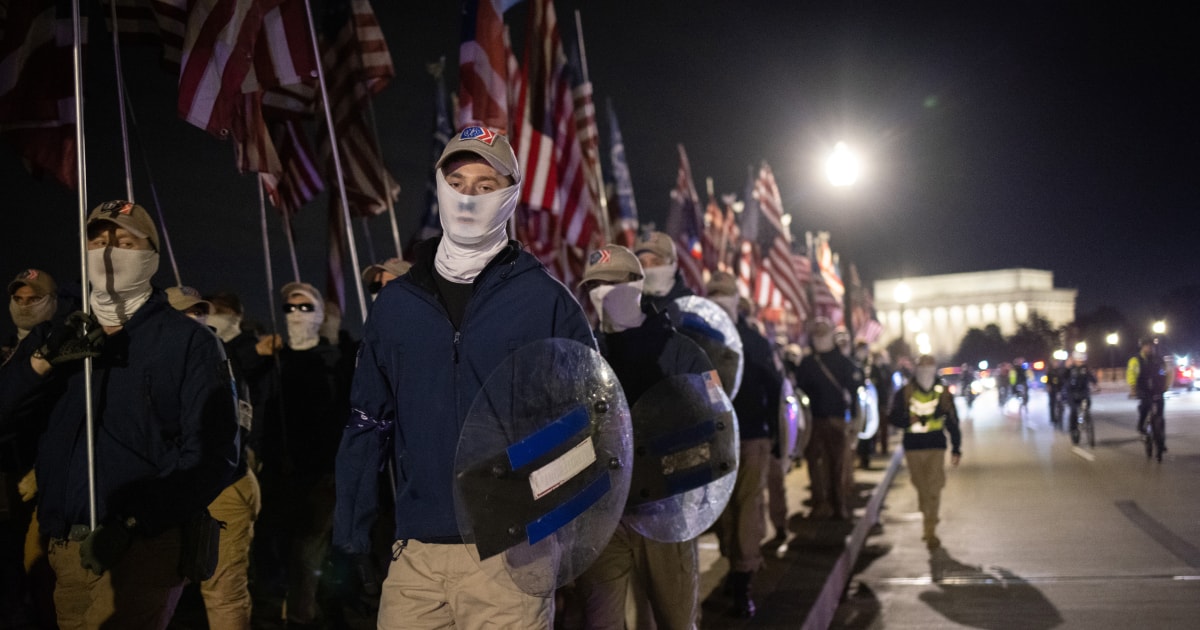
The Unite the Right rally was a far-right gathering held in August 2017 in Charlottesville, Virginia, organised primarily to protest the planned removal of a statue of Confederate General Robert E Lee. The demonstration drew white supremacists, neo-Nazis, Ku Klux Klan members and other extremist groups from across the United States, who marched with torches through the University of Virginia campus chanting nationalist and racist slogans. Clashes quickly erupted between rally participants and counter-protesters, leading local authorities to declare an unlawful assembly. Violence escalated the following day when a car was deliberately driven into a crowd of counter-demonstrators, killing 32-year-old Heather Heyer and injuring dozens more.