March 25, 2026

Chartres shows why Mary matters

Clement Harrold
More
Related
Min read
share

Last summer I had the privilege of participating in the annual traditional Catholic pilgrimage from Paris to Chartres. The walking route covers some 60 miles over three days, and we arrived at Chartres Cathedral with tears, smiles and more than a few blisters.

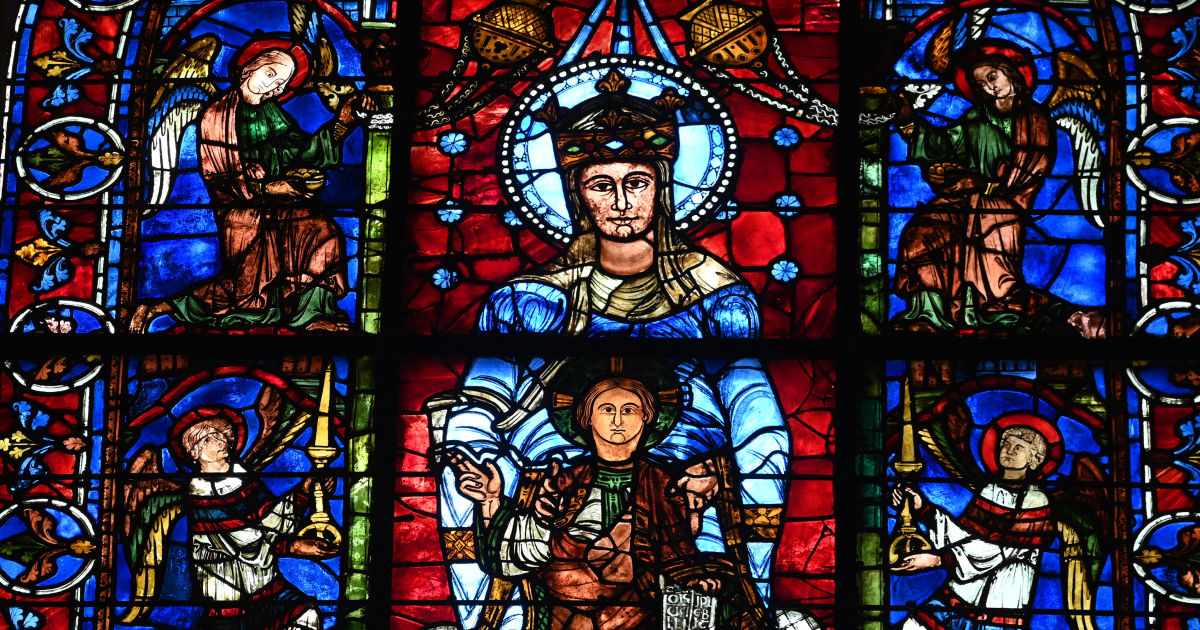
Newcomers like myself soon discover that Chartres Cathedral is perhaps the most magnificent in all Christendom. The soaring arches, incongruous spires and radiant stained-glass windows combine to form an architectural and artistic marvel. Upon entering the nave of this sacred space, one cannot help but wonder what kind of civilisation it must have taken to construct a building such as this with nothing but hand tools, grit and prayer.

It was a civilisation, to be sure, which cherished Our Lady with a passion we can scarcely relate to. As Henry Adams famously observed in his essay ‘The Dynamo and the Virgin’: ‘All the steam in the world could not, like the Virgin, build Chartres.’ It was love of Mary, not the machinery of men, which gave us this Gothic masterpiece.

Last summer also afforded me the chance to visit what might justly be called the most famous structure of the most famous empire of the ancient world: the Colosseum. Who can fail to be awed by the austere grandeur of this massive limestone amphitheatre when viewed up close? Like Chartres Cathedral, it is an engineering marvel impressive almost beyond words. But there the similarities end.

The Colosseum, the architectural paragon of pagan civilisation, was built by Jewish slaves to embody a culture that idolised the powerful at the expense of the weak. As they gazed on the blood-stained sands of the arena, the Roman citizenry learned that some human beings are worth less than others, and they saw no problem with a system in which the lowest members of society were forced to slaughter one another for the entertainment of the masses.

Compare this to Chartres and the contrast is stark. In this cathedral, the crowning achievement of Christian civilisation, we find an edifice built not by slaves but by lovers, and dedicated not to the lust for power but to what William Lecky called ‘the sanctity of weakness’. Though not a practising Christian, Lecky readily grasped the implications of authentic Marian devotion for our understanding of the dignity of every human being: ‘No longer the slave or the toy of man, no longer associated only with ideas of degradation and of sensuality, woman rose in the person of the Virgin Mother into a new sphere, and became the object of a reverential homage of which antiquity had no concept.’

The builders of Chartres lived by this reverential homage, and they inscribed it in glass and stone. In so doing, they perceived what our own post-Christian culture has begun to forget: that the creator of the universe is a God who ‘has put down the mighty from their thrones, and exalted those of low degree’ (Luke 1:52). He is the God who chose a humble peasant girl from a backwater Roman province to be His own mother, the highest honour of our race. Nothing could be more un-pagan than this.

Today we face a renewed onslaught of pagan values. Children are sacrificed on the altar of convenience. The elderly are told, tacitly or not so tacitly, that their lives are a burden on those around them. The masses are taught from a young age to adopt the nihilistic philosophy of our age, and the majority of our fellow citizens soon find themselves enslaved in a toxic cycle of addiction, mental illness and profound loneliness.

Meanwhile, our societal attitude towards women is as contradictory as ever. We say we are interested in women’s rights, yet we have built the most pornified culture in history. We say that modern feminism has improved women’s lives for the better, yet studies show that women today are less happy than they were in the 1970s. We say that womanhood is something to be celebrated, even as we have systematically sought to abolish femininity and build an economy and entertainment industry that treats women as identical to men. Despite all its bluster, our society spectacularly fails to protect and celebrate women as women.

None of this is surprising. Already at the dawn of salvation history, God warned that there would be enmity between the serpent and the woman (see Gen 3:15). And if Catholics are correct that the woman of Revelation 12 can be identified with Mary – and I see no good reason to rule out the possibility – then we should fully expect that the Devil reserves a special hatred for Our Lady and for those she most strongly identifies with: women, children, the vulnerable and the oppressed.

It is a sobering picture, but not a hopeless one. For the Virgin is mightier than the serpent, and we must never forget that it was the Virgin whose loving intervention brought about Our Lord’s first miracle. Why should St John bother to record this detail? He does so to teach us that her maternal mediation is powerful, and it extends even to those parts of our lives that, like a shortage of wine at a wedding, we might be tempted to dismiss as too insignificant or trivial to merit God’s attention.

Now more than ever, our culture needs Mary. ‘In the early twelfth century,’ wrote the celebrated historian Kenneth Clark, ‘the Virgin had been the supreme protectress of civilisation. She had taught a race of tough and ruthless barbarians the virtues of tenderness and compassion.’ As our own civilisation grows increasingly atomised, violent and hedonistic, may we rediscover that vibrant spirit of Marian devotion which built Chartres, gave glory to God and softened the hearts of men.

Last summer I had the privilege of participating in the annual traditional Catholic pilgrimage from Paris to Chartres. The walking route covers some 60 miles over three days, and we arrived at Chartres Cathedral with tears, smiles and more than a few blisters.

Newcomers like myself soon discover that Chartres Cathedral is perhaps the most magnificent in all Christendom. The soaring arches, incongruous spires and radiant stained-glass windows combine to form an architectural and artistic marvel. Upon entering the nave of this sacred space, one cannot help but wonder what kind of civilisation it must have taken to construct a building such as this with nothing but hand tools, grit and prayer.

It was a civilisation, to be sure, which cherished Our Lady with a passion we can scarcely relate to. As Henry Adams famously observed in his essay ‘The Dynamo and the Virgin’: ‘All the steam in the world could not, like the Virgin, build Chartres.’ It was love of Mary, not the machinery of men, which gave us this Gothic masterpiece.

Last summer also afforded me the chance to visit what might justly be called the most famous structure of the most famous empire of the ancient world: the Colosseum. Who can fail to be awed by the austere grandeur of this massive limestone amphitheatre when viewed up close? Like Chartres Cathedral, it is an engineering marvel impressive almost beyond words. But there the similarities end.

The Colosseum, the architectural paragon of pagan civilisation, was built by Jewish slaves to embody a culture that idolised the powerful at the expense of the weak. As they gazed on the blood-stained sands of the arena, the Roman citizenry learned that some human beings are worth less than others, and they saw no problem with a system in which the lowest members of society were forced to slaughter one another for the entertainment of the masses.

Compare this to Chartres and the contrast is stark. In this cathedral, the crowning achievement of Christian civilisation, we find an edifice built not by slaves but by lovers, and dedicated not to the lust for power but to what William Lecky called ‘the sanctity of weakness’. Though not a practising Christian, Lecky readily grasped the implications of authentic Marian devotion for our understanding of the dignity of every human being: ‘No longer the slave or the toy of man, no longer associated only with ideas of degradation and of sensuality, woman rose in the person of the Virgin Mother into a new sphere, and became the object of a reverential homage of which antiquity had no concept.’

The builders of Chartres lived by this reverential homage, and they inscribed it in glass and stone. In so doing, they perceived what our own post-Christian culture has begun to forget: that the creator of the universe is a God who ‘has put down the mighty from their thrones, and exalted those of low degree’ (Luke 1:52). He is the God who chose a humble peasant girl from a backwater Roman province to be His own mother, the highest honour of our race. Nothing could be more un-pagan than this.

Today we face a renewed onslaught of pagan values. Children are sacrificed on the altar of convenience. The elderly are told, tacitly or not so tacitly, that their lives are a burden on those around them. The masses are taught from a young age to adopt the nihilistic philosophy of our age, and the majority of our fellow citizens soon find themselves enslaved in a toxic cycle of addiction, mental illness and profound loneliness.

Meanwhile, our societal attitude towards women is as contradictory as ever. We say we are interested in women’s rights, yet we have built the most pornified culture in history. We say that modern feminism has improved women’s lives for the better, yet studies show that women today are less happy than they were in the 1970s. We say that womanhood is something to be celebrated, even as we have systematically sought to abolish femininity and build an economy and entertainment industry that treats women as identical to men. Despite all its bluster, our society spectacularly fails to protect and celebrate women as women.

None of this is surprising. Already at the dawn of salvation history, God warned that there would be enmity between the serpent and the woman (see Gen 3:15). And if Catholics are correct that the woman of Revelation 12 can be identified with Mary – and I see no good reason to rule out the possibility – then we should fully expect that the Devil reserves a special hatred for Our Lady and for those she most strongly identifies with: women, children, the vulnerable and the oppressed.

It is a sobering picture, but not a hopeless one. For the Virgin is mightier than the serpent, and we must never forget that it was the Virgin whose loving intervention brought about Our Lord’s first miracle. Why should St John bother to record this detail? He does so to teach us that her maternal mediation is powerful, and it extends even to those parts of our lives that, like a shortage of wine at a wedding, we might be tempted to dismiss as too insignificant or trivial to merit God’s attention.

Now more than ever, our culture needs Mary. ‘In the early twelfth century,’ wrote the celebrated historian Kenneth Clark, ‘the Virgin had been the supreme protectress of civilisation. She had taught a race of tough and ruthless barbarians the virtues of tenderness and compassion.’ As our own civilisation grows increasingly atomised, violent and hedonistic, may we rediscover that vibrant spirit of Marian devotion which built Chartres, gave glory to God and softened the hearts of men.

subscribe to
the catholic herald

Continue reading your article with a subscription.
Read 5 articles with our free plan.
Subscribe

subscribe to the catholic herald today

Our best content is exclusively available to our subscribers. Subscribe today and gain instant access to expert analysis, in-depth articles, and thought-provoking insights—anytime, anywhere. Don’t miss out on the conversations that matter most.
Subscribe