



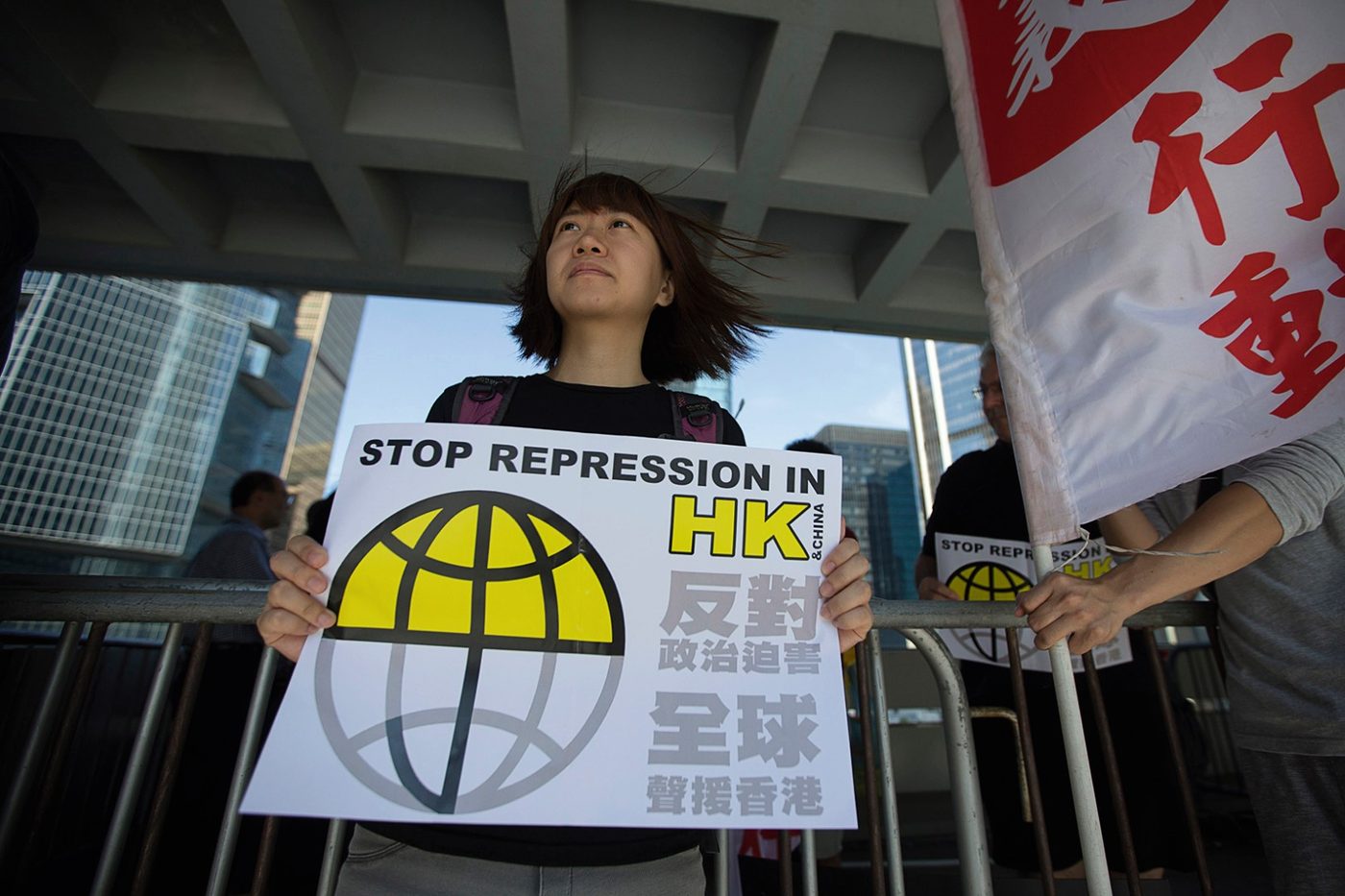
The Foreign Office is to hold “urgent” talks with China after a Catholic human rights activist was denied entry to Hong Kong. Benedict Rogers, a long-standing critic of Beijing and a writer for the Catholic Herald, was turned away while attempting to visit friends in the city’s pro-democracy movement. The incident prompted protests among campaigners in Hong Kong and a terse diplomatic exchange between Britain and China. Foreign Secretary Boris Johnson told the BBC that he was “very concerned” that a British national had been denied entry and said he would seek an “urgent explanation” from Hong Kong and Beijing authorities. China’s foreign ministry accused Mr Rogers of trying to interfere in Hong Kong’s affairs. Mr Rogers, co-founder of the Conservative Party’s Human Rights Commission, said that the idea was “absurd”. “If having lunch and dinner, tea and coffee with people privately is meddling, then I suppose I plead guilty to that,” he told the Hong Kong Free Press. “But that’s a strange definition of meddling.” Mr Rogers said he had been warned he might be denied entry by an MP acting as an intermediary for the Chinese embassy. He asked the MP to assure the embassy he would not speak to the media or visit human rights’ activists in prison as he originally intended. Writing for the Guardian, Mr Rogers said the incident showed that the idea of “one country, two systems” was “dying rapidly, being rendered limb from limb with accelerating speed”. “The world,” he said, “must wake up to this.” Last year Mr Rogers wrote an article for the Herald about China’s “evil secret” – the forced harvesting of political prisoners’ organs. In another piece he analysed talks between the Holy See and Beijing and urged Vatican officials to heed critics’ warnings.
1:00 PM
China’s barring of Catholic activist provokes furore
Staff Reporter

2 min read



Already a subscriber? Sign in
5freearticles every month
Continue reading with a free account. No card needed.
- Five free articles every thirty days, on any device you sign in on
- The Catholic Herald newsletter, every morning
- Subscribe whenever you like for everything: every article and the magazine
Related articles
 Newsroom
Church leaders urge Drumcree dialogue: ‘Too much is at stake’
The Catholic and Church of Ireland Archbishops of Armagh have urged a renewed commitment to peace and reconciliation amid the Drumcree stand-off
Corrie Douglas-Young Newsroom
Thousands of Irish children to join global Rosary campaign
Corrie Douglas-Young Newsroom
TikTok priest urges young people to stand with persecuted Christians
Nathalie Raffray Newsroom
Baby born at 25 weeks reunites with neonatologist two years after leaving hospital
The Catholic Herald Newsroom
Joe Biden honoured by Planned Parenthood after defending abortion rights
Christine Rousselle
subscribe to the catholic herald today
Our best content is exclusively available to our subscribers. Subscribe today and gain instant access to expert analysis, in-depth articles, and thought-provoking insights—anytime, anywhere. Don’t miss out on the conversations that matter most.
Subscribe



