



December 24, 2025
December 24, 2025

Christmas in Gaza

Min read
share

Christmas will arrive in Gaza this year under conditions that barely resemble peace, despite the existence of a ceasefire and widespread claims that the worst of the war has passed. Testimony from the Christian community on the ground suggests that, while active fighting has eased, the humanitarian and psychological realities facing civilians remain acute, with no clear horizon for resolution.

Father Gabriel Romanelli, Priest of the Holy Family parish, Gaza’s only Catholic church, has described the current situation as only marginally improved compared to the height of the conflict. The situation is still very serious and delicate. He highlights the widening gap between diplomatic language and lived reality. Although talk of an end to the war circulates internationally, neither war nor peace has yet definitively arrived, leaving the population suspended in uncertainty.
This sense of limbo is central to understanding Gaza’s present condition. The ceasefire has reduced immediate violence, but it has not restored the basic infrastructure required for normal civilian life. Electricity has effectively been absent for two years, with only limited generator or solar power available, mostly inaccessible to the wider population. Water distribution remains sporadic and insufficient, with residents reportedly waiting hours to collect minimal quantities for daily use.

The collapse of infrastructure is further compounded by the winter conditions. Falling temperatures and heavy rainfall have turned large areas into a mud-filled mess contaminated with human waste, heightening the risk of disease in an already desperate environment. Essential systems such as electricity, water and healthcare are  operating well beyond capacity.

Medical shortages illustrate how far Gaza remains from recovery. Medications for chronic conditions such as diabetes and hypertension are scarce. At the same time, widespread displacement has left large numbers of people without adequate shelter or winter clothing.

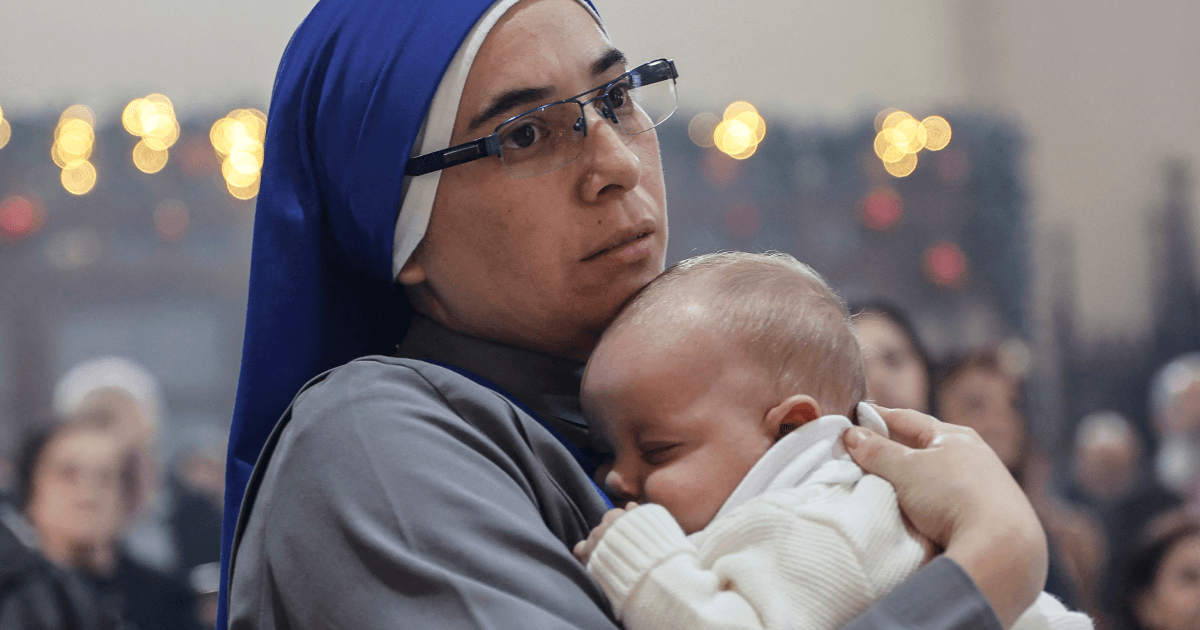
Against this bleak backdrop, Christian institutions have assumed an outsized humanitarian role. Supported by the Latin Patriarchate of Jerusalem, the Holy Family parish has assisted tens of thousands of families since the war began, providing food, shelter and basic support. Yet the scale of need vastly exceeds what church networks can provide, even as they remain among the few truly functioning channels of aid on the ground.

The parish compound itself has become a place of refuge, housing more than 400 people, most of them Christians. Daily religious life continues through Mass, adoration, and devotions, conducted in Arabic, offering some stability amid societal collapse. "We constantly try to light a flame of hope," says Fr. Romanelli.

The Church’s presence does not claim to solve Gaza’s crisis, but to prevent despair from becoming total while political efforts remain in deadlock.

This raises uncomfortable questions for international observers. The persistence of extreme deprivation despite a ceasefire suggests that peace cannot be measured solely by the absence of active combat. Without reconstruction, restored services, and a credible political pathway, ceasefires risk becoming prolonged pauses rather than transitions to stability.

As Christmas approaches, the situation in Gaza highlights a recurring pattern in modern conflicts: declarations of progress that fail to translate into meaningful change for ordinary civilians. True peace is not present until people can once again live with dignity and genuine security.

For Gaza’s small Christian community, Christmas will be marked by modest celebration. Their testimony reminds us that humanitarian crises do not end when headlines move on, and that peace, if it is to be more than a platitude, must be measured by the restoration of ordinary life.

This reporting was supported by Aid to the Church in Need, which continues to assist Christian communities in Gaza and across the Holy Land through humanitarian and pastoral aid.

Christmas will arrive in Gaza this year under conditions that barely resemble peace, despite the existence of a ceasefire and widespread claims that the worst of the war has passed. Testimony from the Christian community on the ground suggests that, while active fighting has eased, the humanitarian and psychological realities facing civilians remain acute, with no clear horizon for resolution.

Father Gabriel Romanelli, Priest of the Holy Family parish, Gaza’s only Catholic church, has described the current situation as only marginally improved compared to the height of the conflict. The situation is still very serious and delicate. He highlights the widening gap between diplomatic language and lived reality. Although talk of an end to the war circulates internationally, neither war nor peace has yet definitively arrived, leaving the population suspended in uncertainty.

This sense of limbo is central to understanding Gaza’s present condition. The ceasefire has reduced immediate violence, but it has not restored the basic infrastructure required for normal civilian life. Electricity has effectively been absent for two years, with only limited generator or solar power available, mostly inaccessible to the wider population. Water distribution remains sporadic and insufficient, with residents reportedly waiting hours to collect minimal quantities for daily use.

The collapse of infrastructure is further compounded by the winter conditions. Falling temperatures and heavy rainfall have turned large areas into a mud-filled mess contaminated with human waste, heightening the risk of disease in an already desperate environment. Essential systems such as electricity, water and healthcare are  operating well beyond capacity.

Medical shortages illustrate how far Gaza remains from recovery. Medications for chronic conditions such as diabetes and hypertension are scarce. At the same time, widespread displacement has left large numbers of people without adequate shelter or winter clothing.

Against this bleak backdrop, Christian institutions have assumed an outsized humanitarian role. Supported by the Latin Patriarchate of Jerusalem, the Holy Family parish has assisted tens of thousands of families since the war began, providing food, shelter and basic support. Yet the scale of need vastly exceeds what church networks can provide, even as they remain among the few truly functioning channels of aid on the ground.

The parish compound itself has become a place of refuge, housing more than 400 people, most of them Christians. Daily religious life continues through Mass, adoration, and devotions, conducted in Arabic, offering some stability amid societal collapse. "We constantly try to light a flame of hope," says Fr. Romanelli.

The Church’s presence does not claim to solve Gaza’s crisis, but to prevent despair from becoming total while political efforts remain in deadlock.

This raises uncomfortable questions for international observers. The persistence of extreme deprivation despite a ceasefire suggests that peace cannot be measured solely by the absence of active combat. Without reconstruction, restored services, and a credible political pathway, ceasefires risk becoming prolonged pauses rather than transitions to stability.

As Christmas approaches, the situation in Gaza highlights a recurring pattern in modern conflicts: declarations of progress that fail to translate into meaningful change for ordinary civilians. True peace is not present until people can once again live with dignity and genuine security.

For Gaza’s small Christian community, Christmas will be marked by modest celebration. Their testimony reminds us that humanitarian crises do not end when headlines move on, and that peace, if it is to be more than a platitude, must be measured by the restoration of ordinary life.

This reporting was supported by Aid to the Church in Need, which continues to assist Christian communities in Gaza and across the Holy Land through humanitarian and pastoral aid.

share

subscribe to the catholic herald today

Our best content is exclusively available to our subscribers. Subscribe today and gain instant access to expert analysis, in-depth articles, and thought-provoking insights—anytime, anywhere. Don’t miss out on the conversations that matter most.
Subscribe