March 22, 2026

Church of the Holy Sepulchre closed amid regional escalation ahead of Holy Week

Thomas Edwards
More
Related
Min read
share

The Church of the Holy Sepulchre has closed its doors to the public. The 1,700-year-old church, built under the Roman Emperor Constantine and believed to be the site where Jesus rose from the dead, has been closed for weeks, with concerns now turning to whether it will be open for Holy Week.

The closure comes after Israel and the United States began military operations against Iran on February 28, initiating Operation Epic Fury, with the Iranian regime responding with military action against Israel and across the wider Middle East.

Liturgies have been paused in the church, where the Greek, Armenian, Coptic and Syriac Orthodox Churches share access with Catholics, who are represented by the Franciscan order. The sanctuary normally hosts a near constant cycle of worship under a historic and complex arrangement between the Churches known as the “Status Quo”.

The closure of the church, especially at the behest of the state, is a rarity. In 2018, the various church leaders temporarily closed it in protest against proposed Israeli tax policies. In 1990 it also closed when its large wooden doors were fastened for a day in symbolic objection to the presence of Jewish settlers who had moved into a nearby Christian hospice.

However, to be closed indefinitely in the run-up to Holy Week marks a significant moment in the history of one of the holiest sites of Christian worship. Traditionally, Holy Week celebrations begin on Palm Sunday with a large procession from the Mount of Olives into the Old City, led by the Latin Patriarch, currently Cardinal Pierbattista Pizzaballa OFM, and ending near the church.

On Holy Thursday, Catholics would normally celebrate the Mass of the Lord’s Supper, including the washing of the feet, and on Good Friday the Via Dolorosa procession, a pilgrimage route of about 600 metres in the Old City of Jerusalem that commemorates Jesus’s journey to the Crucifixion, concludes at the church, where Catholics venerate the Cross at Golgotha.

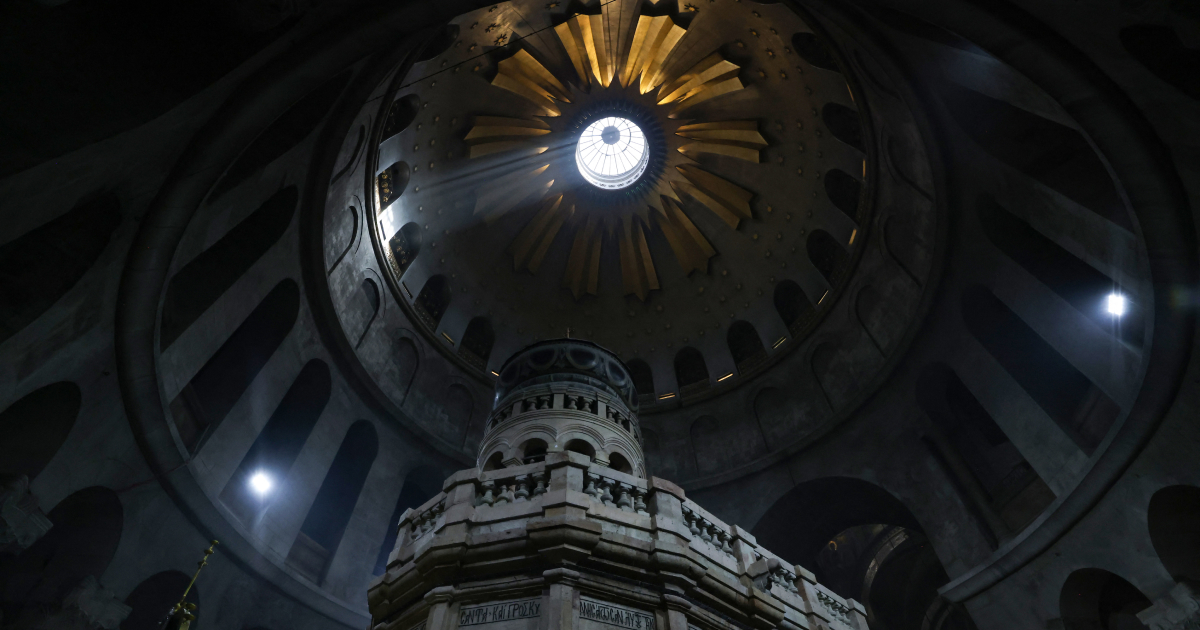
The church being closed on Holy Saturday presents a particular problem for the Greek Orthodox, who would normally celebrate the Holy Fire ceremony. During it, the Greek patriarch enters the Holy Edicule, a shrine that protects the traditional site of Jesus Christ’s tomb. He then emerges with two lit candles, from which the fire is passed throughout the Orthodox world, with special flights arranged to transport it.

The closure of the church forms part of wider restrictions on religious sites in Israel, which is home to sacred buildings for Christians, Jews and Muslims. A statement from the head of Israel’s Civil Administration said: “All holy sites in the Old City of Jerusalem, including the Western Wall, the Temple Mount and the Church of the Holy Sepulchre, will remain closed … for security reasons in light of the current tensions in the region.” 
The Church of the Holy Sepulchre has closed its doors to the public. The 1,700-year-old church, built under the Roman Emperor Constantine and believed to be the site where Jesus rose from the dead, has been closed for weeks, with concerns now turning to whether it will be open for Holy Week.

The closure comes after Israel and the United States began military operations against Iran on February 28, initiating Operation Epic Fury, with the Iranian regime responding with military action against Israel and across the wider Middle East.

Liturgies have been paused in the church, where the Greek, Armenian, Coptic and Syriac Orthodox Churches share access with Catholics, who are represented by the Franciscan order. The sanctuary normally hosts a near constant cycle of worship under a historic and complex arrangement between the Churches known as the “Status Quo”.

The closure of the church, especially at the behest of the state, is a rarity. In 2018, the various church leaders temporarily closed it in protest against proposed Israeli tax policies. In 1990 it also closed when its large wooden doors were fastened for a day in symbolic objection to the presence of Jewish settlers who had moved into a nearby Christian hospice.

However, to be closed indefinitely in the run-up to Holy Week marks a significant moment in the history of one of the holiest sites of Christian worship. Traditionally, Holy Week celebrations begin on Palm Sunday with a large procession from the Mount of Olives into the Old City, led by the Latin Patriarch, currently Cardinal Pierbattista Pizzaballa OFM, and ending near the church.

On Holy Thursday, Catholics would normally celebrate the Mass of the Lord’s Supper, including the washing of the feet, and on Good Friday the Via Dolorosa procession, a pilgrimage route of about 600 metres in the Old City of Jerusalem that commemorates Jesus’s journey to the Crucifixion, concludes at the church, where Catholics venerate the Cross at Golgotha.

The church being closed on Holy Saturday presents a particular problem for the Greek Orthodox, who would normally celebrate the Holy Fire ceremony. During it, the Greek patriarch enters the Holy Edicule, a shrine that protects the traditional site of Jesus Christ’s tomb. He then emerges with two lit candles, from which the fire is passed throughout the Orthodox world, with special flights arranged to transport it.

The closure of the church forms part of wider restrictions on religious sites in Israel, which is home to sacred buildings for Christians, Jews and Muslims. A statement from the head of Israel’s Civil Administration said: “All holy sites in the Old City of Jerusalem, including the Western Wall, the Temple Mount and the Church of the Holy Sepulchre, will remain closed … for security reasons in light of the current tensions in the region.” 

subscribe to
the catholic herald

Continue reading your article with a subscription.
Read 5 articles with our free plan.
Subscribe

subscribe to the catholic herald today

Our best content is exclusively available to our subscribers. Subscribe today and gain instant access to expert analysis, in-depth articles, and thought-provoking insights—anytime, anywhere. Don’t miss out on the conversations that matter most.
Subscribe