December 5, 2025
December 5, 2025

Crib, crown and cross

Min read
share

As we filed out of our temporary chapel into the bright sunlight, we shook hands with each other. I looked at my companions with a new awareness.

The priest was Chinese. He had been assisted by a Malayan curate. Also present was an elderly couple of Indian descent. There was another Malay, and a house party comprising five Dutch people and two Americans. And then, of course, there was Mick from Eire, and myself, an Englishman.

That short and simple service had been attended by 14 of us, bound together by a common faith. Our roots lay in seven countries distributed over three continents.
Then I thought of all those other Catholics in the world — more than 500 million — who, regardless of differences in colour, language, and customs, would be crowding into churches all over the world on this very special day. Suddenly the world seemed a much smaller place, my family much nearer, and I knew that I was part of a much larger family. Yes. I shall always remember Christmas, 1964.

Advent takes on a special intensity as the last days before Christmas arrive. The titles given to the coming Messiah reflect the great yearning of the Church as she awaits the birth of the Saviour: “O Wisdom, who issued from the mouth of the Most High, reaching from end to end, ordering all things mightily yet tenderly, come to teach us the way of prudence.”

And the last one rings with the longed-for hope of salvation: “O Emmanuel, our King and our Law-giver, the expected of the nations and their Saviour, come to save us, our Lord and God.”

If Advent is really lived, and we enter into the Church’s liturgy as the season progresses, the full meaning of Christmas becomes part of everything we do.

It begins the great sequence — Advent, Christmas, Epiphany, Lent, Holy Week, Easter, Pentecost. It may be called the world of supernature, for the world of nature too has a similar sequence — spring, summer, autumn, winter.

Advent is a season of great beauty and appeal: a blend of joy and sadness, of hope and fear, of expectation and possession. We look back to Christ’s first coming, when He redeemed us; we look forward to Christ’s second coming, when that redemption will have full effect. Advent is the remote preparation for the greatest feast of the year — the paschal feast at Easter.

There are three advents or comings of Christ: the coming in history, the coming in mystery, and the coming in majesty.

The coming in history is Christ’s birth in the stable at Bethlehem; the coming in mystery is the coming of Christ into our hearts by His grace; the coming in majesty is at the end of time, when the Son of Man will come “in a cloud with His full power and majesty.”

The Church strongly urges us to prepare now “to abandon the ways of darkness and put on the armour of light.” We must long for His coming. It is the hungry whom the Lord fills with good things.

Advent is a time of joyful hope and eager yearning. The Church in these days recalls the intense yearning of the chosen people for their Deliverer. It is, therefore, a time of penance in preparation for Christmas.

Penance in itself is not, of course, attractive. But Pope John Paul, in a recent major document, brought out its great importance — especially today: “The true celebration of the great feast of Christmas must come, not from gifts and merriment, but from our minds and hearts.”

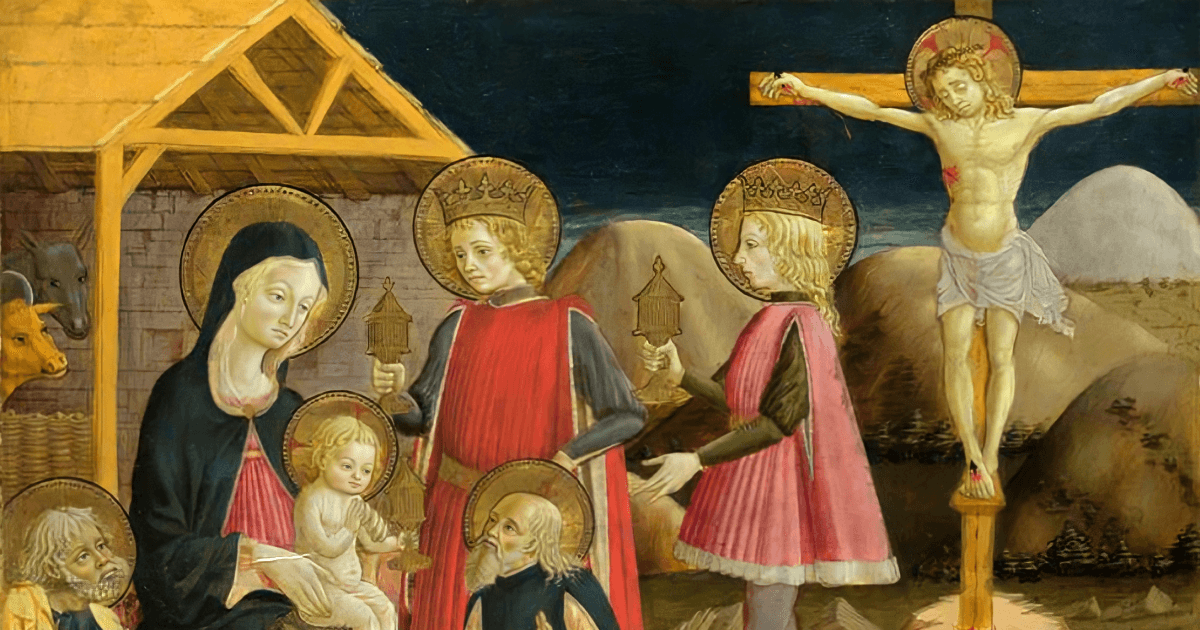
It is a mixture; it joins crib, cross, and crown. In us it creates both a warmth and a loneliness. It gives us “that airport feeling.”

Once, I was in a foreign airport waiting for my plane to Heathrow. All around was hustle and bustle; there were frequent announcements about planes’ arrivals and departures. “I’ll be glad when I’m home,” I thought, “with my friends and books and music and peace and security — back to the old routine.”

Suddenly I realised that “the airport feeling” summed up the Christian way of life. Living in this world, we are really travellers away from home. We have to be ready at every moment for the call that will take us into eternity.

John the Baptist would have blinked in amazement if he saw the glamourised preparation today for Christmas. This is not the Advent he preached when he burst in from the desert, a gaunt messenger of God, and proclaimed in tones tolling like a monastery bell: “Do penance, for the Kingdom of God is nigh.” Not perhaps the sterner penance of Lent.

Advent and Lent are different: the first lasts four weeks, the second six weeks. Lent leads to Calvary and the Cross; Advent leads to Christmas and the Crib.

But they are also similar. The Crib and the Cross go together. The spirit of Advent changes when Christmas arrives. The spirit of Christmas is expansive — to make others happy, to make oneself happy, to experience the real love of the Christ-Child.

It means trying to do good and to be good. An American theologian writes: “It is easy to gush over the ‘baby Jesus’ and what a sweet picture the stable scene makes on a Christmas card with ‘cute little angels’ flying overhead. We must not forget that the baby whom everyone helps to adore will grow up to be the man everyone helps to crucify.”

It is a time when we pay special honour to Mary, the Mother of God. G.K. Chesterton writes: “You cannot visit the child without visiting the mother. You cannot in common human life approach the child except through the mother.

We must either leave Christ out of Christmas, or Christmas out of Christ, or we must admit — if only we admit it in an old picture — that those heads are too near together for the haloes not to mingle and cross.”

Through Mary we can get a glimpse of heaven. “The world is too much with us; late and soon, getting and spending, we lay waste our powers,” wrote Wordsworth. Full of wonder and awe at the divine life within her, Mary instinctively reaches out to help us.

We too, through God’s grace, have the divine life within us, and we nurture and strengthen it by reaching out to help those in need: the poor, the suffering, the lonely.The true celebration of the great feast of Christmas must come not from gifts and merriment, but from our own minds and hearts.

As we filed out of our temporary chapel into the bright sunlight, we shook hands with each other. I looked at my companions with a new awareness.

The priest was Chinese. He had been assisted by a Malayan curate. Also present was an elderly couple of Indian descent. There was another Malay, and a house party comprising five Dutch people and two Americans. And then, of course, there was Mick from Eire, and myself, an Englishman.

That short and simple service had been attended by 14 of us, bound together by a common faith. Our roots lay in seven countries distributed over three continents.
Then I thought of all those other Catholics in the world — more than 500 million — who, regardless of differences in colour, language, and customs, would be crowding into churches all over the world on this very special day. Suddenly the world seemed a much smaller place, my family much nearer, and I knew that I was part of a much larger family. Yes. I shall always remember Christmas, 1964.

Advent takes on a special intensity as the last days before Christmas arrive. The titles given to the coming Messiah reflect the great yearning of the Church as she awaits the birth of the Saviour: “O Wisdom, who issued from the mouth of the Most High, reaching from end to end, ordering all things mightily yet tenderly, come to teach us the way of prudence.”

And the last one rings with the longed-for hope of salvation: “O Emmanuel, our King and our Law-giver, the expected of the nations and their Saviour, come to save us, our Lord and God.”

If Advent is really lived, and we enter into the Church’s liturgy as the season progresses, the full meaning of Christmas becomes part of everything we do.

It begins the great sequence — Advent, Christmas, Epiphany, Lent, Holy Week, Easter, Pentecost. It may be called the world of supernature, for the world of nature too has a similar sequence — spring, summer, autumn, winter.

Advent is a season of great beauty and appeal: a blend of joy and sadness, of hope and fear, of expectation and possession. We look back to Christ’s first coming, when He redeemed us; we look forward to Christ’s second coming, when that redemption will have full effect. Advent is the remote preparation for the greatest feast of the year — the paschal feast at Easter.

There are three advents or comings of Christ: the coming in history, the coming in mystery, and the coming in majesty.

The coming in history is Christ’s birth in the stable at Bethlehem; the coming in mystery is the coming of Christ into our hearts by His grace; the coming in majesty is at the end of time, when the Son of Man will come “in a cloud with His full power and majesty.”

The Church strongly urges us to prepare now “to abandon the ways of darkness and put on the armour of light.” We must long for His coming. It is the hungry whom the Lord fills with good things.

Advent is a time of joyful hope and eager yearning. The Church in these days recalls the intense yearning of the chosen people for their Deliverer. It is, therefore, a time of penance in preparation for Christmas.

Penance in itself is not, of course, attractive. But Pope John Paul, in a recent major document, brought out its great importance — especially today: “The true celebration of the great feast of Christmas must come, not from gifts and merriment, but from our minds and hearts.”

It is a mixture; it joins crib, cross, and crown. In us it creates both a warmth and a loneliness. It gives us “that airport feeling.”

Once, I was in a foreign airport waiting for my plane to Heathrow. All around was hustle and bustle; there were frequent announcements about planes’ arrivals and departures. “I’ll be glad when I’m home,” I thought, “with my friends and books and music and peace and security — back to the old routine.”

Suddenly I realised that “the airport feeling” summed up the Christian way of life. Living in this world, we are really travellers away from home. We have to be ready at every moment for the call that will take us into eternity.

John the Baptist would have blinked in amazement if he saw the glamourised preparation today for Christmas. This is not the Advent he preached when he burst in from the desert, a gaunt messenger of God, and proclaimed in tones tolling like a monastery bell: “Do penance, for the Kingdom of God is nigh.” Not perhaps the sterner penance of Lent.

Advent and Lent are different: the first lasts four weeks, the second six weeks. Lent leads to Calvary and the Cross; Advent leads to Christmas and the Crib.

But they are also similar. The Crib and the Cross go together. The spirit of Advent changes when Christmas arrives. The spirit of Christmas is expansive — to make others happy, to make oneself happy, to experience the real love of the Christ-Child.

It means trying to do good and to be good. An American theologian writes: “It is easy to gush over the ‘baby Jesus’ and what a sweet picture the stable scene makes on a Christmas card with ‘cute little angels’ flying overhead. We must not forget that the baby whom everyone helps to adore will grow up to be the man everyone helps to crucify.”

It is a time when we pay special honour to Mary, the Mother of God. G.K. Chesterton writes: “You cannot visit the child without visiting the mother. You cannot in common human life approach the child except through the mother.

We must either leave Christ out of Christmas, or Christmas out of Christ, or we must admit — if only we admit it in an old picture — that those heads are too near together for the haloes not to mingle and cross.”

Through Mary we can get a glimpse of heaven. “The world is too much with us; late and soon, getting and spending, we lay waste our powers,” wrote Wordsworth. Full of wonder and awe at the divine life within her, Mary instinctively reaches out to help us.

We too, through God’s grace, have the divine life within us, and we nurture and strengthen it by reaching out to help those in need: the poor, the suffering, the lonely.The true celebration of the great feast of Christmas must come not from gifts and merriment, but from our own minds and hearts.

share

subscribe to the catholic herald today

Our best content is exclusively available to our subscribers. Subscribe today and gain instant access to expert analysis, in-depth articles, and thought-provoking insights—anytime, anywhere. Don’t miss out on the conversations that matter most.
Subscribe