



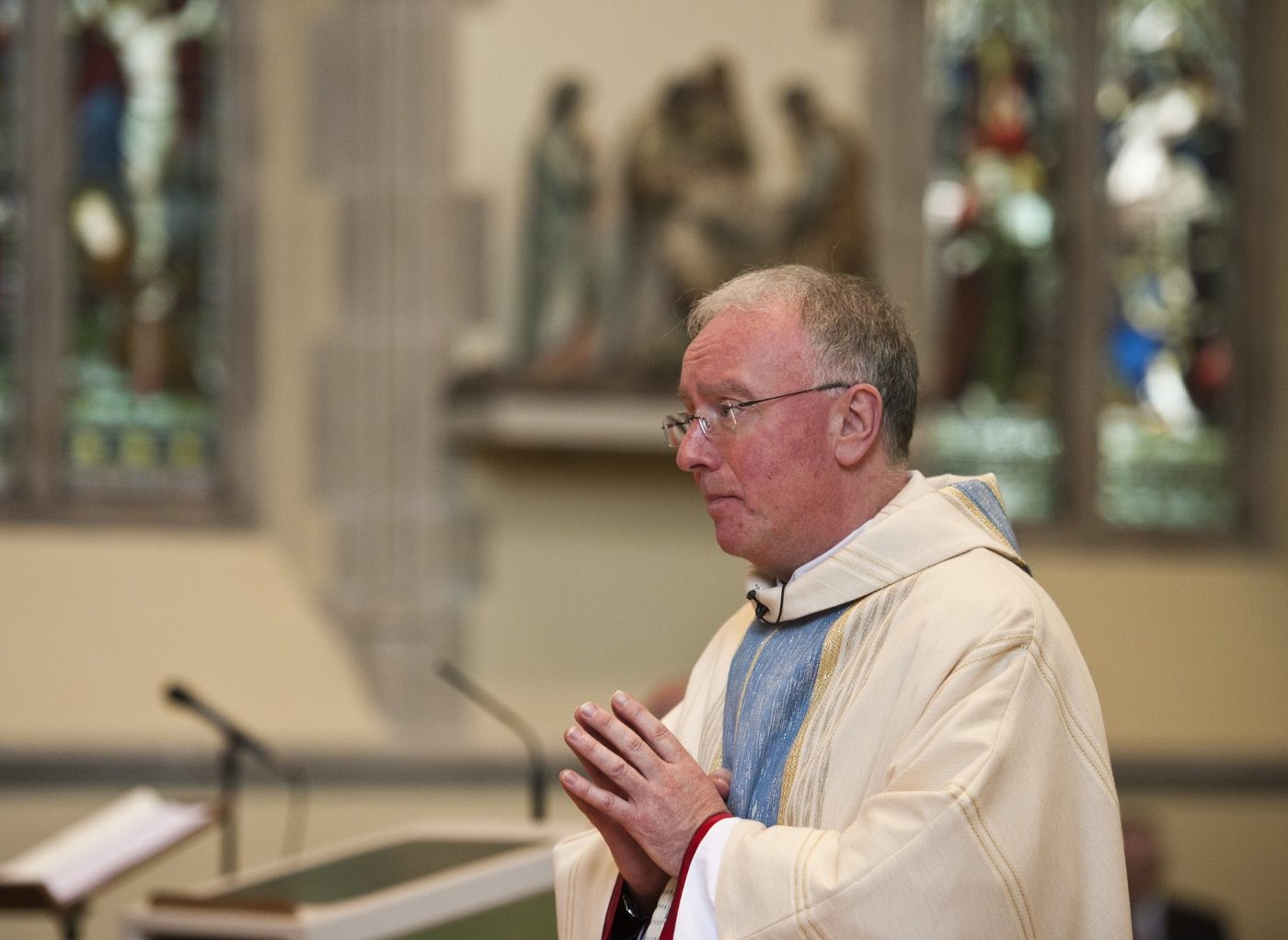
Over the weekend, my attention was drawn to a news item from two years ago: a 2014 LifeSiteNews interview with Bishop Philip Egan of Portsmouth. In it, he suggested that "people [who] are not in communion with the Catholic Church" on core teachings - he specifically cites here politicians voting in favour of abortion or same-sex marriage - "shouldn’t be receiving Holy Communion". In such cases, moreover, actively denying Communion would be "an act of mercy", done in the "hope that... it would encourage someone to come back to seek communion with the Lord, with the truth, and say I’m sorry I got lost." When and why old stories suddenly resurface on social media is an interesting question in itself. Regardless, since it seems to be doing the rounds again, now is as a good a time as any to share some observations on the understandably sensitive issue of who should or should not receive (or, relatedly, be offered) Communion. It is, after all, not an issue that is likely to go away. The first is simply this. In general terms, Bishop Egan was - and I assume still is, though I've not asked after his present stance - on very firm scriptural, patristic, and scholastic ground. Paul's strictures against those who "eat and drink judgment on themselves" (1 Corinthians 11.29) are, of course, well known. Partaking of Christ's Body and Blood is no casual affair - "Everyone ought to examine themselves before they eat of the bread and drink from the cup" (11.28) - and it is far better not to receive, than to receive unworthily. Evidently, this point applies to everyone, and not just to elected officials. It also, note well, applies to many more matters than voting for abortion or same-sex marriage (serious matters though they indeed are). St John Chrysostom, for instance, warns those who neglect Christ's real presence in beggars "perishing outside, freezing and uncovered" (cf. Matthew 25.44-6) not to dare approaching him at the altar: at least, that is, if they wish to avoid the "abyss" (Homilies on Matthew 50). More broadly still, St Cyril of Jerusalem urges new communicants: "deprive not yourselves, by the pollution of sins, of these Holy and Spiritual Mysteries" (Catechetical Lectures 5). St Thomas rather bluntly explains the reason for such cautions: "if anyone, while in mortal sin, receives this sacrament, he purchases damnation" (Summa Theologiae, 3a, q. 80, a. 4). It would indeed be an "act of mercy", and a very pastoral one, for this to be more often spelled out. (By the bye, one can understand why divorced-and-married Catholics might feel unjustly singled out when only they are ever told to refrain from Communion. When was the last time you heard a sermon suggesting, in even the gentlest terms, that unconfessed tax cheats, expenses fiddlers, contraceptors, extorting landlords, cohabitees, despisers of foreigners, widows, or orphans, and many, many more - "there is no one who is righteous, not even one" (Romans 3.10) - ought perhaps to think twice before automatically trooping up? It is no wonder the remarried feel self-conscious and marginalised while everyone else climbs over them on the way up for the Communion.) So much for the general point. However, it is one thing to suggest people think carefully before presenting themselves for Communion. It is quite another for a bishop or priest publicly to ask a person not to present themselves - or indeed, actively to refuse them Communion if they do. Yet once again, there are solid patristic precedents. In 390, St Ambrose - the Philip Egan of fourth-century Milan - excommunicated the Christian Emperor Theodosius for committing war crimes during civil unrest in Thessalonica. Personally barring him from Milan Cathedral, Ambrose publicly demanded:
1:03 PM
Denying someone Communion can be an act of mercy. Just ask the Church Fathers
The denial of Communion is a supremely grave matter which raises a host of tricky questions
Stephen Bullivant

5 min read



Already a subscriber? Sign in
5freearticles every month
Continue reading with a free account. No card needed.
- Five free articles every thirty days, on any device you sign in on
- The Catholic Herald newsletter, every morning
- Subscribe whenever you like for everything: every article and the magazine
Related articles
 Newsroom
Church leaders urge Drumcree dialogue: ‘Too much is at stake’
The Catholic and Church of Ireland Archbishops of Armagh have urged a renewed commitment to peace and reconciliation amid the Drumcree stand-off
Corrie Douglas-Young Newsroom
Thousands of Irish children to join global Rosary campaign
Corrie Douglas-Young Newsroom
TikTok priest urges young people to stand with persecuted Christians
Nathalie Raffray Newsroom
Baby born at 25 weeks reunites with neonatologist two years after leaving hospital
The Catholic Herald Newsroom
Joe Biden honoured by Planned Parenthood after defending abortion rights
Christine Rousselle
subscribe to the catholic herald today
Our best content is exclusively available to our subscribers. Subscribe today and gain instant access to expert analysis, in-depth articles, and thought-provoking insights—anytime, anywhere. Don’t miss out on the conversations that matter most.
Subscribe



