

February 12, 2026

Film: National treasures keep calm and carry on

Mike McCahill
More
Related
Min read
share

Nostalgia ain’t what it used to be. The spectre of the “well-made British film” – well-cast, well-acted and well-dressed, yet so emotionally hemmed in as to pack all the wallop of a damp handkerchief – hangs heavy over Their Finest (★★★, cert 12A, 115 mins). Directed by Lone Scherfig, it takes its inspiration from Lissa Evans’s bestselling Second World War book. It’s certainly well cast and well produced, lining up its national treasures like mantelpiece tchotchkes.

The film maps the progress of screenwriter Catrin Cole (Gemma Arterton) within the wartime propaganda industry. 21st-century career women will recognise elements of Catrin’s predicament: territorial male colleagues, limited pay, a wider institutional sexism.

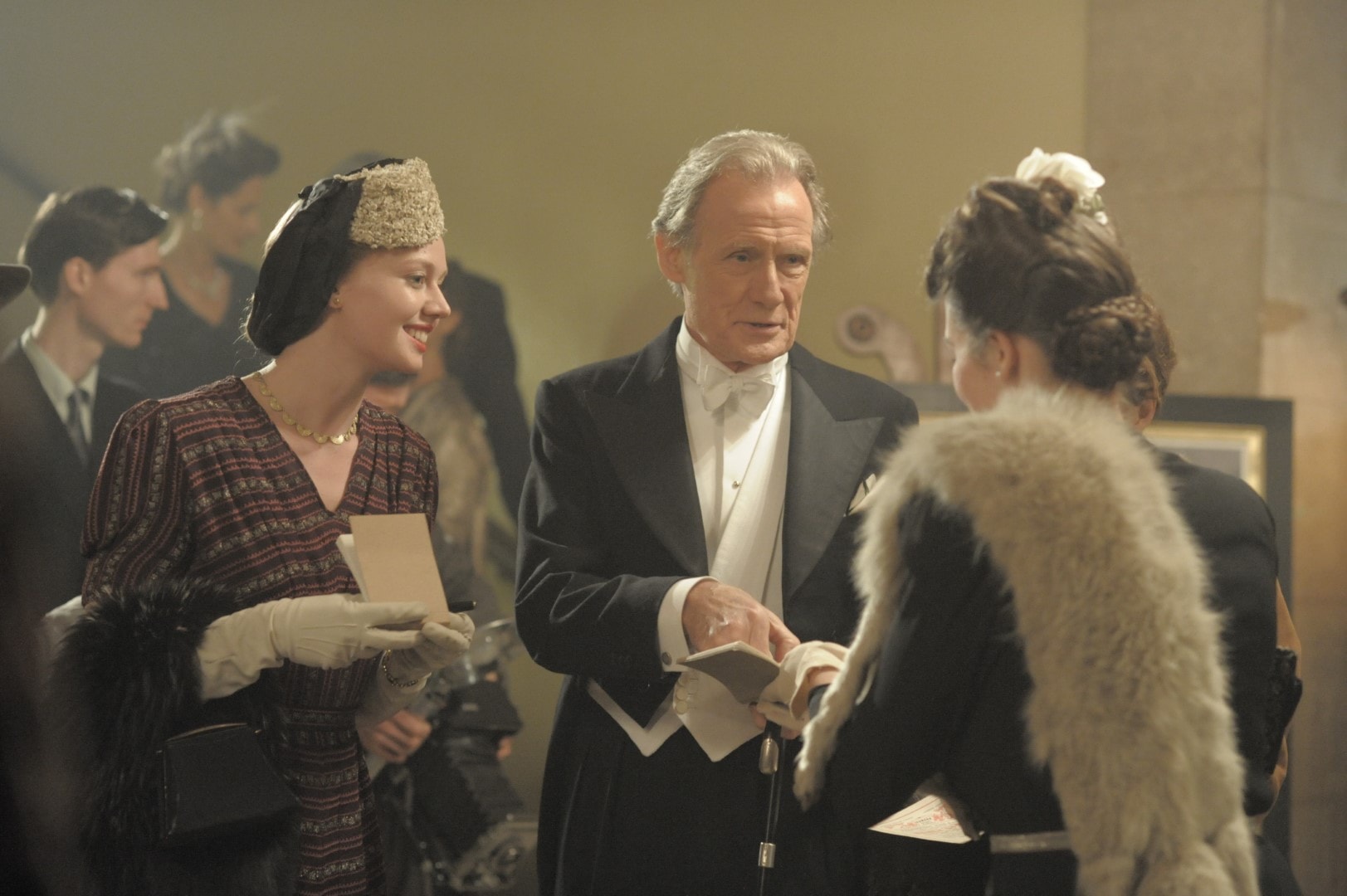
Why, then, is Their Finest only mildly stirring? Partly, it’s the drab grey fug Scherfig shrouds scenes in, constantly obscuring the film’s more colourful features: like the amusingly vain lead Bill Nighy’s double act with schnauzer-toting agent Eddie Marsan, or Rachael Sterling’s no-nonsense producer.

Their Finest instead emerges from that “keep calm and carry on” mentality determined to recast the Second World War as a jolly, best-of-British romp: it’s fish-and-chips in newspaper wrappers, pretty girls on bicycles, and a pantomimic rendering of Dunkirk spirit via a caricatured crew (plucky heroine, square-jawed Yank) forming their own cosy platoon.

At the outset, Henry Goodman’s bigwig lists a successful picture’s key ingredients as “authenticity, optimism, and a dog”. Scherfig’s film can claim two of these three, enough to provide genteel matinee distraction – but it’s barely more sophisticated in appealing to a modern audience.

Hollywood, meanwhile, is harking back to that late 1950s golden age when rich white men might still present themselves as romantic mavericks. Warren Beatty’s Rules Don’t Apply (★★, cert 12A, 127 mins), American cinema’s biggest financial flop of 2016, deploys a juicy Howard Hughes quote (“Never check an interesting fact”) to justify its entirely fictional love triangle between ageing satyr Hughes (Beatty himself), a self-improving starlet (Lily Collins), and her designated driver (Alden Ehrenreich).

Familiar faces (Ed Harris, Annette Bening, Alec Baldwin) prove subservient to the dominant creative force: Beatty’s Hughes emerges from the shadows after half an hour, and begins pawing Collins in a manner that might well put you off the movies forever.

The film is a longstanding labour of love for Beatty, and its nostalgia feels more sincere for emanating from someone who actually lived through the mythmaking. Yet as Rules rambles on, it becomes clear it crosses the line into lavishly expensive folly – a silver-screen version of Hughes’s flying boat, the Spruce Goose.

Nostalgia ain’t what it used to be. The spectre of the “well-made British film” – well-cast, well-acted and well-dressed, yet so emotionally hemmed in as to pack all the wallop of a damp handkerchief – hangs heavy over Their Finest (★★★, cert 12A, 115 mins). Directed by Lone Scherfig, it takes its inspiration from Lissa Evans’s bestselling Second World War book. It’s certainly well cast and well produced, lining up its national treasures like mantelpiece tchotchkes.

The film maps the progress of screenwriter Catrin Cole (Gemma Arterton) within the wartime propaganda industry. 21st-century career women will recognise elements of Catrin’s predicament: territorial male colleagues, limited pay, a wider institutional sexism.

Why, then, is Their Finest only mildly stirring? Partly, it’s the drab grey fug Scherfig shrouds scenes in, constantly obscuring the film’s more colourful features: like the amusingly vain lead Bill Nighy’s double act with schnauzer-toting agent Eddie Marsan, or Rachael Sterling’s no-nonsense producer.

Their Finest instead emerges from that “keep calm and carry on” mentality determined to recast the Second World War as a jolly, best-of-British romp: it’s fish-and-chips in newspaper wrappers, pretty girls on bicycles, and a pantomimic rendering of Dunkirk spirit via a caricatured crew (plucky heroine, square-jawed Yank) forming their own cosy platoon.

At the outset, Henry Goodman’s bigwig lists a successful picture’s key ingredients as “authenticity, optimism, and a dog”. Scherfig’s film can claim two of these three, enough to provide genteel matinee distraction – but it’s barely more sophisticated in appealing to a modern audience.

Hollywood, meanwhile, is harking back to that late 1950s golden age when rich white men might still present themselves as romantic mavericks. Warren Beatty’s Rules Don’t Apply (★★, cert 12A, 127 mins), American cinema’s biggest financial flop of 2016, deploys a juicy Howard Hughes quote (“Never check an interesting fact”) to justify its entirely fictional love triangle between ageing satyr Hughes (Beatty himself), a self-improving starlet (Lily Collins), and her designated driver (Alden Ehrenreich).

Familiar faces (Ed Harris, Annette Bening, Alec Baldwin) prove subservient to the dominant creative force: Beatty’s Hughes emerges from the shadows after half an hour, and begins pawing Collins in a manner that might well put you off the movies forever.

The film is a longstanding labour of love for Beatty, and its nostalgia feels more sincere for emanating from someone who actually lived through the mythmaking. Yet as Rules rambles on, it becomes clear it crosses the line into lavishly expensive folly – a silver-screen version of Hughes’s flying boat, the Spruce Goose.

subscribe to
the catholic herald

Continue reading your article with a subscription.
Read 5 articles with our free plan.
Subscribe

subscribe to the catholic herald today

Our best content is exclusively available to our subscribers. Subscribe today and gain instant access to expert analysis, in-depth articles, and thought-provoking insights—anytime, anywhere. Don’t miss out on the conversations that matter most.
Subscribe