
February 12, 2026

Fine art: Catch one last glimpse of medieval beauty

David V Barrett
More
Related
Min read
share

Opus Anglicanum
V&A, London, until February 5

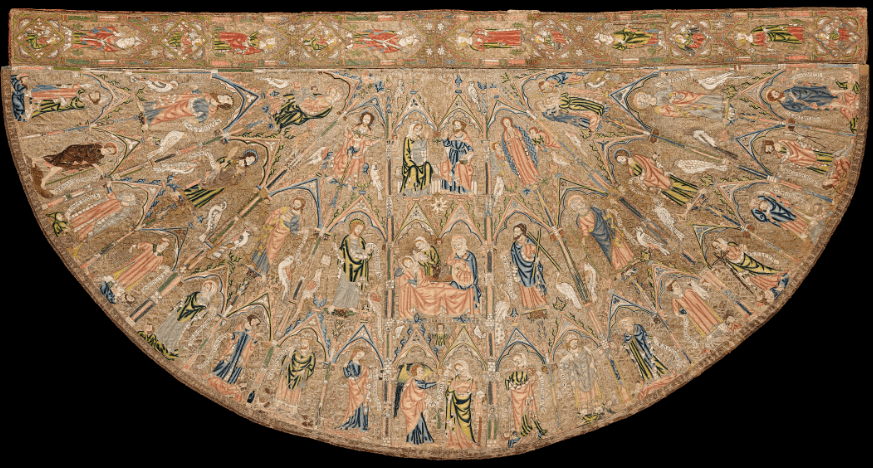
Opus Anglicanum is a showcase of the Victoria & Albert Museum’s large collection of English medieval embroidery work, along with examples loaned from elsewhere, with some returning to Britain for the first time in more than half a millennium.

The exquisitely detailed and colourful embroidery was first called opus anglicanum (English work) as far back as the 13th century. Made of silk, with the use of gold and silver thread, these were splendid and expensive pieces at the time they were created. They were worn by kings, queens, cardinals and popes throughout Europe.
Most of the exhibition consists of beautiful copes and chasubles from the late 13th and early 14th centuries. It’s startling how large the copes are when spread out: huge semi-circles of cloth, some in gorgeously bright colours, still sparkling with silver thread 700 to 800 years after they were made. Other exhibits include orphreys (decorated bands attached to vestments) and burses, flat purses to contain the corporal (the linen cloth on which the chalice and paten rest).

Sometimes, the intricately embroidered scenes of Christ’s Passion, or the life of the Virgin, have been cut out from a cope and re-used as part of altar furnishings. The exhibition has a couple of copes that have been reconstructed, with gaps, and several orphreys with scenes that are likely to have originally come from copes.

Most exhibits in Opus Anglicanum are ecclesiastical. The reason is twofold: copes and chasubles were not worn every day, and they were well looked after. They have survived partly because bishops and abbots were buried in their finest vestments, which were recovered if the cleric was later disinterred. In contrast, the nobility would wear their clothing until it wore out or became unfashionable. The exhibition has the Black Prince’s surcoat, which was worn over his armour. The only piece of secular clothing to survive from the 14th century, it is very worn, and the colours of its royal arms are faded. But a contemporary book cataloguing the arms of nobles gives an idea of how colourful it originally looked.

This is quite a small, intimate exhibition. Embroidery enthusiasts and those interested in Church history should note that it may be the last of its kind. Many of the exhibits are more than 700 years old, and are extremely fragile.

Opus Anglicanum
V&A, London, until February 5

Opus Anglicanum is a showcase of the Victoria & Albert Museum’s large collection of English medieval embroidery work, along with examples loaned from elsewhere, with some returning to Britain for the first time in more than half a millennium.

The exquisitely detailed and colourful embroidery was first called opus anglicanum (English work) as far back as the 13th century. Made of silk, with the use of gold and silver thread, these were splendid and expensive pieces at the time they were created. They were worn by kings, queens, cardinals and popes throughout Europe.
Most of the exhibition consists of beautiful copes and chasubles from the late 13th and early 14th centuries. It’s startling how large the copes are when spread out: huge semi-circles of cloth, some in gorgeously bright colours, still sparkling with silver thread 700 to 800 years after they were made. Other exhibits include orphreys (decorated bands attached to vestments) and burses, flat purses to contain the corporal (the linen cloth on which the chalice and paten rest).

Sometimes, the intricately embroidered scenes of Christ’s Passion, or the life of the Virgin, have been cut out from a cope and re-used as part of altar furnishings. The exhibition has a couple of copes that have been reconstructed, with gaps, and several orphreys with scenes that are likely to have originally come from copes.

Most exhibits in Opus Anglicanum are ecclesiastical. The reason is twofold: copes and chasubles were not worn every day, and they were well looked after. They have survived partly because bishops and abbots were buried in their finest vestments, which were recovered if the cleric was later disinterred. In contrast, the nobility would wear their clothing until it wore out or became unfashionable. The exhibition has the Black Prince’s surcoat, which was worn over his armour. The only piece of secular clothing to survive from the 14th century, it is very worn, and the colours of its royal arms are faded. But a contemporary book cataloguing the arms of nobles gives an idea of how colourful it originally looked.

This is quite a small, intimate exhibition. Embroidery enthusiasts and those interested in Church history should note that it may be the last of its kind. Many of the exhibits are more than 700 years old, and are extremely fragile.

subscribe to
the catholic herald

Continue reading your article with a subscription.
Read 5 articles with our free plan.
Subscribe

subscribe to the catholic herald today

Our best content is exclusively available to our subscribers. Subscribe today and gain instant access to expert analysis, in-depth articles, and thought-provoking insights—anytime, anywhere. Don’t miss out on the conversations that matter most.
Subscribe