




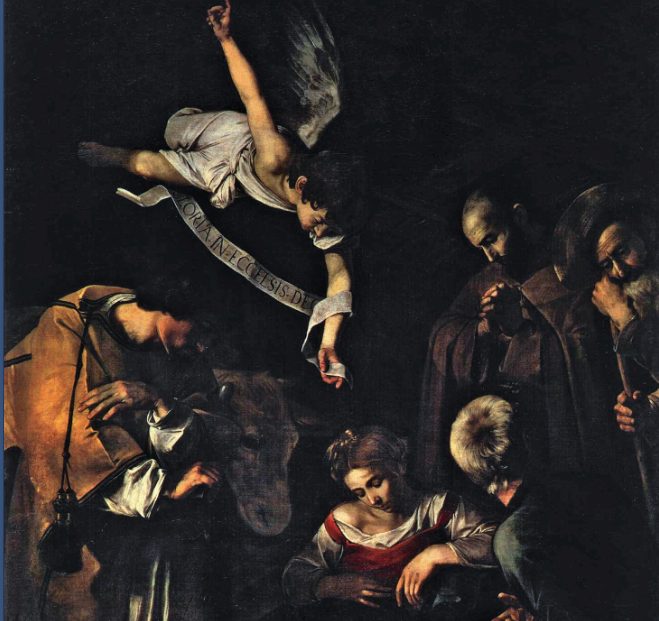
Italian police announced this month that they were reopening an investigation into the theft of a painting by Caravaggio. In October 1969, the Nativity with St Francis and St Lawrence was cut from its frame, where it hung in the Oratory of San Lorenzo in Palermo, Sicily. This stunning example of Caravaggio’s late period – in which he moved away from the dramatic certainty of his early paintings towards a looser, but no less riveting style – was stolen, it is has long been believed, by members of the Camorra crime syndicate. There are conflicting accounts of its fate. According to one, it was dumped in a Sicilian barn and eaten by rats. Despite that theory, Italian police are hopeful of tracing the precious painting. A mafia member turned informant has reportedly told authorities that the painting ended up in the hands of high-level members of the Cosa Nostra, who sent it to Switzerland. Rosy Bindi, the head of Italy’s anti-mafia commission, told the Telegraph that investigators “don’t believe the painting was destroyed, as was thought in the past.” Art theft is a common crime, and one that many think of in terms of a big-screen caper. The alleged mafia links to this particular act of thievery add to that sense of pulpy drama. Yet while art theft might not be a violent crime, it does great injury to the culture at large, depriving people of the chance to experience magnificent works of art – and, in this case, in the setting it was intended for. Works such as Caravaggio’s Nativity were created for the public. Today churches that boast paintings by him and other revered painters are able to thrive because of them, as they attract the faithful and tourists alike. So much art is now on display in soulless, corporate-sponsored galleries that witnessing Caravaggio’s paintings in the spaces for which they were created is truly something to savour. Spending time, for example, in front of his masterpiece, The Beheading of St John the Baptist, in St John’s Co-Cathedral in Valletta, is about a profound an artistic experience as you can find anywhere on the planet. The Italian police will, I hope, somehow track down the Nativity. It’s unlikely, but not impossible. There has, after all, been a Caravaggio miracle before. When an art expert from the National Gallery of Ireland visited the Jesuits’ residence in Dublin in 1990, he spotted that the painting hanging in the dining room, thought to be a copy of an original by one of Caravaggio’s Dutch followers, was in fact The Taking of Christ by the man himself. Caravaggio’s painting had been presumed lost for more than 200 years. It is now on permanent loan to the National Gallery of Ireland for all to see. Not all lost art is a lost cause. In the case of the missing Nativity, it might be a good idea to pray for another miracle.
1:00 PM
Fine arts: Gangsters, rats and a great art mystery
Will Gore

3 min read



Already a subscriber? Sign in
5freearticles every month
Continue reading with a free account. No card needed.
- Five free articles every thirty days, on any device you sign in on
- The Catholic Herald newsletter, every morning
- Subscribe whenever you like for everything: every article and the magazine
Related articles
 Newsroom
Church leaders urge Drumcree dialogue: ‘Too much is at stake’
The Catholic and Church of Ireland Archbishops of Armagh have urged a renewed commitment to peace and reconciliation amid the Drumcree stand-off
Corrie Douglas-Young Newsroom
Thousands of Irish children to join global Rosary campaign
Corrie Douglas-Young Newsroom
TikTok priest urges young people to stand with persecuted Christians
Nathalie Raffray Newsroom
Baby born at 25 weeks reunites with neonatologist two years after leaving hospital
The Catholic Herald Newsroom
Joe Biden honoured by Planned Parenthood after defending abortion rights
Christine Rousselle
subscribe to the catholic herald today
Our best content is exclusively available to our subscribers. Subscribe today and gain instant access to expert analysis, in-depth articles, and thought-provoking insights—anytime, anywhere. Don’t miss out on the conversations that matter most.
Subscribe



