


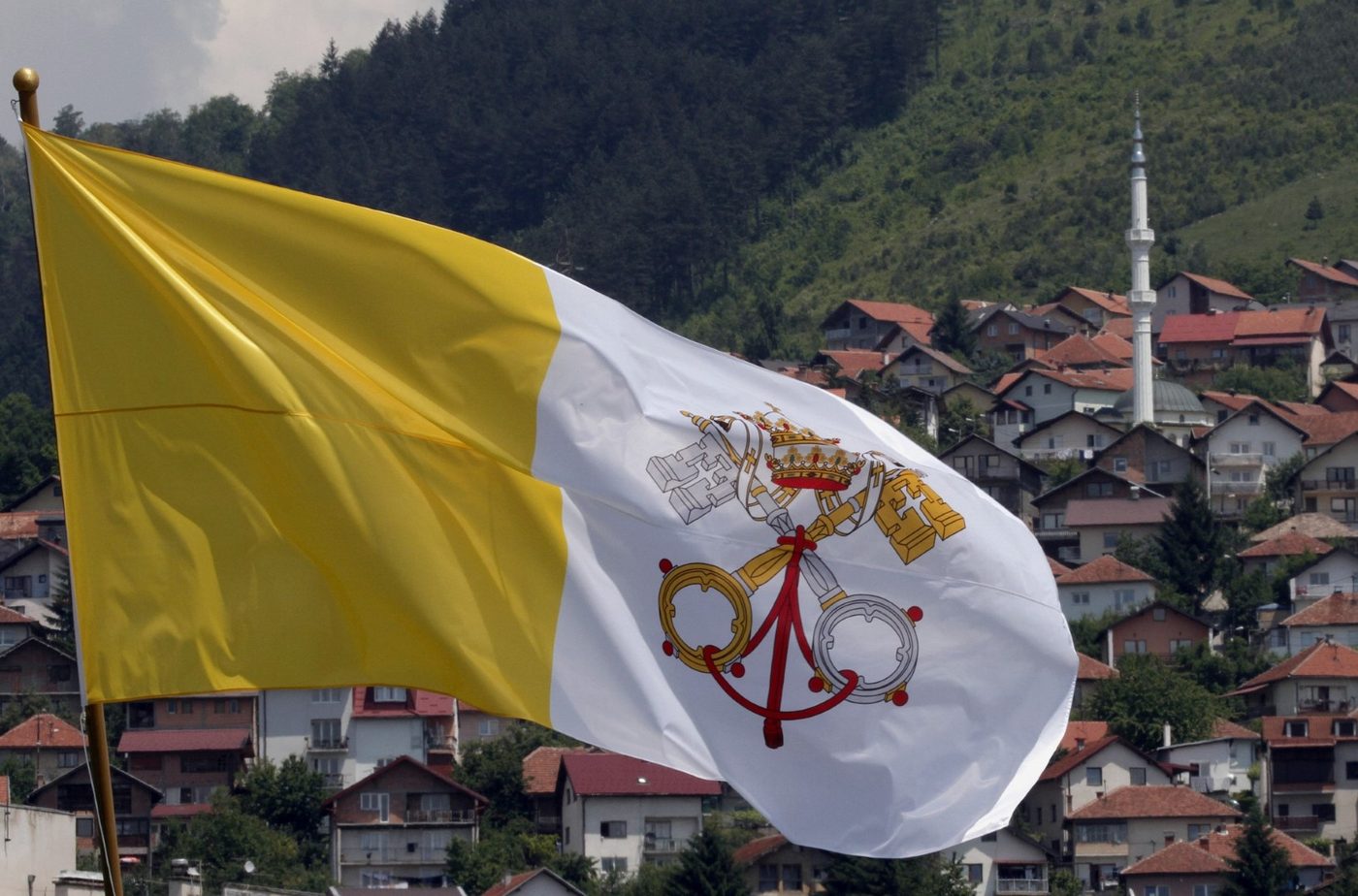
On the mantelpiece in my friend Gerry’s sitting room until his death last month was a little desk flag of the kind they have at the UN. His was a Vatican flag and it had been at half-mast since Pius XII died. This started as a ceremonial tribute to Pius XII whom Gerry admired for all kinds of reasons, but, I think, mostly for the reason that he was pope when Gerry first began to think seriously about what the Petrine office meant. That it stayed at half-mast was Gerry’s small and typically whimsical protest against some of the changes in the Church which followed in the wake of the Second Vatican Council. Gerry’s death and his funeral instructions have left me pondering not just mortality, but change. St Ambrose says that you can see the whole of the Church in the soul of one person, and it is true to say that Gerry was deeply saddened by changes in the Church in the wake of Vatican II. In fact, I think he felt betrayed. For years impatient reformers, clergy and lay, parroted to him the facile mantra “you have to change with the times”, when what they actually meant was that you have to change against the times: to accept that everything that time and obedience had taught must now cede to innovation. The Catholic maxim that “tradition has the force of law” became completely inverted, and now innovation alone gave the seal of authenticity. Part of my mourning for Gerry is that he felt like a man caught in the cross-fire of an ecclesiastical war unleashed by Vatican II. Polemicists would seek to caricature Gerry as some unthinking reactionary. In fact, Gerry’s reaction to the Brave New Church of the Seventies was one informed by an exceptional Catholic devotion and a knowledge of Catholic history both from study and lived heritage. His received memory of 150 years experience within the Catholic world that was Downside Abbey meant that he was resistant not to change, but to polemic. He had experience of the great consecration of the Abbey, the beauties of the monastic liturgy, the devotional life of the little parish of St Benedict’s, the catechetical formation of the Servite nuns and the witness of many positive examples of consecrated life – not the monks alone, but the 76-year marriage of his grandparents, or the 60 years his Uncle Isaac served the parish as MC. These, and much more, proclaimed an authentic value which would not easily yield to revolutionary polemic of the “spirit of Vatican II”. He watched in a kind of disbelief as Dom Gregory Murray, Downside’s famous monastic musician and virtuoso organist, abandoned plainsong almost overnight for English chant, and never played the Abbey’s magnificent grand organ again, preferring a tinny electronic keyboard on spindly legs in front of the choir stalls, all in defiance of what the Council decree on the liturgy actually mandated. On discovering from researching local history that a recusant priest had been martyred in the marketplace of Shepton Mallet, he wrote to inform the parish priest and was told by him brusquely: “We don’t want to stir up all that sort of thing again.” Celebrating Gerry’s funeral at his parish in London, I found it impossible not to remember the fight he put up over the reordering – as the Orwellian euphemism has it – of a magnificent Victorian Gothic church, the history of which he had meticulously researched and documented. In his name, and thousands of others like him, it is important to ask exactly what benefit accrued spiritually to a single soul by covering the fine tessellated marble sanctuary floor with off-salmon-pink shag pile, or banishing to the convent garden the finely carved wooden altar on which the first Mass in several hundred years in that place had been celebrated. It was Gerry’s truth or tragedy to live long enough for history itself to reveal the wisdom of his instincts. Shorn of polemic, few, if any of the innovations he resisted have resulted in the renewal that would have been the only justification for their indifference to his religious sensibilities, and those of thousands like him who remained loyal to the end. Perhaps it is a mercy that they will be spared seeing the worst of the decline. I have kept Gerry’s Vatican flag. It remains at half-mast. As Sir Humphrey Appleby once said: “A pessimist is just what an optimist calls a realist.” This article first appeared in the latest edition of the Catholic Herald magazine (3/7/15). Take up our special subscription offer – 12 issues currently available for just £12!
11:00 AM
Flags at half-mast for a dear departed friend
My friend Gerry's Vatican flag had been lowered ever since Pius XII died
Pastor Iuventus

4 min read



Already a subscriber? Sign in
5freearticles every month
Continue reading with a free account. No card needed.
- Five free articles every thirty days, on any device you sign in on
- The Catholic Herald newsletter, every morning
- Subscribe whenever you like for everything: every article and the magazine
Related articles
 Newsroom
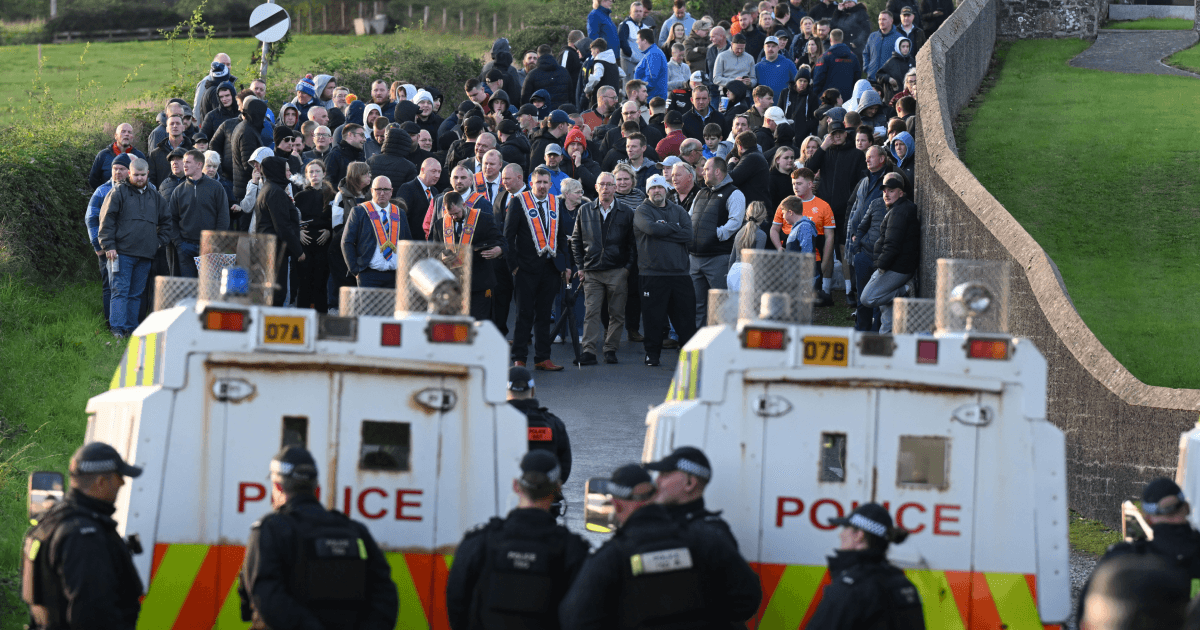
Church leaders urge Drumcree dialogue: ‘Too much is at stake’
The Catholic and Church of Ireland Archbishops of Armagh have urged a renewed commitment to peace and reconciliation amid the Drumcree stand-off
Corrie Douglas-Young Newsroom
Thousands of Irish children to join global Rosary campaign
Corrie Douglas-Young Newsroom
TikTok priest urges young people to stand with persecuted Christians
Nathalie Raffray Newsroom
Baby born at 25 weeks reunites with neonatologist two years after leaving hospital
The Catholic Herald Newsroom
Joe Biden honoured by Planned Parenthood after defending abortion rights
Christine Rousselle
subscribe to the catholic herald today
Our best content is exclusively available to our subscribers. Subscribe today and gain instant access to expert analysis, in-depth articles, and thought-provoking insights—anytime, anywhere. Don’t miss out on the conversations that matter most.
Subscribe



