March 29, 2026

Following Our Lord into Jerusalem

Fr Samuel Burke OP
More
Related
Min read
share

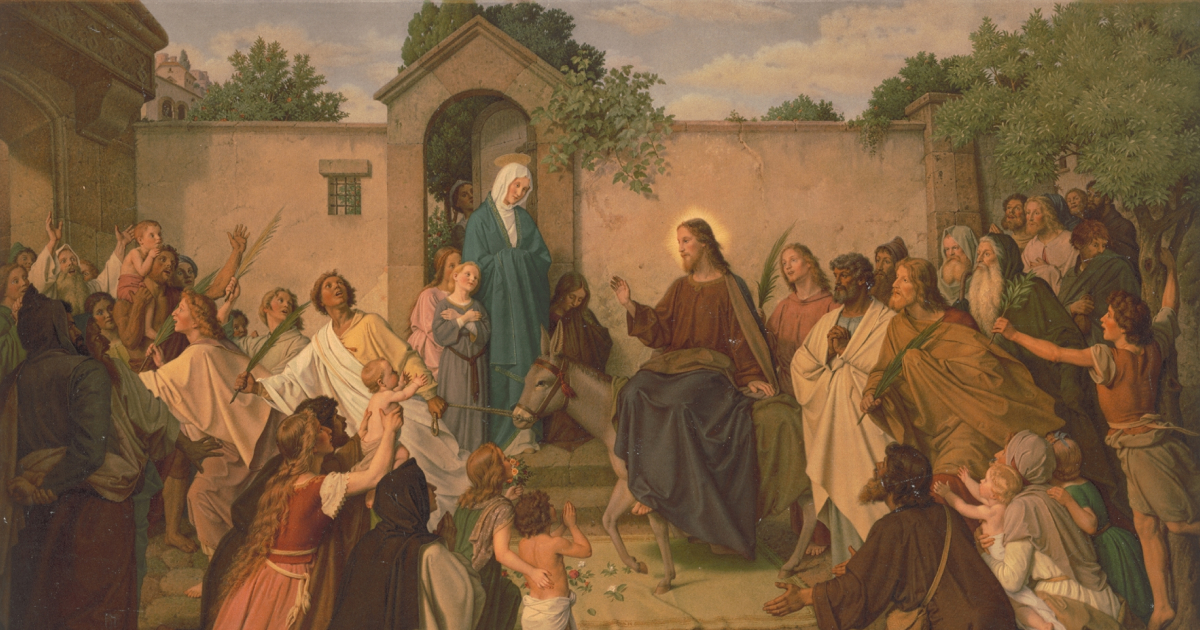
And so it begins. We start Holy Week following in Jesus’s steps. Our Lord enters Jerusalem on a donkey amidst a throng of people and palms, stirred alike by curiosity and the chorus. Two thousand years later, we do likewise.

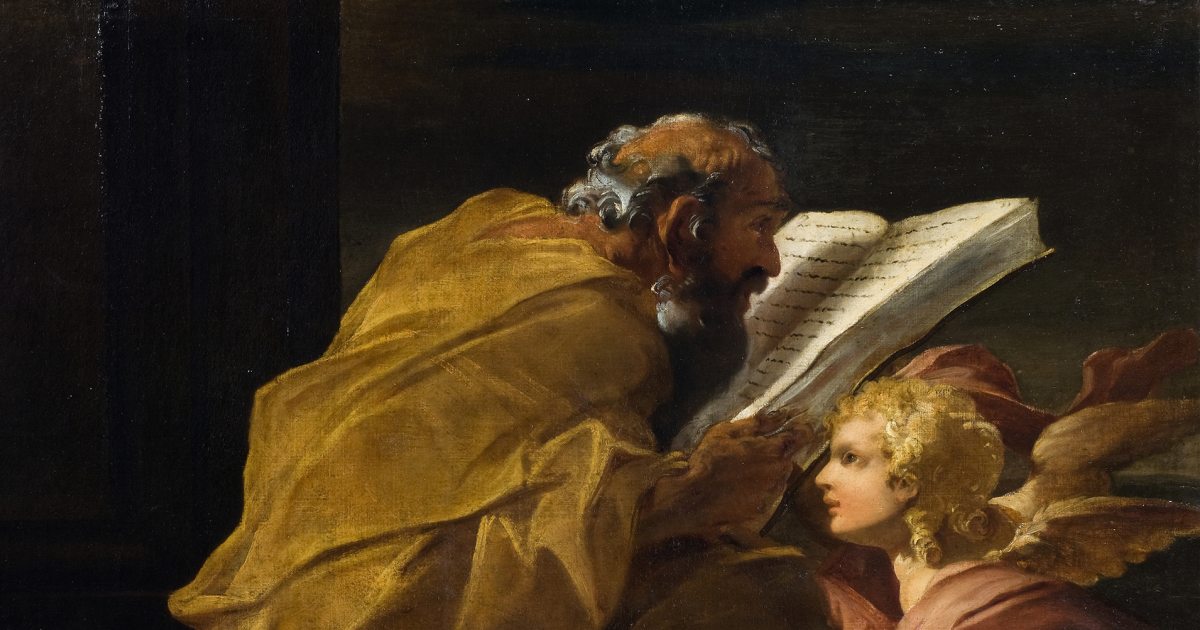
Throughout the course of this week – a week we rightly call ‘holy’ – our sacred liturgies invite us to re-enter the mystical drama of our salvation in real time so as better to fathom its awesome depths. Yet on Palm Sunday we read not only of our Lord’s entry into Jerusalem but also of his Passion, this year in St Matthew’s account. This seems an odd preview. Without some reflection or synoptic reading, it can feel rather like being thrown in at the deep end.

In some parishes that I know of, no homily is preached. For one thing, it is thought that the liturgy is long enough as it is. And, for another, the Gospel might be considered a case of what lawyers might term res ipsa loquitur: the thing speaks for itself. Perhaps no further comment is strictly required. St Matthew’s account of the Passion stands up as it is – starkly – with its raw power undiluted. Yet there is so much that might be said: the brimming symbolism, the fulfilment of prophecy and the confounding paradoxes of it all. Even if there is little time, there is so much to say on Palm Sunday.

Jesus’s entry into Jerusalem has an air of both triumph and oddity. He rides not on a warhorse but on a donkey. The strangeness is explained by the fulfilment of a prophecy: Zechariah foretold a righteous, victorious yet humble king who would so enter the great city. It would seem that his unlikely mode of transport defied popular expectations of a militaristic Messiah so longed for by the people. Nevertheless, it was seen then, as now, as a moment of victory. The victory he heralds is not political but spiritual, a triumph not over Roman oppressors but over sin.

How so? The answer is found in the reading of the Passion. Jesus’s triumph over sin is achieved through ever darker turns, which unfold in the coming days: the Last Supper, the Agony in the Garden of Gethsemane, the trial, the baying mob, and the awful climax of the Crucifixion. While monstrous injustice may appear in the ascendant through repeated episodes of betrayal, shame and the gut-wrenching agony Jesus endures, not for a single moment is Jesus’s lordship rescinded. No, he conquers and redeems all of it, and – in the same saving sacrificial act – our sins, trials and hardships as well.

Here we find the rationale for the jarring contrast of Gospel passages with which we are presented today. When our Lord’s entry into Jerusalem is mentioned in commentaries, it is often described as ‘triumphant’, or with some similar word. This is taken to heart and palms are waved as the congregation sings in pale imitation. But no sooner have we taken our seats and laid down our palms than we are on our feet again, playing the part of the crowd in the retelling of the Lord’s Passion. The same crowds in Jerusalem that cried ‘Hosanna’ a mere few days earlier soon cry out for his Crucifixion. In mimicking their shocking volte-face, to say nothing of Peter’s, we are invited to contemplate our own betrayals and cowardice; we confront our own sins and repent of them.

The juxtaposition and sequencing of these events, brought together in this one liturgy, has me recalling Kipling’s line: ‘If you can cope with triumph and disaster, and treat these two imposters just the same’; then – he later concludes – ‘You’ll be a man, my son’. Jesus was not just a man, nor simply a son; he was the Son of God. To my mind, Kipling’s verse finds a new, deeper and unexpected resonance when applied to the dramatic events of the week now in full view.

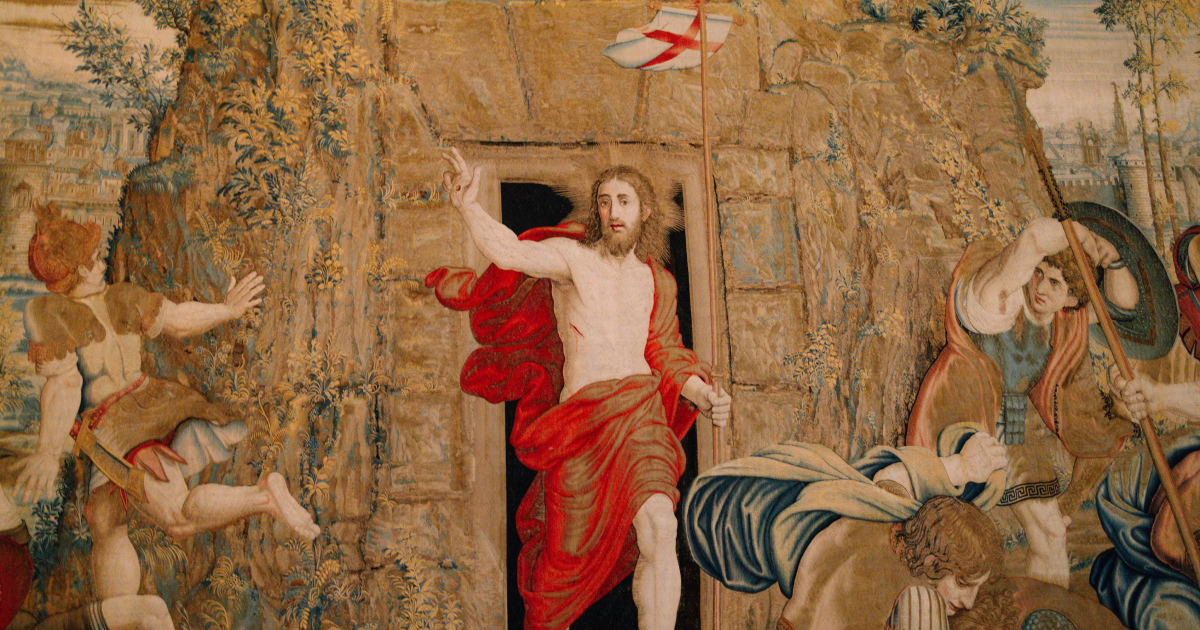
The readings might leave us feeling reasonably despondent. After all, the triumph of Palm Sunday’s entry into Jerusalem is immediately overshadowed by the disaster of the Cross on Good Friday. This sadness is a place in which we perhaps ought to dwell this week, as our Lenten wilderness takes on a new spiritual intensity. But lest despondency get the upper hand, lest disaster impose itself unduly, we ought not to forget that the story does not end on Good Friday. Just three days later, the disaster of the Cross will be eclipsed by the triumph of his rising at Easter. And Easter triumph is no imposter but the lasting salvation of those who believe in its Victor.
And so it begins. We start Holy Week following in Jesus’s steps. Our Lord enters Jerusalem on a donkey amidst a throng of people and palms, stirred alike by curiosity and the chorus. Two thousand years later, we do likewise.

Throughout the course of this week – a week we rightly call ‘holy’ – our sacred liturgies invite us to re-enter the mystical drama of our salvation in real time so as better to fathom its awesome depths. Yet on Palm Sunday we read not only of our Lord’s entry into Jerusalem but also of his Passion, this year in St Matthew’s account. This seems an odd preview. Without some reflection or synoptic reading, it can feel rather like being thrown in at the deep end.

In some parishes that I know of, no homily is preached. For one thing, it is thought that the liturgy is long enough as it is. And, for another, the Gospel might be considered a case of what lawyers might term res ipsa loquitur: the thing speaks for itself. Perhaps no further comment is strictly required. St Matthew’s account of the Passion stands up as it is – starkly – with its raw power undiluted. Yet there is so much that might be said: the brimming symbolism, the fulfilment of prophecy and the confounding paradoxes of it all. Even if there is little time, there is so much to say on Palm Sunday.

Jesus’s entry into Jerusalem has an air of both triumph and oddity. He rides not on a warhorse but on a donkey. The strangeness is explained by the fulfilment of a prophecy: Zechariah foretold a righteous, victorious yet humble king who would so enter the great city. It would seem that his unlikely mode of transport defied popular expectations of a militaristic Messiah so longed for by the people. Nevertheless, it was seen then, as now, as a moment of victory. The victory he heralds is not political but spiritual, a triumph not over Roman oppressors but over sin.

How so? The answer is found in the reading of the Passion. Jesus’s triumph over sin is achieved through ever darker turns, which unfold in the coming days: the Last Supper, the Agony in the Garden of Gethsemane, the trial, the baying mob, and the awful climax of the Crucifixion. While monstrous injustice may appear in the ascendant through repeated episodes of betrayal, shame and the gut-wrenching agony Jesus endures, not for a single moment is Jesus’s lordship rescinded. No, he conquers and redeems all of it, and – in the same saving sacrificial act – our sins, trials and hardships as well.

Here we find the rationale for the jarring contrast of Gospel passages with which we are presented today. When our Lord’s entry into Jerusalem is mentioned in commentaries, it is often described as ‘triumphant’, or with some similar word. This is taken to heart and palms are waved as the congregation sings in pale imitation. But no sooner have we taken our seats and laid down our palms than we are on our feet again, playing the part of the crowd in the retelling of the Lord’s Passion. The same crowds in Jerusalem that cried ‘Hosanna’ a mere few days earlier soon cry out for his Crucifixion. In mimicking their shocking volte-face, to say nothing of Peter’s, we are invited to contemplate our own betrayals and cowardice; we confront our own sins and repent of them.

The juxtaposition and sequencing of these events, brought together in this one liturgy, has me recalling Kipling’s line: ‘If you can cope with triumph and disaster, and treat these two imposters just the same’; then – he later concludes – ‘You’ll be a man, my son’. Jesus was not just a man, nor simply a son; he was the Son of God. To my mind, Kipling’s verse finds a new, deeper and unexpected resonance when applied to the dramatic events of the week now in full view.

The readings might leave us feeling reasonably despondent. After all, the triumph of Palm Sunday’s entry into Jerusalem is immediately overshadowed by the disaster of the Cross on Good Friday. This sadness is a place in which we perhaps ought to dwell this week, as our Lenten wilderness takes on a new spiritual intensity. But lest despondency get the upper hand, lest disaster impose itself unduly, we ought not to forget that the story does not end on Good Friday. Just three days later, the disaster of the Cross will be eclipsed by the triumph of his rising at Easter. And Easter triumph is no imposter but the lasting salvation of those who believe in its Victor.
subscribe to
the catholic herald

Continue reading your article with a subscription.
Read 5 articles with our free plan.
Subscribe

subscribe to the catholic herald today

Our best content is exclusively available to our subscribers. Subscribe today and gain instant access to expert analysis, in-depth articles, and thought-provoking insights—anytime, anywhere. Don’t miss out on the conversations that matter most.
Subscribe