

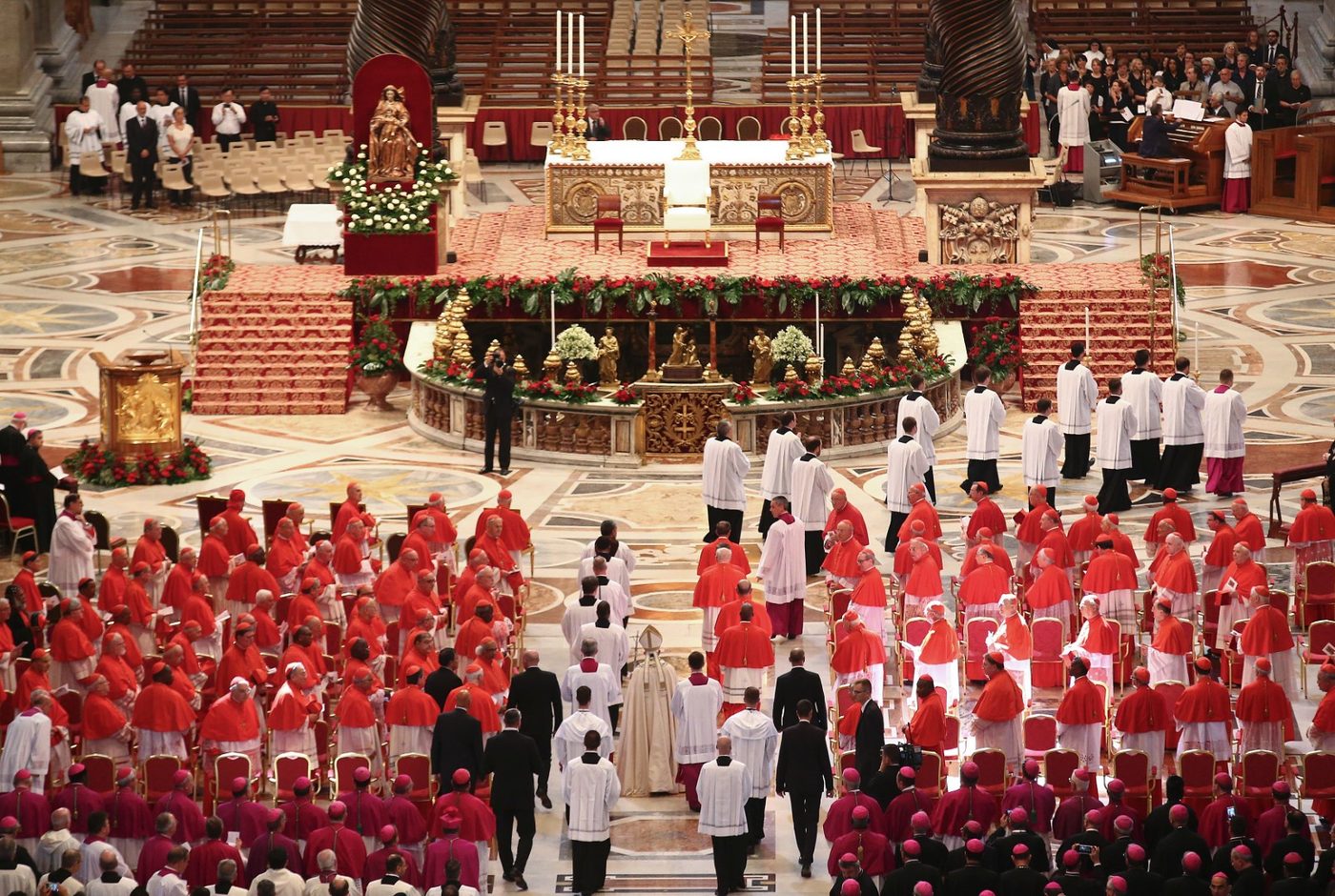
Like many faithful Catholics, Fr Aidan Nichols is concerned about the festering doctrinal and pastoral crisis resulting from Pope Francis’s Apostolic Exhortation Amoris Laetitia. This magisterial document is unprecedented in that it appears to conflict with a number of traditional Church teachings: those, for instance, prohibiting Communion for divorced and invalidly remarried Catholics and asserting the existence of intrinsically evil acts that can never be justified under any circumstances. Some of these teachings certainly meet the conditions for infallibility laid down by Vatican Council II in Lumen Gentium, 25. However, I have some reservations about Fr Nichols’ proposed solution: a new canonical procedure “for calling to order a pope who teaches error”. As Fr Nichols recognises, the ancient canon affirming that “The First See is judged by no one” (c. 1404 in the current Code) does not preclude correction of an erring pope. It appears in the section under “Trials” and simply means that the Church recognises no tribunal, secular or religious, that would be competent to summon and pass judgment on the Roman Pontiff. The authoritative New Commentary on the Code of Canon Law, in expounding this canon, clarifies that it “is not a statement about the personal impeccability or inerrancy of the Holy Father. Should, indeed, the pope fall into heresy, it is understood that he would lose his office. To fall from Peter’s faith is to fall from his chair.” Most great canonists, as well as classical theologians such as Suárez, Cajetan, Bellarmine and John of St. Thomas, have endorsed this view, understanding “heresy” here to mean formal heresy, which includes the element of pertinacity (obstinacy). That’s when you refuse to accept correction even after being shown that your opinion contradicts a doctrine the Church has proposed as revealed truth, to be believed “with divine and Catholic faith” (cf. Catechism of the Catholic Church, 2089). But the Commentary immediately adds an important reservation: “The question, however, of who or what body . . . would determine whether, in fact, the pope had fallen into heresy is unclear historically and is obviously not settled by this canon” (p. 1618). Most of the canonists and great theologians mentioned above maintained that only an “imperfect general council” (consisting of the whole episcopal college except the pope) would be competent to determine this question of fact. This body would declare, if necessary, not that it was removing the pope from office – something beyond the competence of any earthly authority – but that since it was clear the pope had, as an observable matter of fact, become a formal heretic, he had ipso facto fallen from office. The cardinals would then gather in conclave to elect a new pope. However, a fatal weakness in the above procedure would immediately become apparent if we tried to implement it in the 21st century. And I am afraid this weakness would probably apply also to the milder kind of canonical procedure suggested by Fr Nichols – one which would seek not to replace the reigning pontiff, but just to formally correct him. Those great scholars of former centuries took for granted an ecclesial culture in which the great body of the episcopate retained a deep and healthy abhorrence of heresy. They therefore assumed that if a pope should lapse into heresy (which heaven forbid!), he would find himself up against a rock-solid wall of resistance from the remaining bishops and the College of Cardinals, so that any man elected as the new pope would enjoy the morally unanimous acceptance of the faithful. Problem solved.
12:53 PM
Fr Nichols is right about the doctrinal crisis. But there's a better answer
The proposed reform would be hard to implement. Here's another way to change canon law
Fr Brian Harrison

6 min read



Already a subscriber? Sign in
5freearticles every month
Continue reading with a free account. No card needed.
- Five free articles every thirty days, on any device you sign in on
- The Catholic Herald newsletter, every morning
- Subscribe whenever you like for everything: every article and the magazine
Related articles
 Newsroom
Church leaders urge Drumcree dialogue: ‘Too much is at stake’
The Catholic and Church of Ireland Archbishops of Armagh have urged a renewed commitment to peace and reconciliation amid the Drumcree stand-off
Corrie Douglas-Young Newsroom
Thousands of Irish children to join global Rosary campaign
Corrie Douglas-Young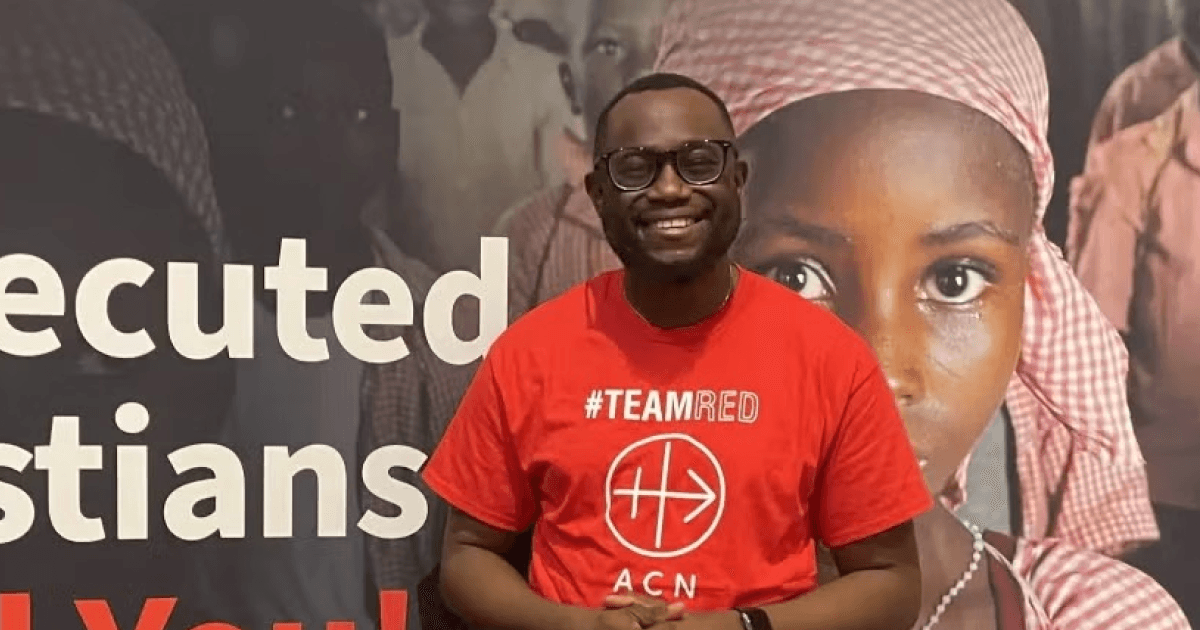 Newsroom
TikTok priest urges young people to stand with persecuted Christians
Nathalie Raffray Newsroom
Baby born at 25 weeks reunites with neonatologist two years after leaving hospital
The Catholic Herald Newsroom
Joe Biden honoured by Planned Parenthood after defending abortion rights
Christine Rousselle
subscribe to the catholic herald today
Our best content is exclusively available to our subscribers. Subscribe today and gain instant access to expert analysis, in-depth articles, and thought-provoking insights—anytime, anywhere. Don’t miss out on the conversations that matter most.
Subscribe



