


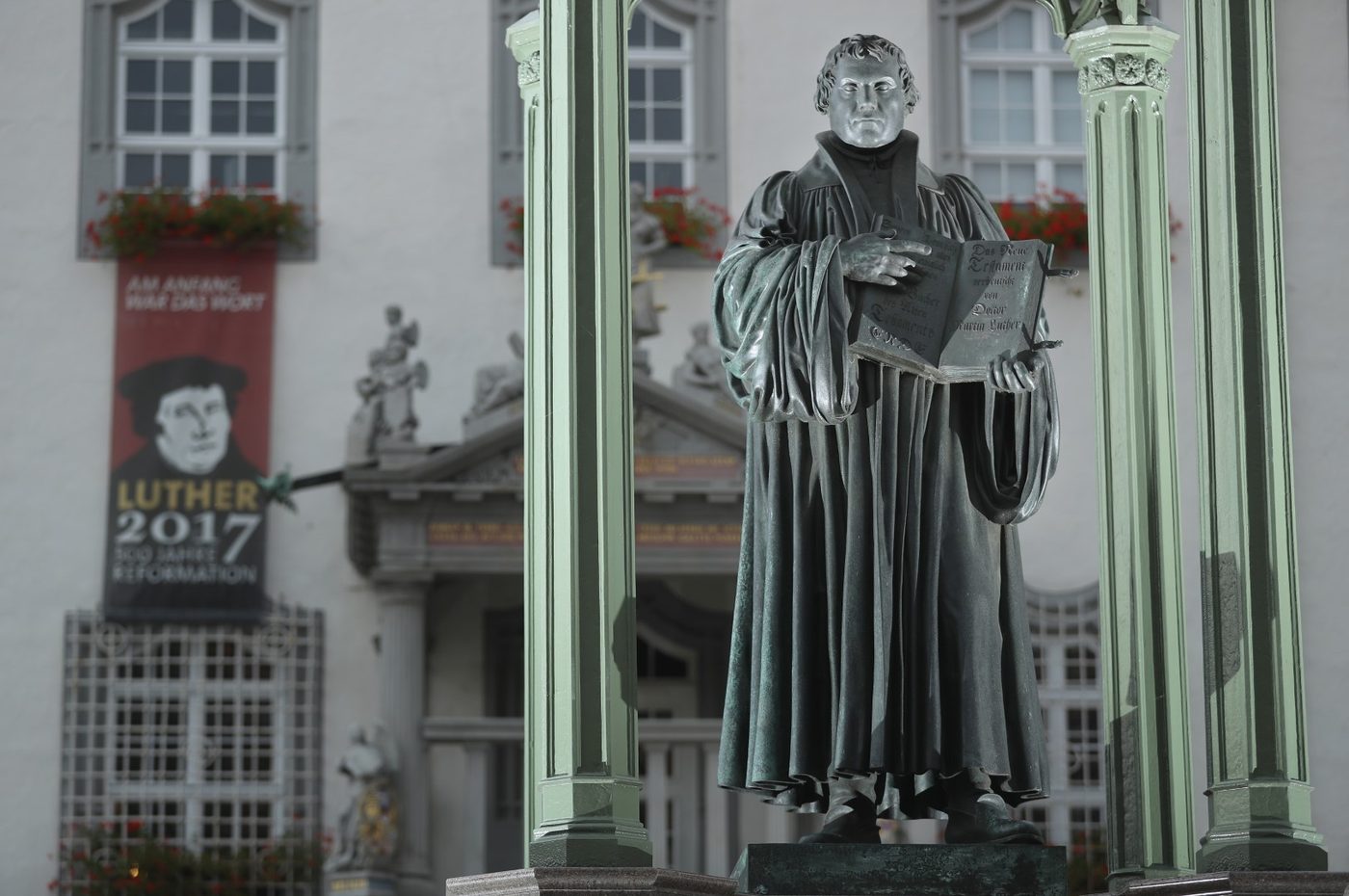
Much has been written by scholars about the impact of Martin Luther’s reforms on the religious divisions of Europe, (the start of which is dated from October 31, 1517). Henceforth Western Europe divided into Catholic and Protestant (while Eastern Europe and Greece remained with Byzantine Orthodoxy). But leaving the religious divisions to the scholars, I remain fascinated by the cultural differences which linger between Catholic and Protestant Europe. Protestant societies are said to drive more carefully – reflecting a concern for prudence – than Catholic societies, where a more easy-going, or even fatalist, attitude may prevail. Protestant culture is famously focused on cleanliness – “cleanliness is next to godliness” being a traditional Protestant motto. The virtuous boast of the upright Ulster Protestant always used to be: “You could eat your dinner off my kitchen floor.” When I visited Norway, I observed how spotlessly clean public lavatories were, notably on trains. A heritage, maybe, of Protestant culture. Max Weber, the German sociologist, wrote a classic book explaining these attitudes, The Protestant Ethic and the Spirit of Capitalism. Protestants, he claimed, were better with money, because Calvinism stigmatised poverty, discouraged begging and promoted work and sobriety. Catholic societies tolerated begging as almsgiving, respected the poor (sometimes calling poverty “holy”) and were generally more happy-go-lucky. Protestant culture was technically progressive, but also more anxious. Catholics, said Weber, slept better because they were less worried about life in general. This is now somewhat outdated (and it was pointed out that banking was invented in Catholic Lombardy), but I think there are aspects of European culture which still owe their colourings to Catholic and Protestant divisions. Commentators could understand Europe better if they grasped that Denmark is Lutheran in culture and Portugal is Catholic. Belfast comedians still find a rich seam of drolleries on Luther’s divisions. In Belfast last week, a funnyman advised me to attend the Catholic church in Divis Street “if you want to meet friendly people and look at nice holy pictures – but your car mightn’t be there when you come out. Go to the Protestant church and your car will be fine, but you’ll feel cold and dead guilty as you emerge!” Ah, Luther! ........ I fear that my poor GP – a conscientious and helpful medic – will burst a blood vessel if he is asked to quiz patients on their sexual orientation, because he is already drowning in bureaucracy and box-ticking which the NHS “systems” impose on doctors. Too much time which should be dedicated to patients is now used up with “compliance” rules of every conceivable variety. Doctors also have to protect themselves from litigation of every possible kind and that means more paperwork and legal bureaucracy. Small wonder so many GPs have quit the profession and there is a growing shortage of doctors entering this most people-oriented aspect of medicine. NHS England says it wants doctors to ask patients whether they are straight, gay, transgender, etc, so as to ensure that gay people, who apparently suffer from more depression and suicide issues, get properly treated. Everyone, regardless of their personal lives, should be properly treated, but it shouldn’t warrant such an institutional intrusion. And it shouldn’t be yet another box-ticking burden on already overwhelmed general practitioners. ........ Bill Nighy, that most pleasing film actor with a deceptively languid manner (he played the hilarious old rock star in Love Actually) has been saying that the road to professional success should be anything but languid. The 67-year-old’s advice to young thespians is to prepare for every job diligently: “Learn every single word that you have to say backwards, forwards and sideways before you go into a rehearsal room – and obviously, before you go on a film set.” He deplores laziness in a performer and says there is a fashion now “for not knowing your lines. It’s been invented by people who don’t want to do their homework.” It could be the nuns in my convent school speaking. Preparation is everything, we were taught. Significantly, the French word for “rehearsal” is répetition. Repetition is how we learn. Bill Nighy thinks that some people now believe it’s more “creative” not to be prepared, and that’s tosh. The great creative artists often prepared their work obsessively. Follow Mary Kenny on Twitter: @MaryKenny4
1:00 PM
From kitchens to cars, Luther changed everything
Mary Kenny

4 min read



Already a subscriber? Sign in
5freearticles every month
Continue reading with a free account. No card needed.
- Five free articles every thirty days, on any device you sign in on
- The Catholic Herald newsletter, every morning
- Subscribe whenever you like for everything: every article and the magazine
Related articles
 Newsroom
Church leaders urge Drumcree dialogue: ‘Too much is at stake’
The Catholic and Church of Ireland Archbishops of Armagh have urged a renewed commitment to peace and reconciliation amid the Drumcree stand-off
Corrie Douglas-Young Newsroom
Thousands of Irish children to join global Rosary campaign
Corrie Douglas-Young Newsroom
TikTok priest urges young people to stand with persecuted Christians
Nathalie Raffray Newsroom
Baby born at 25 weeks reunites with neonatologist two years after leaving hospital
The Catholic Herald Newsroom
Joe Biden honoured by Planned Parenthood after defending abortion rights
Christine Rousselle
subscribe to the catholic herald today
Our best content is exclusively available to our subscribers. Subscribe today and gain instant access to expert analysis, in-depth articles, and thought-provoking insights—anytime, anywhere. Don’t miss out on the conversations that matter most.
Subscribe



