
September 8, 2026

‘God appears to be doing something’: Hundreds of Texas A&M students enrol in OCIA

Christine Rousselle
More
Related
Min read
share

The campus ministry staff at Texas A&M University is thankful but humble after nearly 700 students enrolled in OCIA for the upcoming year.

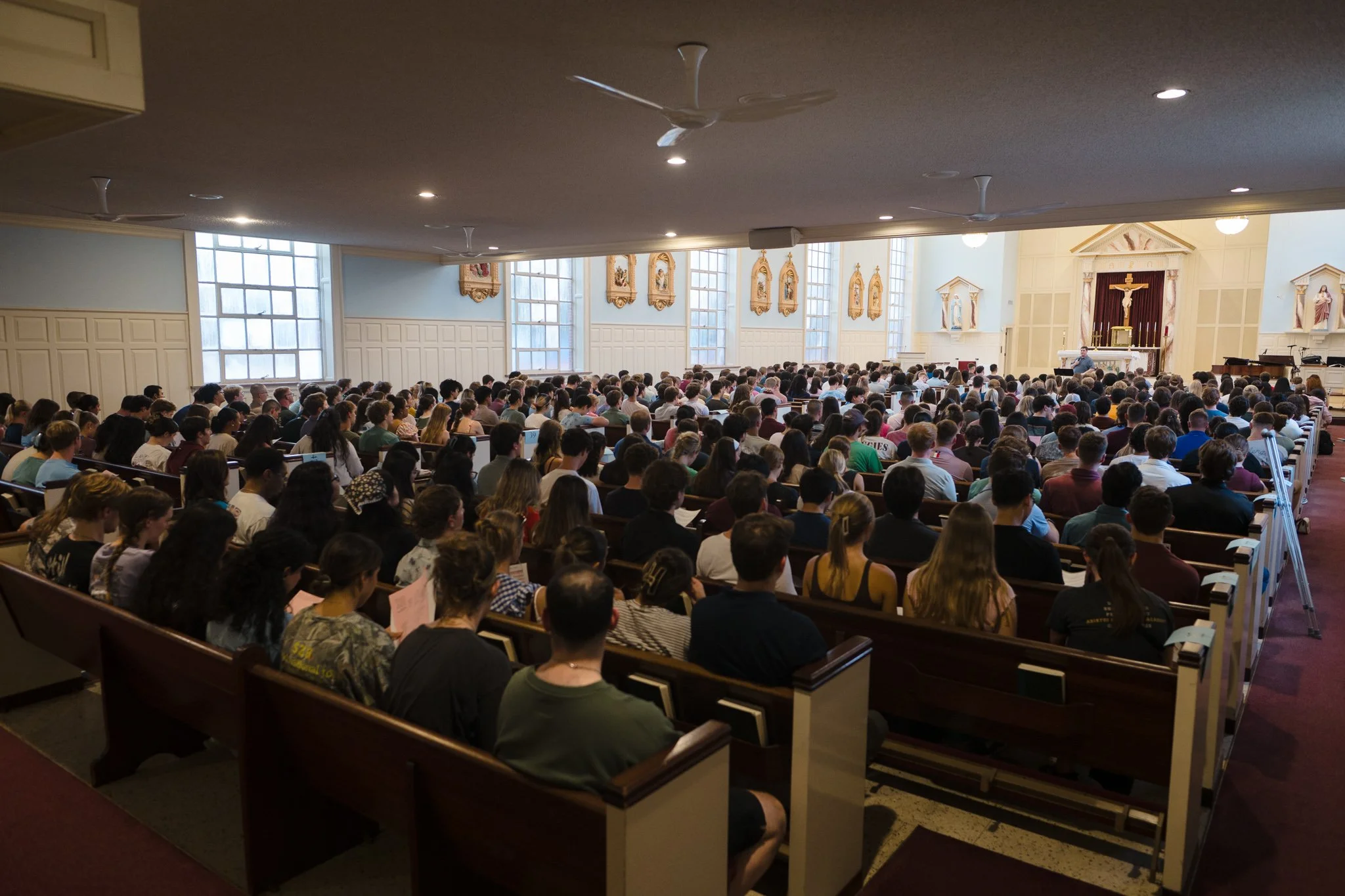
At Texas A&M, a public university in College Station, Texas, OCIA is a two-semester process, with classes beginning at the start of both the spring and fall semesters. Last week, more than 380 people attended the first night of OCIA classes for the session beginning with the fall semester. About an additional 270 began OCIA at the start of the spring 2026 semester.

“We are incredibly grateful,” said Kevin Pesek, an alumnus of Texas A&M and the director of OCIA and marriage preparation at the St Mary’s Catholic Center, told the Catholic Herald. “More than 380 people showing up on the first night is remarkable.”

That being said, Pesek was quick to note that “many of these students did not suddenly decide on September 1 that they were interested in Catholicism. By the time they come to us, something has often been stirring for quite a while. They have been going to Mass with friends, having conversations about the faith, reading, listening to podcasts, or asking questions on their own.”

He continued: “The majority of people we meet are not saying, ‘I know nothing about Catholicism.’ More often, they are saying something like, ‘I’m pretty sure I want to become Catholic, but I have a few questions.’”

The large OCIA class, he said, “says much more about what God is already doing in the lives of these students than it does about St Mary’s”.

Of the OCIA students, about one in four are not baptised, and another 40 per cent were baptised in a different Christian tradition, Pesek explained. The remainder were baptised Catholic but did not receive First Communion and/or Confirmation.

Unlike programmes where people who were already baptised Catholic would take separate, Confirmation-focused sacramental preparation from their unbaptised peers, at St Mary’s this is not the case.

“We have found that being baptised Catholic does not necessarily tell us where a college student is in his or her faith. Someone baptised as an infant may need much of the same evangelisation and catechesis as the non-Catholic student sitting beside them,” he said.

With an OCIA programme that is larger than many Catholic colleges’ entire student body, ensuring proper religious formation and discernment is a key focus, said Pesek.

“We work very hard to make sure OCIA does not feel like 650 people sitting anonymously in a lecture hall,” he said. Each week, students attend classes, “but a huge part of the formation happens in smaller groups”, with more than 200 student leaders assisting with OCIA this year. Many of those students are themselves former OCIA participants at St Mary’s Catholic Center.

“They lead discussions after the talks, help students work through questions, go to Mass with them, pray with them, and build relationships outside of the weekly meeting,” he said. “More than half of those leaders received their own sacraments within the past two years, so many of them remember very clearly what it was like to sit on the other side of the table.”

Aside from teaching OCIA participants about Catholicism, there is an emphasis on participation “in the actual life of the Church through Mass, prayer, Adoration, retreats, service, and Catholic community”, said Pesek.

“Ultimately, though, our goal is not simply to make sure everyone gets through the material. We are helping people discern whether God is calling them into the Catholic Church. That requires good catechesis, but it also requires prayer, relationships, time, and freedom,” he said.

Pesek said there was not one specific driving force, programme or influence leading students to sign up for OCIA.

Rather, “What we hear most often from students is much simpler: there was a Catholic person in their life whose faith made them curious. Sometimes that is a missionary. Often it is a roommate, friend, boyfriend or girlfriend, classmate, or grandmother.”

“That is probably the larger lesson for all of us. You do not need to work for the Church to have an impact on someone’s faith. Live your faith, be willing to talk about it, and be willing to invite someone to come with you.”

Students are attracted to the Eucharist, and the tradition and stability of the Church, said Pesek, something that stands out “at a time when so much around them can seem negotiable”.

He continued: “I think many students are looking for something they believe is actually true and worth building their lives around. One student told me their favourite part of Mass was watching everyone else receive Communion. They couldn't receive yet, but said they were excited that their brothers and sisters could receive Jesus and that they could simply be close to someone who had received Him.”

Another student, he said, expressed a desire to become Catholic to join “the Church that the martyrs were in”.

“Those are very different answers, but both point towards something deeper than joining a club or finding a community,” he said. “These students are asking serious questions about Jesus Christ, the Sacraments, and whether the claims of the Catholic Church are true. Our responsibility is to give them the space and formation to discern those questions freely.”

As the school year continues, Pesek anticipates that additional students may join OCIA and others may drop out, or decide that after two semesters they simply need more time to discern joining the Church.

“OCIA is not a roller coaster where you get strapped in at the beginning and inevitably receive the sacraments at the end,” he said.

“Our job is not to hit a quota or convince people to become Catholic. Our job is to teach faithfully, answer their questions, give them opportunities to encounter Jesus Christ, and accompany them while they listen for what God is asking of them.”

The huge numbers of potential conversions at Texas A&M “are not really the story”, said Pesek.

“The story is that God appears to be doing something in the lives of hundreds of young people, and for a time, we have been given the privilege of walking with them.”

Continue reading with a free account

Create a free account to read up to five articles each month
Create free account

You have # free articles remaining this month.

Subscribe to get unlimited access.
Sign up

subscribe to the catholic herald today

Our best content is exclusively available to our subscribers. Subscribe today and gain instant access to expert analysis, in-depth articles, and thought-provoking insights—anytime, anywhere. Don’t miss out on the conversations that matter most.
Subscribe