



I would happily describe myself as part of the “crunchy Catholic” camp: someone whose faith forms the basis of how I understand everything, while also being drawn to holistic health, natural living, traditional remedies, organic food and a general distrust of over-medicalised modern life.
While I try to hold all of this within a theological worldview, I’ve become increasingly aware of how the secular wellness-optimisation framework has seeped into my thinking, and I can’t help but ask if the very pursuit of optimisation is what’s keeping me anxious.
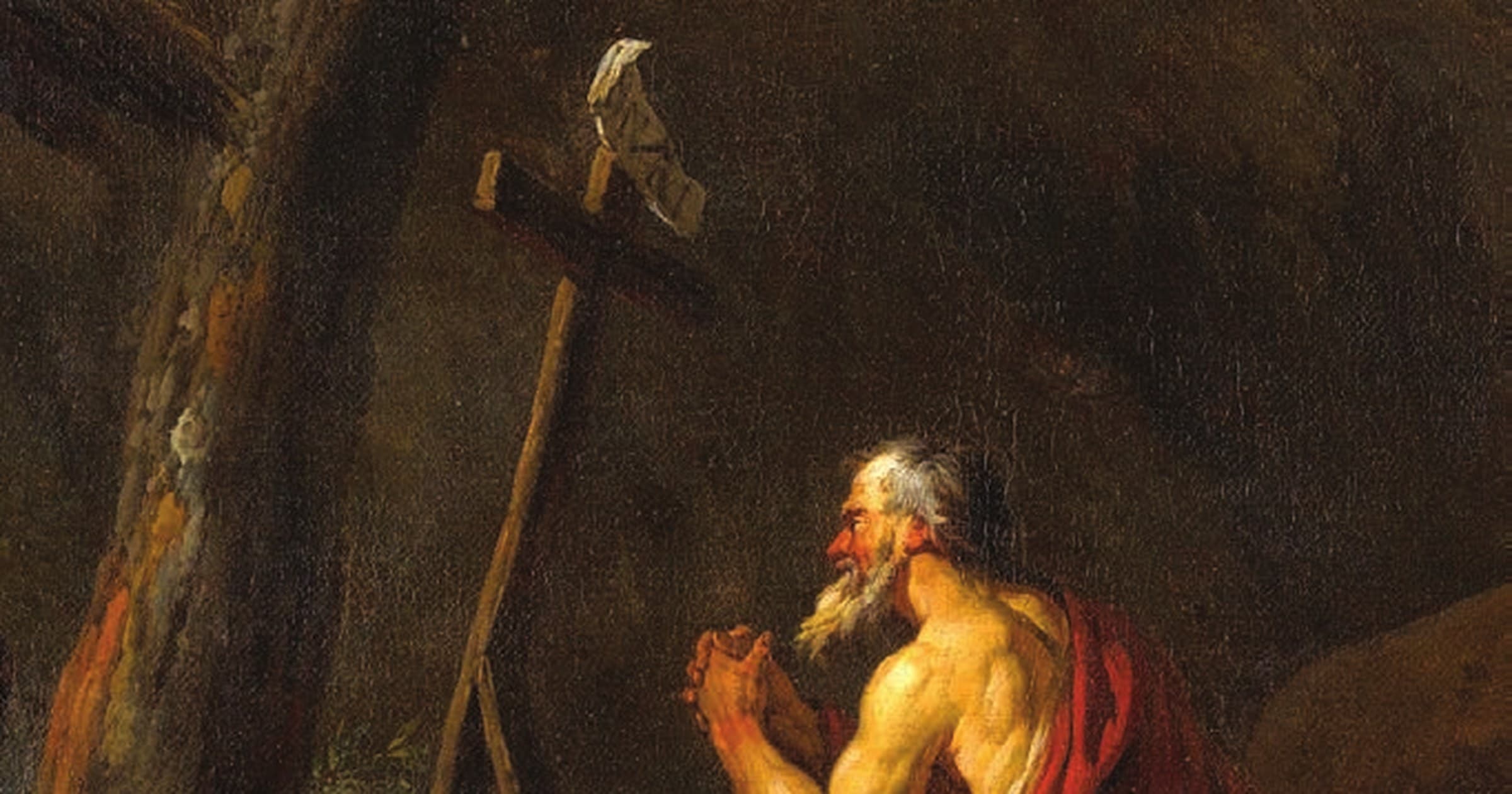
The belief that peace can be attained through endlessly optimising, tracking, detoxing and controlling our bodies often produces the very opposite: food fear, stress and unrest. And while wellness has become the great promise of our age, offered through clean eating, cold plunges, biohacking, step counts and sleep scores, the human person has slowly turned into a project to be perfected.
On the surface, it looks admirable. Who would argue against caring for the body, eating well or seeking discipline? These are all good things. But beneath it, something more subtle has emerged: wellness has started to have its own rituals, moral codes, prophets, heresies and, perhaps most importantly, its own promise of salvation.
The message implied is that if we manage ourselves well enough, we will be okay. If we sleep perfectly, regulate our cortisol, avoid toxins, journal our thoughts, eat enough protein and optimise our nervous system, we will finally feel safe and enjoy peak wellbeing. Yet, paradoxically, we are seeing more burnout, digestive issues and hormonal imbalances than ever before, even among those who are doing “everything right”. And perhaps it is this that feels most frustrating: that careful effort does not always yield the promised stability or health.
Even acknowledging that we live in a world of endocrine disruptors, digital overstimulation, environmental toxins and ultra-processed food, one has to ask: is the prevailing wellness paradigm truly the answer it claims to be, or has it become part of the problem?
The answer lies in the foundation of the system itself. Modern wellness culture is built on radical self-reliance, assuming that when something goes wrong, it is our responsibility to fix it through better data, discipline and control. But the human person is not a machine; we are not self-contained systems that can regulate ourselves into peace indefinitely. We are relational beings, created with a need for love, safety, communion – and ultimately, God.
When wellness becomes disconnected from this truth, it quietly turns into a burden. The body is no longer something to be loved, but something to be managed. Rest is no longer gratefully received, but optimised. Even food becomes morally charged: clean or dirty, good or bad, healing or harmful. This creates a low-level anxiety in us that can never fully switch off. Because if we are the ones responsible for our total wellbeing, then there is no true rest, only ongoing vigilance.
This is why I believe in a “both/and” approach. When I rely solely on myself to perfect my health habits, it breeds pressure and anxiety. But when I can embrace the healthier ways of living God has led me towards – while also trusting that my life ultimately rests in His hands – I enjoy a far deeper sense of freedom.
At the same time, I’m wary of over-spiritualising every ailment as though it were directly willed by God in a simplistic sense, with no space for personal responsibility. Of course, God permits suffering and can bring profound good from it, but I do not believe illness itself is His desire for us.
In my own life, persistent inflammation and health struggles have been gifts only in the sense that they acted as red flags, forcing me to pay attention to patterns, habits and wounds I had long ignored, prompting changes that ultimately brought me closer both to myself and to God. But I also have to acknowledge that many of those health consequences were not random, but the result of tangible choices, behaviours, stresses and imbalances.
After all, we were created to receive life, not manufacture it. “Apart from Me you can do nothing” (John 15:5) is not merely a spiritual saying, but a description of reality. So much of what modern science is now discovering about nervous-system regulation – safety cues, co-regulation, attachment and vagal tone – has always, in a different language, pointed towards something the Church has known for centuries: the human being is stabilised not merely by discipline, but by love.
A calm nervous system is not simply the product of perfect routines, but the fruit of safety, being-with and resting in the presence of the One who never demands performance from us. This is where prayer and adoration become profoundly relevant – not as “spiritual hacks”, but as encounters with reality itself. In them, our breathing slows, our muscles release, and we are no longer scanning for threats, whether that’s a crowded street, a disgruntled text message or a disturbing news story.
This level of peace is something no wearable device can replicate, because it is not achieved through control, but through stewardship: seeing our bodies as gifts entrusted to us, and as part of a lived relationship with God. The Christian vision is not anti-body or anti-discipline; it is, in fact, profoundly embodied.
We were not made to carry the weight of our own salvation – physically, mentally or spiritually. And when we try to do so, even under the seemingly noble banner of “wellness”, something in us will eventually break. And perhaps the deepest irony of all is that the more we stop trying to save ourselves, the more our bodies can finally learn how to rest.


.jpg)