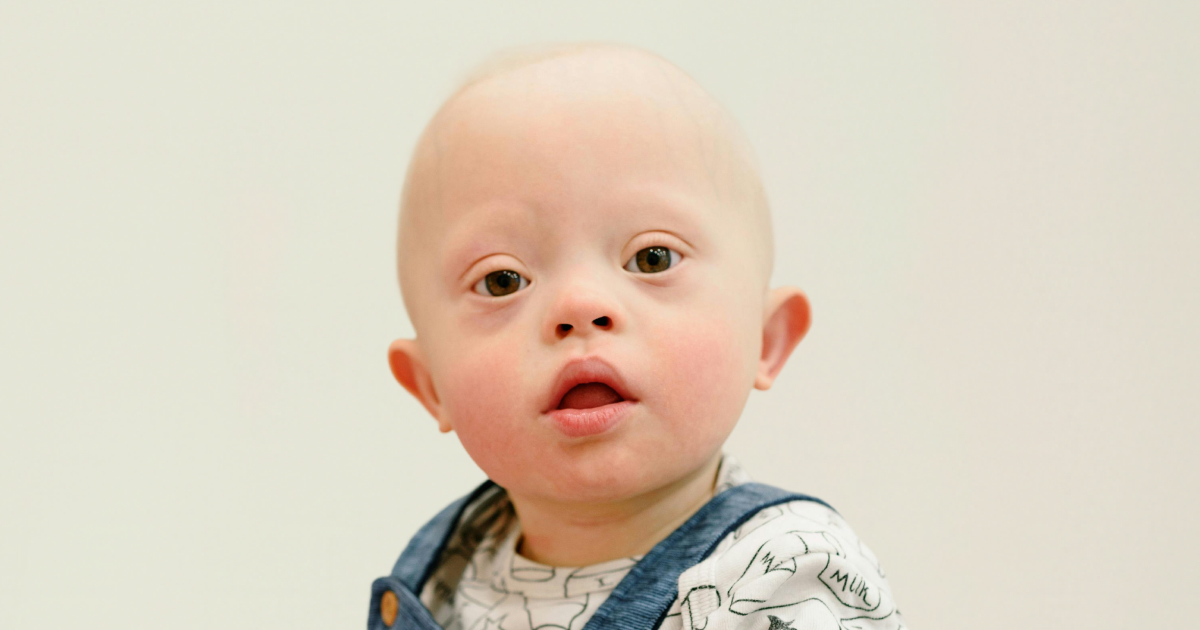


Archbishop Ettore Balestrero, Permanent Observer of the Holy See to the United Nations and Other International Organisations in Geneva, has called for an end to discriminatory practices targeting babies diagnosed with Down syndrome.
Speaking at an event organised by the Jérôme Lejeune Foundation, a French organisation dedicated to funding research into genetic intellectual disorders, the archbishop called for attendees to reaffirm their “unwavering efforts to promote and defend the inherent dignity, fundamental rights, and transcendent value of all persons at every stage of life”.
He said that “persons with Down syndrome are more than a diagnosis, more than a condition, and certainly more than the limits others may imagine. All of them, like all of us, possess the same inherent dignity and sacred value, intentionally and lovingly imprinted by the Creator from the very first moment of conception.”
He also criticised “eugenic practices linked to prenatal screening” and the “selective termination of pregnancies”, saying such practices must be firmly rejected.
His remarks come amid growing concern over an increase in terminations of children with Down syndrome and government legislation which appears to encourage mothers not to continue pregnancies following such a diagnosis.
The increase is in part linked to the expansion of prenatal testing. Non-invasive prenatal testing, which does not carry the risks associated with earlier methods, was introduced in 2011 and is now standard practice in many countries.
This has led to high numbers of children with Down syndrome being aborted, particularly in Nordic countries such as Iceland and Denmark.
In Iceland, where prenatal testing is offered to all women, almost no children are born with Down syndrome, leading the Icelandic geneticist Kári Stefánsson to state: “We have basically eradicated, almost, Down syndrome from our society.” The country’s treatment of children with Down syndrome has led the United Nations to request that it “take immediate and effective steps to combat discrimination against persons with disabilities, particularly those with Down’s syndrome, and strengthen public awareness campaigns to uphold their rights and provide comprehensive support and assistance to concerned persons and their families”.
In the United Kingdom, where prenatal testing has been available since 2012, the number of children born with Down syndrome fell by 54 per cent between 2011 and 2015. The country permits the termination of children with Down syndrome up until birth, a policy repeatedly condemned by disability rights activists.
Responding to the archbishop’s comments, Lynn Murray of Don’t Screen Us Out, a UK-based advocacy group for people with Down syndrome, said: “This is a welcome intervention on this issue. Our current law that allows abortion up to birth if a baby has a disability including Down’s syndrome is deeply discriminatory.”
“In England and Wales, around 90 per cent of babies diagnosed with Down’s syndrome are aborted. We rightly recognise that discrimination against people with Down’s syndrome is unacceptable after birth, but our abortion law allows direct discrimination before birth.”
“As a mother of a daughter who has Down’s syndrome, I see every day the unique joy she brings to our family and the continuing positive impact she has on others around her.
“People with Down’s syndrome are not defined by a diagnosis. They are loved, valued, and cherished members of our families and communities, and their lives are of equal worth.”
“That is why this law is so troubling. It sends a message that some lives are less worthy of protection than others. This is discrimination and it is a message we should firmly reject.”
“We also hear time and again from parents who say that, after receiving a diagnosis, abortion was repeatedly presented to them as the solution. Families deserve better than that. If we are serious about equality, dignity, and inclusion, then our law should reflect those values too.”
“If we truly believe that discrimination against people with Down’s syndrome is wrong, then we cannot keep defending a law that permits that discrimination before birth.”