



September 11, 2026

House of Commons rejects assisted suicide Bill

Corrie Douglas-Young
More
Related
Min read
share

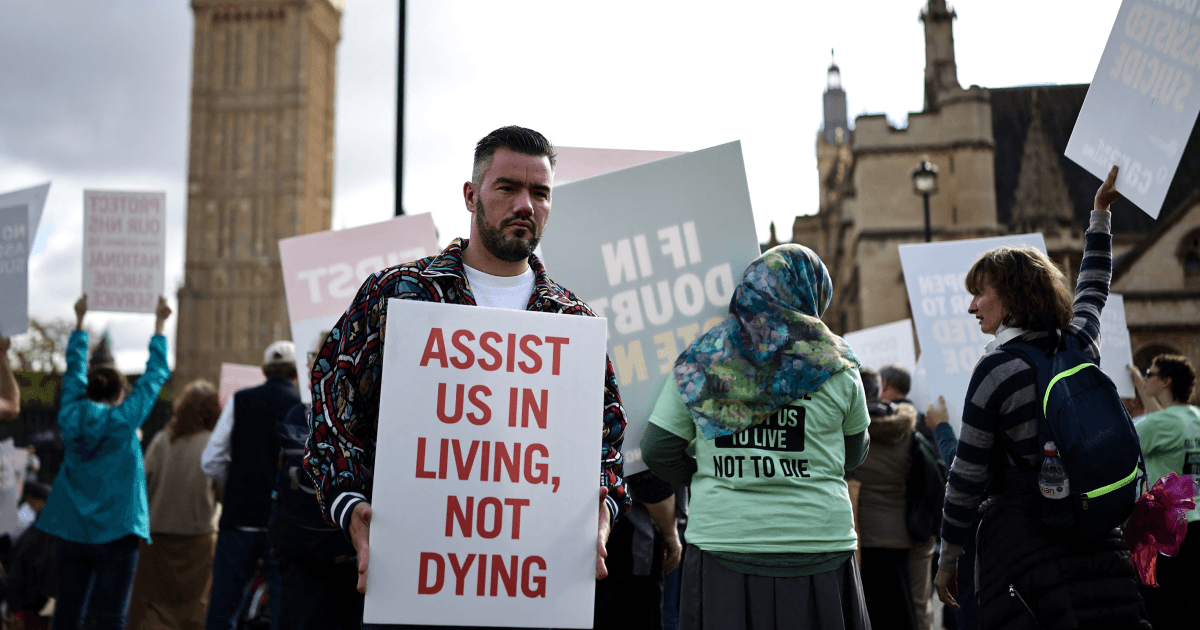
The House of Commons has rejected the Terminally Ill Adults (End of Life) Bill, with 286 MPs voting against and 270 in favour. The Bill, introduced by MP for Rochester and Strood Lauren Edwards, would have legalised assisted suicide for people aged 18 and over who are expected to die within six months. 

Archbishop John Sherrington of Liverpool thanked those who wrote to their MPs to stop the Terminally Ill Adults (End of Life) Bill progressing through Parliament, stating that the bishops of England and Wales were pleased MPs had opposed the legislation.

“I would like to express my gratitude to those MPs who voted against the Bill and the many people from across society who made their voices heard – doctors, legal professionals, disability groups, other faith communities and those of no faith who stood up for the dignity and sanctity of every life,” he said.

“We are thankful for the many prayers which have been offered during these weeks. Throughout this debate, we have argued that our response to those facing serious illness, disability or the challenges of old age should be rooted in solidarity, care and respect. 

“The true measure of a compassionate society is its willingness to support people through difficult circumstances rather than encouraging them to end their lives.”

Labour MP for West Lancashire Ashley Dalton, who has incurable stage four breast cancer, appealed to MPs before the vote to reject the bill.

“I have been terrorised by tales of people vomiting up their own faeces as though this is commonplace during death. It is vanishingly rare,” she said.

“It is nothing short of irresponsible to scaremonger people like me into believing our deaths will be horrific, when all the evidence suggests that with access to good palliative care, deaths are on the whole gentle. The answer is not to terrify people and their families, it’s to sort out palliative care and social care first, because none of this takes place in a vacuum.

“Until we can say that everyone who needs it has access to high-quality palliative care then we are offering nobody a choice. A terrible death or an assisted death is not a choice, it’s a threat.”

Conservative MP for South West Wiltshire Dr Andrew Murrison said: “Canada has seen the most appalling mission creep, particularly into mental health.

“And that is probably why the Royal College of Psychiatrists, in company with the most impressive array of medical, disability and charity groups, is so wary of this Bill,” he said, encouraging MPs to “not turn a tin ear to them”.

Prime Minister Andy Burnham, who did not participate in the vote in order not to “unduly influence the debate”, had expressed his concerns surrounding the introduction of assisted suicide. He stated that he found it “very challenging to introduce that wider debate in a context of people not receiving that care and having the peace of mind about that care”.

Burnham’s predecessor Kier Starmer had voted in favour of Kim Leadbeater’s private member’s bill, which was identical to the current proposed legislation, which fell in the House of Lords in April. The previous Bill had passed two votes in the House of Commons, with the second seeing a narrowing in the majority.

Provisions under the Parliament Act would have prevented the House of Lords from once again blocking the legislation if it had passed, due to it being identical to Leadbeater’s Bill. It had fallen after the House of Lords tabled more than 1,200 amendments to the proposed legislation.

The bishops of England and Wales made a final appeal this week following a long campaign to encourage the faithful and MPs to oppose the Bill. Across a number of statements, they had called it “wrong in principle” and “deeply flawed”, citing both moral opposition and practical concerns regarding coercion for patients and freedom of conscience for medics.

It also drew to light what many have called serious underfunding for palliative care, an issue which the bishops have championed as a way “in which people can rightly and properly be assisted to die with dignity.”  “By offering them our love and care, by supporting them and their families with our prayers, and through the services provided by palliative care and hospices,” Bishop Marcus Stock of Leeds said.

Continue reading with a free account

Create a free account to read up to five articles each month
Create free account

You have # free articles remaining this month.

Subscribe to get unlimited access.
Sign up

subscribe to the catholic herald today

Our best content is exclusively available to our subscribers. Subscribe today and gain instant access to expert analysis, in-depth articles, and thought-provoking insights—anytime, anywhere. Don’t miss out on the conversations that matter most.
Subscribe