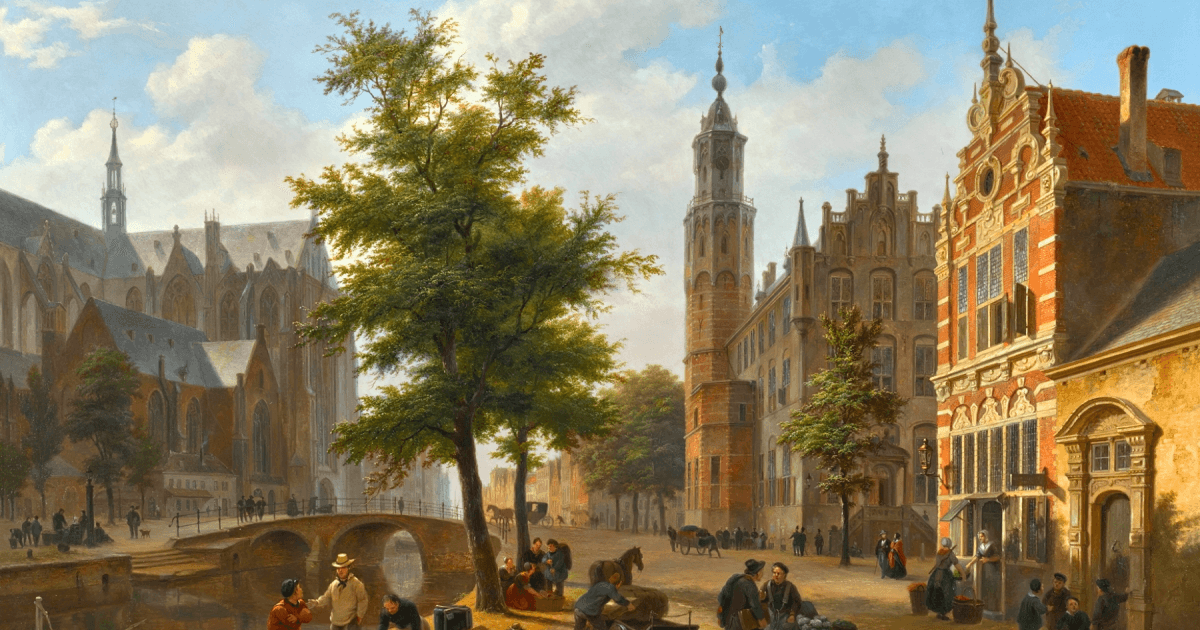




Last week I read an incredible Substack article titled “We Must Build”. The underlying point of it was that Catholics used to live in physically proximate communities. They lived, worked and worshipped together in the same area. And this de facto accountability is what helped them all stay Catholic.
If you didn’t show up at church on Sunday, people would ask what’s wrong or if someone was sick. Nowadays Catholics don’t live in proximity to each other. And they often don’t attend the same Mass every Sunday. Making check-ins like this effectively rude.
What’s fascinating, as the author points out, is that we actually have more priests per number of practising Catholics today than we ever have. The key issue is, we are so much more spread out, which makes it feel harder for the priests we do have to minister to us. The key issue here is that the number of parishes (physical churches) has stayed relatively stagnant, making the number of people served per church lower.
As I read, the solution to this problem of disconnectedness seemed to be the creation of “Catholic communities”. That would directly solve the density problem. It would also solve the priest problem. It would solve a lot of other problems as well, many of which are beyond the scope for today.
Doing this can be very challenging, but I believe with a small amount of effort, over a long period of time, Catholic business owners can solve this problem. We have a galvanising role to play.
Let’s get into it. More than money, business owners have one asset that is highly valuable to employees: stability. We can offer stability through commitment to our employees. Stable employment is the reason most people are not taking a leap into starting a business of their own. They value that stability because they want to raise a family, they are fearful of risk-taking or for many other reasons.
What if we offer them more than just a stable paycheque? What if working for us leads to a sense of peace and fulfilment, and even encouragement to be better fathers and mothers? After all, we are Catholics; shouldn’t we understand the hierarchy of needs? God, vocation, career. In that order – never switched.
What if we offered people the opportunity to take an extra-long lunch break so they could get to Mass during the day (and still have time for lunch). Perhaps we stop to pray the Angelus during the day, inviting anyone else to join us. Maybe we close up shop on holy days of obligation, marking it as a truly special occasion. Maybe we encourage our employees to go home for dinner with their families instead of exulting in burning the midnight oil.
All of these are small examples of what we could start to do to offer more than just a stable pay cheque for our employees. But there is something more.
If you’re creating roles that are truly orientated towards the person and encourage family flourishing, what’s to say many of these people wouldn’t stay with you for a lifetime? We used to have lifer employees. If you can achieve this, there are so many benefits to the business owner as well. Compounding knowledge in the company. Lower costs on recruiting a new person every two to three years.
It’s also amazing for the employee. They can buy a house and stick with it. Making improvements on it to continue beautifying it. Thus improving their neighbourhood. They will probably also spend more time getting to know their neighbours since they’re going to be there for a while. This has immense benefit to the community or neighbourhood that your employees live in. But what if we took it even further?
What if we created a programme to help our employees with a down payment on their house if they can buy in a certain neighbourhood? Ideally close to where you work out of. Ideally also within walking distance of a church (preferably with daily Mass). This could also come with some sort of contractual requirement to pay it back if they leave too soon, thus giving you the time with them to really build that bond of employer and employee. Hopefully taking it further into friendship.
Replicate this across, say, a dozen employees, and you’ve already got the makings of an incredibly dense “Catholic neighbourhood”. Notice how you didn’t have to buy empty land and start a commune from scratch. You didn’t have to change your way of life and become a homesteader. You just acted with the resources at your disposal.
What do you think will happen once word gets out at your local parish that a dozen-ish families live within walking distance of the church, and all work in that same neighbourhood? You guessed it. You’re going to attract more people who like that. Maybe word gets out around the state, or country as a whole, and another business owner is inspired to do the same thing. A chain reaction ensues, leading to Catholic neighbourhoods all over the place. And the ones that existed begin to grow like wildfire.
Then just imagine what happens to the non-Catholics in those neighbourhoods. Surely they still outnumber the Catholics. But when they see the devotion and strength of their neighbours’ Catholic culture and identity seeping through, what will they think? Will they ask them what’s going on? Perhaps they used to be Catholic but have since apostatised – this might be the moment of return. Surely, this effect will begin to shape the neighbourhood. After all, you are the average of the five people you spend the most time with. The hearts of those in the neighbourhood will surely either be transformed or they will be heartened, and they will leave, making room for others who want this life and further increasing the density.
And don’t forget about the children. Being surrounded by friends whose core identity is rooted in their faith. What an incredible hack to find your future spouse there. And those called to the religious life, through being so near to a priest, and hopefully a few nuns, won’t it be so much easier for them to hear that calling to the religious life?
All of this is possible. And it’s not even that hard. It only takes a bit of effort, sustained over a lifetime. Given that we as Catholics think in eternal timelines, thinking in generational timelines should be a piece of cake.
All that’s needed is that we as business owners begin to be intentional – to recognise that we have a role to play. If we want a better future, a future where practising our faith is the default setting, we are going to have to stop playing by the rules of the world and start playing by the rules of God.


.png)