




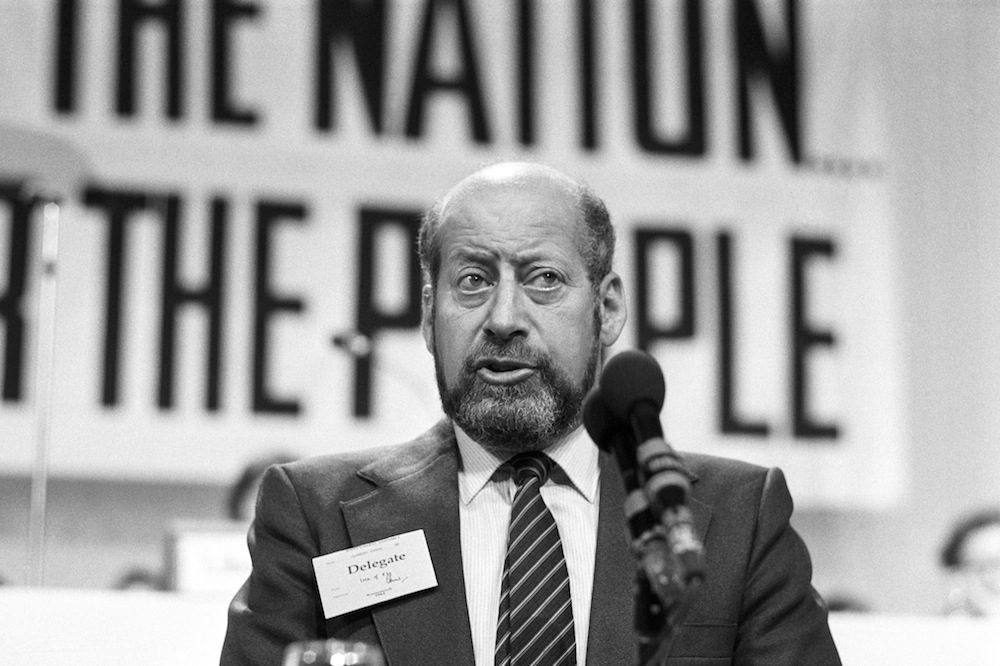
We were given to understand, in our schooldays, that Sigmund Freud’s work was a source of Vatican disapproval – because Dr Freud was “obsessed with sex”, and had peculiar theories that even young children had sexual impulses. This was regarded as scandalous and immodest. This may not have been an orthodox interpretation: Freud was an atheist who predicted that religion would die out by 1978 (he gave it 50 years, from 1928), which might have incurred a thumbs down from the Holy See. And yet, I reflected last week when I saw the headlines about the late Sir Clement Freud, history often pans out in darkly ironic ways. Sir Clement has been accused by three women of having seduced them as young girls and of having “groomed” them for sex when they were underage; and in one case, of having taken a teenager’s virginity in circumstances that amounted to rape. “Sir Clement Freud exposed as a paedophile who sexually abused girls as young as 10 for decades”, ran the media headlines. It is also considered suspicious that he associated with the family of the missing Madeleine McCann in Portugal. Meanwhile, his brother Lucian fathered so many sprogs with so many lovers that the exact number of his progeny has not been ascertained. In a demonstration of sibling rivalry that Sigmund himself (or his daughter Anna, a child psychiatrist) might find difficult to disentangle, the two Freud brothers never spoke, and never healed a childhood quarrel over a trifle. The association between the names of Freud and sexual compulsions may well have some basis in truth, it would seem. I once had dinner with Clement Freud – in Iceland, where we were reporting on a chess tournament. I thought him a little creepy, but I was a robust young woman and dealt with any would-be advances by quipping: “Do you believe anatomy is destiny, then?” But what really put me off “Clay” was his arrogance towards the Icelandic waiters, reprimanding them for having no knowledge of the finer points of Burgundy and claret – in a rough volcanic land where whale blubber and Geneva gin were the main items on the menu. Clement Freud had complex attitudes to his renowned grandfather. He was aware of the dynastic power of the name, and yet wanted to be famous on his own merits. On one occasion he accompanied “Young” Winston Churchill MP (grandson of the original) on a parliamentary trip to China. Clay complained that Churchill had been given a much better hotel room than he had. The Chinese official explained: “But you see, Mr Freud, Mr Churchill had a famous grandfather.” Clement was not amused that the Chinese (no more than the Vatican) had little regard for Sigmund Freud. ... There was a pleasing picture last week of Kate, Duchess of Cambridge, with Mary, Crown Princess of Denmark, together in their finery at Royal Ascot. They looked similar enough to be sisters and they have a lot in common – both married to heirs to their respective thrones and both from non-aristocratic backgrounds. My theory is that monarchies in Europe have helped to revive their popularity by marrying attractive but intelligent women from middle-class backgrounds (Letizia of Spain and Máxima of the Netherlands also), who are grounded in sensible values and are conscientious mothers. These princesses have learned much from the late Diana about care for the disadvantaged and involvement in charitable causes. Kate’s recent embrace of mental health problems is an example of this. Do altar and throne still go together? Frequently, yes. ... The adherents of Florence Nightingale are displeased that a large statue of her apparent rival, Mary Seacole, is to be unveiled shortly outside St Thomas’s Hospital in London (where Flo Nightingale founded her nursing school). The Nightingale Society, led by Dr Eileen Magnello, considers that Mrs Seacole’s achievements in the Crimea were not of the same magnitude as Miss Nightingale’s. But then Florence Nightingale herself was inspired by the pioneering nursing work of the French St Vincent de Paul nuns, whom she had seen attending to the wounded and dying on the battlefield. And I don’t think there is a statue, as yet, to those pioneers.
1:00 PM
Mary Kenny: How I dealt with Freud’s advances
Mary Kenny

4 min read



Already a subscriber? Sign in
5freearticles every month
Continue reading with a free account. No card needed.
- Five free articles every thirty days, on any device you sign in on
- The Catholic Herald newsletter, every morning
- Subscribe whenever you like for everything: every article and the magazine
Related articles
 Newsroom
Church leaders urge Drumcree dialogue: ‘Too much is at stake’
The Catholic and Church of Ireland Archbishops of Armagh have urged a renewed commitment to peace and reconciliation amid the Drumcree stand-off
Corrie Douglas-Young Newsroom
Thousands of Irish children to join global Rosary campaign
Corrie Douglas-Young Newsroom
TikTok priest urges young people to stand with persecuted Christians
Nathalie Raffray Newsroom
Baby born at 25 weeks reunites with neonatologist two years after leaving hospital
The Catholic Herald Newsroom
Joe Biden honoured by Planned Parenthood after defending abortion rights
Christine Rousselle
subscribe to the catholic herald today
Our best content is exclusively available to our subscribers. Subscribe today and gain instant access to expert analysis, in-depth articles, and thought-provoking insights—anytime, anywhere. Don’t miss out on the conversations that matter most.
Subscribe



