August 19, 2026

How Poland’s Church brought down an empire

Corrie Douglas-Young
More
Related
Min read
share

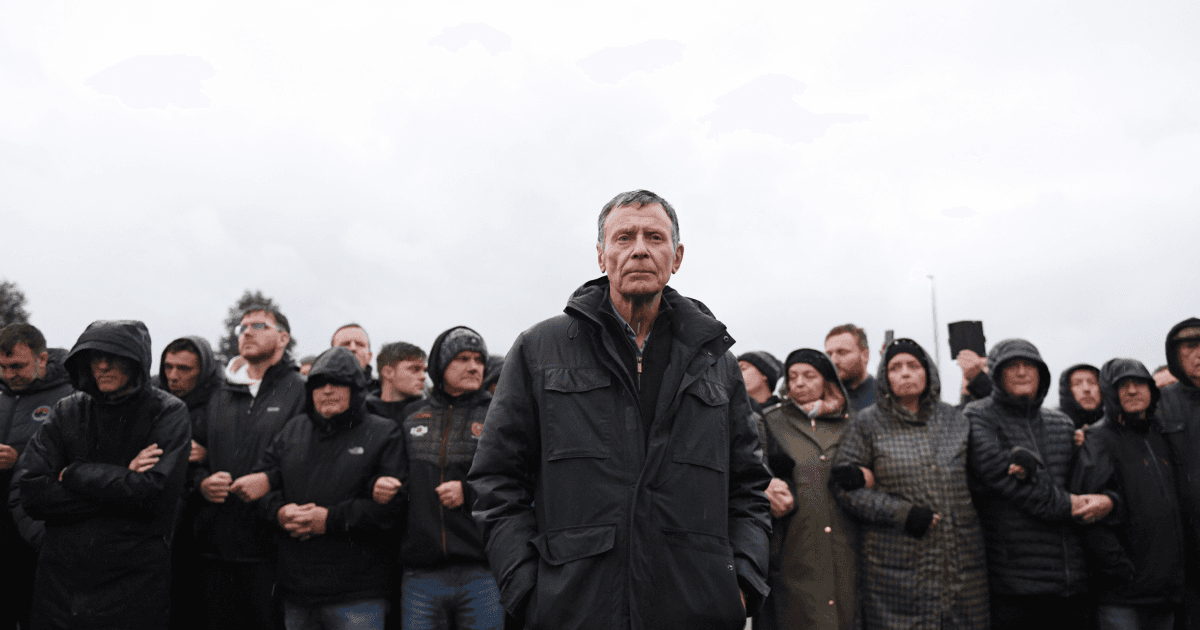
On August 15, former Polish President Lech Wałęsa sat at the front row of a blessing that, for him, completed his journey – for many, it was as one of the country’s most consequential figures. It was beneath the massive, 55-metre-tall statue of Our Lady of Mercy – now the tallest Marian statue in Europe; higher even than Christ the Redeemer in Rio de Janeiro.

The Poland that Wałęsa had grown up in, the oft-unruly namesake of the communist Warsaw Pact, had been transformed. “This is the end of my path,” he told the Associated Press. “I started with the Virgin Mary and I end with the Virgin Mary.”
Wałęsa was born in 1943 in German-occupied Poland, two years before the Red Army would establish its own complete occupation of the country. What followed was a 44-year communist rule of the deeply Catholic nation, which throughout looked to the Church as the institution resisting its subjugation.

In 1945, the newly formed “Government of National Unity” declared the 1925 concordat signed between the Polish State and the Vatican non-binding, effectively breaking off diplomatic relations. For another 13 years, it would maintain diplomatic relations with the government in exile. Relations with the Polish State would not be fully restored until communism fell.

The Polish Church was vulnerable – its links with the Holy See remained intact, but restricted with heavy surveillance. The security apparatus of the Communist Party had been preparing for a crackdown on the Church since 1947, and by 1949 plans were ready to establish an organisation of clergy loyal to the party in order to split the Church.

The Government began to engage with the Church in what appears to have been an intentionally hopeless negotiation. So-called patriotic priests joined Party organisations, and the State began allowing for the repression of both clergy and laity for religious activity.

Catholic associations were then obliged to register their activities with State authorities and in response, fearing an attempted takeover, the hierarchy dissolved religious organisations. Catholic hospitals were nationalised and Caritas organisations were infiltrated by Catholics – lay and clerical – loyal to the communists.

The next year, Bishop Kazimierz Kowalski of Chełmno was arrested for a dozen days and a new law sought to nationalise the majority of Church-owned landed estates. A new State-operated body of religious administration was created to manage and influence religious bodies.

With pressure from every angle, the Polish Church through a commission came to an agreement with the Government, without the authorisation from Rome. Bishops would be – at least superficially – loyal to the State and would refrain from criticising its collectivisation policies. In return, the State would recognise papal authority over the Church as pertaining to faith and morals, Catholics would be granted the freedom of worship, and Catholic schools could teach the Faith.

The agreement was controversial, and even today it is hotly debated. As is the case today in parts of the world, the Church had to make a call between principle and pastoral obligation. That year had seen the liquidation of religious orders in Hungary and Czechoslovakia, which had included internment.

In 1953, a few days after being arrested, Cardinal Stefan Wyszyński said: “The Polish Church has already donated too much blood in German concentration camps to be able to imprudently squander the blood of other priests.” He stated that whilst martyrdom was honourable, a “different kind” was needed to stop the “process of spiritual bleeding at every possible cost”. Citing the persecutions of the Church under revolutionary France, Bismarckian Germany, Mexico and Spain “there was an armistice”.

The breaking point, however, was a decree from the government that it would assume power over the creation, appointment and abolition of ecclesiastical positions. The Church published a letter at the encouragement of Cardinal Wyszyński, who would be interned from 1953 to 1956, in response. Dramatically, it stated: “The things of God cannot be offered on the altars of Caesar. Non possumus!”

From that point on, the Church became an alternative public sphere for Catholic Poles free from a totalitarian ideology, where they could form their own independent thought.

Priests and laity alike paid the price for their convictions, sometimes with their lives. This week marks 50 years since the murder of Fr Roman Kotlarz by the communist authorities ruling over Poland. A man who challenged a socialist State over the treatment of its workers, his flock, he was frequently interrogated and beaten severely on several occasions by the security services and the police. His death is believed to have resulted from such beatings.

The turning point, famously, was the election of Cardinal Karol Wojtyła as Pope in 1978. If there was one thing the Soviet tendrils did not want to see in Poland, it was the devout population now swearing its fidelity to a pontiff who was himself Polish. The parallel public sphere now had a champion with a very keen interest.

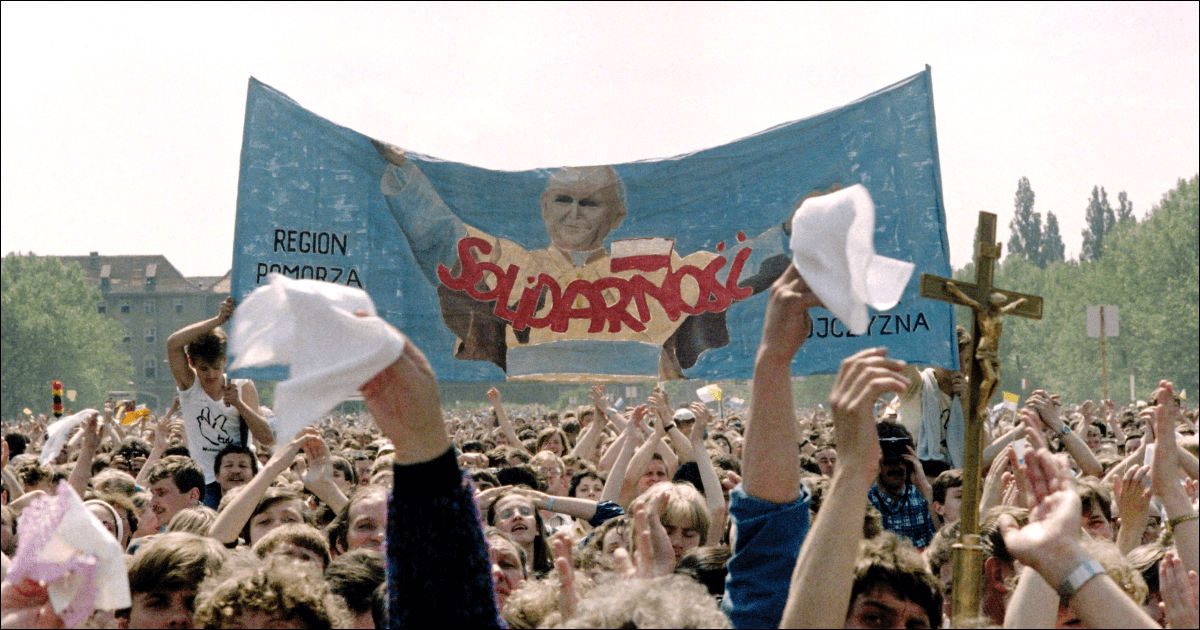
The Soviets warned Pope John Paul II against interfering in Poland, and understandably so. In his 1979 visit to his homeland, he was met by the Polish head of state Henryk Jabłoński and Cardinal Wyszyński. As he was driven into Warsaw, two million people cheered. A quarter of a million of the faithful greeted him as he entered Victory Square for an open-air Mass.

"I have kissed the ground of Poland on which I grew up, the land from which, through the inscrutable design of providence, God called me to the chair of Peter in Rome, the land from which I am coming today as a pilgrim," he said.

It has since been described as the catalyst that emboldened the anti-communist opposition. Writing for the Los Angeles Times after the Pope’s death, Wałęsa said the pontiff “provided the bedrock upon which we Poles built political and historical greatness and unleashed the hope for freedom that continues to spread. Because of his well-timed testimony, we live in a different Poland – one in which I can express myself freely – and a different world.”

“In the 40s and 50s, we fought with weapons in our hands. In the 60s and 70s, strikes and demonstrations thundered through Poland’s streets. But time after time, the authorities broke our ranks, crushed our uprisings.”

He stated that for years before the Holy Father’s 1979 visit, he had tried to organise anti-communist resistance: in two decades, he had attracted 10 activists. Following the visit, the 10-strong group “blossomed into the 10-million-member assembly called Solidarność (Solidarity),” a third of the nation’s working age population

Solidarność, Wałęsa’s independent trade union, was the first of its kind to be recognised in the entire Warsaw Pact. The Church legitimised the movement, encouraged non-violence and provided shelter to anti-communist dissidents.

Blessed Jerzy Popiełuszko, an anti-communist priest much like Fr Kotlarz, supported the Solidarność movement. He was murdered for his outspoken advocacy for workers after being kidnapped and tortured by the secret services.

The authorities would attempt to crush the movement through the imposition of martial law, but the spell of terror had been broken. The mass movement, consisting of a broad coalition of organisations, had to be negotiated with. When that time came in 1986, the Church directed its efforts towards mediation.

In the years following the liberation of Eastern Europe from Communism, which began in Poland, it was summarised by the former leader of the Soviet Union, Mikhail Gorbachev: “It would have been impossible without the Pope.” So too, the blood and toil of priests, laity and workers alike who held their convictions more precious than their safety.

Continue reading with a free account

Create a free account to read up to five articles each month
Create free account

You have # free articles remaining this month.

Subscribe to get unlimited access.
Sign up

subscribe to the catholic herald today

Our best content is exclusively available to our subscribers. Subscribe today and gain instant access to expert analysis, in-depth articles, and thought-provoking insights—anytime, anywhere. Don’t miss out on the conversations that matter most.
Subscribe