

Last Thursday the Missionaries of Charity serving at a nursing home in Yemen would have gathered after morning Mass to recite a short prayer. “Lord, teach me to be generous,” they would have said. “Teach me to serve you as you deserve; to give and not to count the cost, to fight and not to heed the wounds, to toil and not to seek for rest, to labour and not to ask for reward.” It was one of the last prayers they ever said. Not long afterwards militants belonging to either al-Qaeda or ISIS broke into the residence, handcuffed four of the Sisters and shot them dead. Mother Teresa’s order has run a home for the elderly and disabled in Aden since 1992. The four Sisters – Sister Margherite and Sister Reginette from Rwanda, Sister Anselm from India and Sister Judith from Kenya – cared for 80 residents with help from volunteers, 12 of whom were also killed in the attack. The prayer the Sisters recited moments before their death is attributed to the Jesuit founder St Ignatius of Loyola. Pope Francis, the most famous son of St Ignatius alive today, must have recited the “Prayer for Generosity” himself many times. The four Sisters were carrying out a truly Francis-like mission to “the poorest of the poor” in the dusty, bullet-ridden “periphery” of Yemen. So it is no surprise that the Pope was profoundly touched by the Sisters’ deaths. In a message on Saturday he described the killings as “an act of senseless and diabolical violence”. Then on Sunday he appeared at his window for the Angelus and denounced what he described as global indifference towards the murders. The Sisters, he said, “are the martyrs of today ... they gave their blood for the Church, [yet] they are not in the papers, they are not news.” The attack did in fact feature in many newspapers worldwide, but it generally wasn’t front-page news. The reason why is probably as much fatigue as indifference. Many of us are no doubt grieved by the conflict in Yemen, which has so far claimed more than 6,000 lives. We would like to understand the war’s causes and identify the actors, but we lack the time and, if we’re honest, the curiosity. It requires a similar effort to grasp the true extent of violence against Christians worldwide. Researchers tell us we are in the middle of the most brutal, sustained assault on the faithful in centuries. According to the charity Open Doors, 2015 was “the worst year in modern history for Christian persecution”. But you would never guess that from watching a BBC news bulletin or reading most newspapers, which present acts of anti-Christian violence as isolated, aberrant events. Perhaps editors are wary of the story because the perpetrators are so often Islamists. According to Open Doors, 35 out the 50 worst countries for Christians have a problem with Islamic extremism. It is therefore up to us to let the world know that this great persecution is happening and that it must stop. We can do this by supporting the charities that are bringing comfort to the downtrodden from the slums of Cairo to the refugee camps of Erbil. We should also pray – daily and where possible with others – for the persecuted. Pope Francis did not hesitate to describe the four slain Sisters as martyrs. We can therefore be confident that they are now in heaven and can ask their intercession for all Christians who live in peril around the world.
12:00 PM
If not us, then who?
Staff writers

5 min read



Already a subscriber? Sign in
5freearticles every month
Continue reading with a free account. No card needed.
- Five free articles every thirty days, on any device you sign in on
- The Catholic Herald newsletter, every morning
- Subscribe whenever you like for everything: every article and the magazine
Related articles
 Newsroom
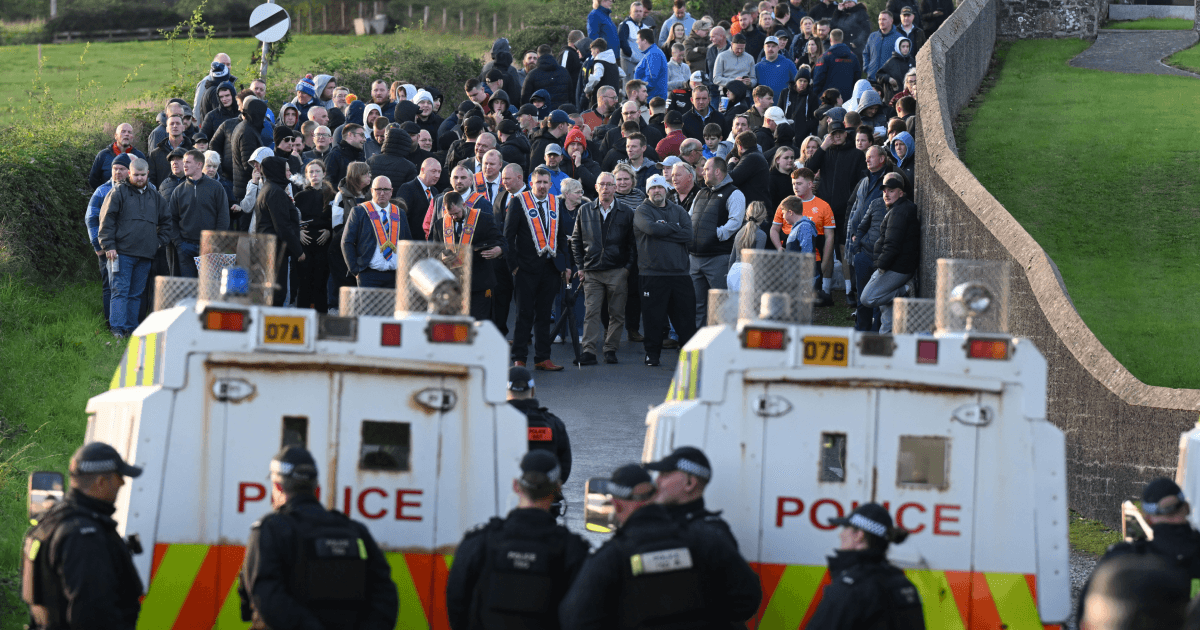
Church leaders urge Drumcree dialogue: ‘Too much is at stake’
The Catholic and Church of Ireland Archbishops of Armagh have urged a renewed commitment to peace and reconciliation amid the Drumcree stand-off
Corrie Douglas-Young Newsroom
Thousands of Irish children to join global Rosary campaign
Corrie Douglas-Young Newsroom
TikTok priest urges young people to stand with persecuted Christians
Nathalie Raffray Newsroom
Baby born at 25 weeks reunites with neonatologist two years after leaving hospital
The Catholic Herald Newsroom
Joe Biden honoured by Planned Parenthood after defending abortion rights
Christine Rousselle
subscribe to the catholic herald today
Our best content is exclusively available to our subscribers. Subscribe today and gain instant access to expert analysis, in-depth articles, and thought-provoking insights—anytime, anywhere. Don’t miss out on the conversations that matter most.
Subscribe



