

Pope Leo XIV’s first encyclical, Magnifica Humanitas, is primarily concerned with a set of hypermodern issues: artificial intelligence, concentrated private power and the transhumanist goal of developing technology to enhance – or deform – human nature.
Released on the 135th anniversary of Leo XIII’s Rerum Novarum, the document presents a civilisational choice: whether to build a new Tower of Babel through technological self-deification, or to pursue the patient, participatory work of Nehemiah in rebuilding a city orientated towards God and the common good, where divine grace and human nature coexist, with technology subordinated to the end of human flourishing.

Put simply, the Pope calls for technology to be treated as a servant to our embodied human existence, rather than as a demanding master that requires us to forfeit and surrender it.
While papal teaching rarely names contemporary individuals, history teaches us that encyclicals have often addressed, directly or obliquely, actors whose ideas or activities are deemed false or dangerous. Gregory XVI’s Mirari Vos is well known for its attack on Félicité de Lamennais’s liberal Catholicism, as Pius XII’s Humani Generis was for its careful condemnation of elements of the nouvelle theologian Henri de Lubac’s thought in the context of mid-century social change.
What is interesting is that Leo XIV’s inaugural encyclical is possibly similarly addressed to a geopolitically significant figure in our own age, and would accordingly reflect a growing political rift between MAGA and the papacy, despite their points of alignment and natural alliance on abortion and social issues.
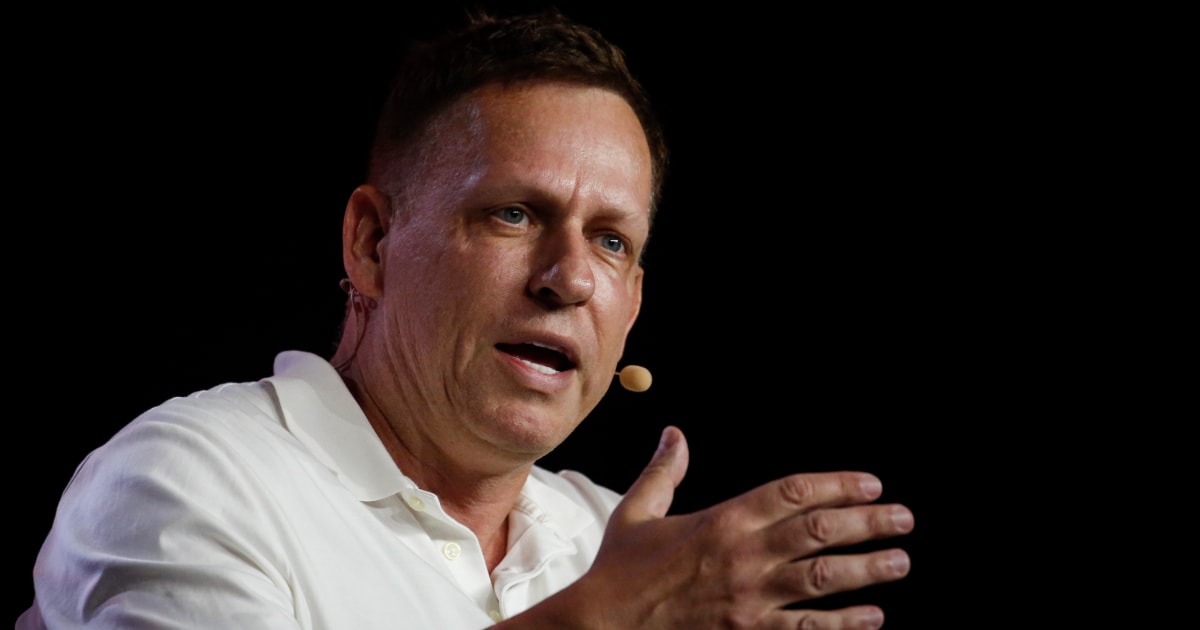
In the aforementioned tradition, Magnifica Humanitas, though not naming any targets, offers a sustained Thomistic and scriptural critique of transhumanist currents that align strikingly with the public positions and institutional projects of Peter Thiel – PayPal co-founder, Palantir Technologies architect and influential backer of accelerationist techno-political networks.
There is evidence to justify this speculation. In leaked audio recordings, as reported by the journalist Christopher Hale, in 2025 Thiel revealed he told JD Vance to ignore Pope Leo XIV on moral issues, including the development of ethical AI. Thiel’s links with Vance, who as Vice President of the United States stands as the likely heir apparent to Donald Trump, run deep. Vance’s political and financial career was bankrolled by Thiel, who ploughed $15 million into his 2022 Senate campaign. Hale noted how this places the encyclical in direct tension with a Silicon Valley patron whose influence now extends deep into American governance.
The Pontiff, for his part, released an encyclical whose central chapters read, at times, like a point-by-point theological critique of much of Thiel’s Weltanschauung. A look at its particulars reveals this may not be a coincidence.
Also significant is that the encyclical, though at times marked by an idealistic humanitarian sentimentalism all too common in postconciliar Church documents, is generally unflinching in its arguments. While it is highly unlikely that the encyclical’s authors engaged with his writings directly, the arguments that Magnifica Humanitas advances about technological power, the erosion of human agency, the self-perpetuating logic of industrial systems, the warping of our impulses and the induction of slavery resemble arguments first made, in a rather less sane idiom, by Ted Kaczynski, known to many as “the Unabomber”.
The Unabomber’s diagnosis of what he called “the system” and its tendency to absorb and neutralise human freedom, perverting and agonising our natures, was, at its core, an anthropological observation: that technology does not serve human ends, instead frequently reshaping them – with much psychological and physiological fallout – progressively, in its own image.
His criticisms were, and remain, not without cause. In the developed world, workers and students are increasingly dependent upon the persistent use of LED-lit internet-connected screens, which produce measurable adverse effects such as anxiety and vision problems, alongside attention and memory deficiencies, as social media hooks its users with deliberately induced addiction. The contraceptive pill has wrought behavioural, hormonal and physiological havoc on its users and the environment. Though there may be positive fruits borne by some of these innovations and our increasing interconnectivity, who ultimately judges that such trade-offs are worth it, and who draws the line? If we cannot escape the use of such technologies in the contemporary economy, is it possible we may reach a point where their arrival and use is more negative than positive for the human experience?
Magnifica Humanitas makes a similar argument, catalysed by a Thomistic, Aristotelian and Christian virtue ethics rooted in the grandeur of embodied, limited, grace-dependent humanity. The Pope’s answer to Kaczynski’s problem is Nehemiah rather than the Unabomber manifesto. His diagnosis, stripped of Kaczynski’s murderous conclusion, is recognisable.
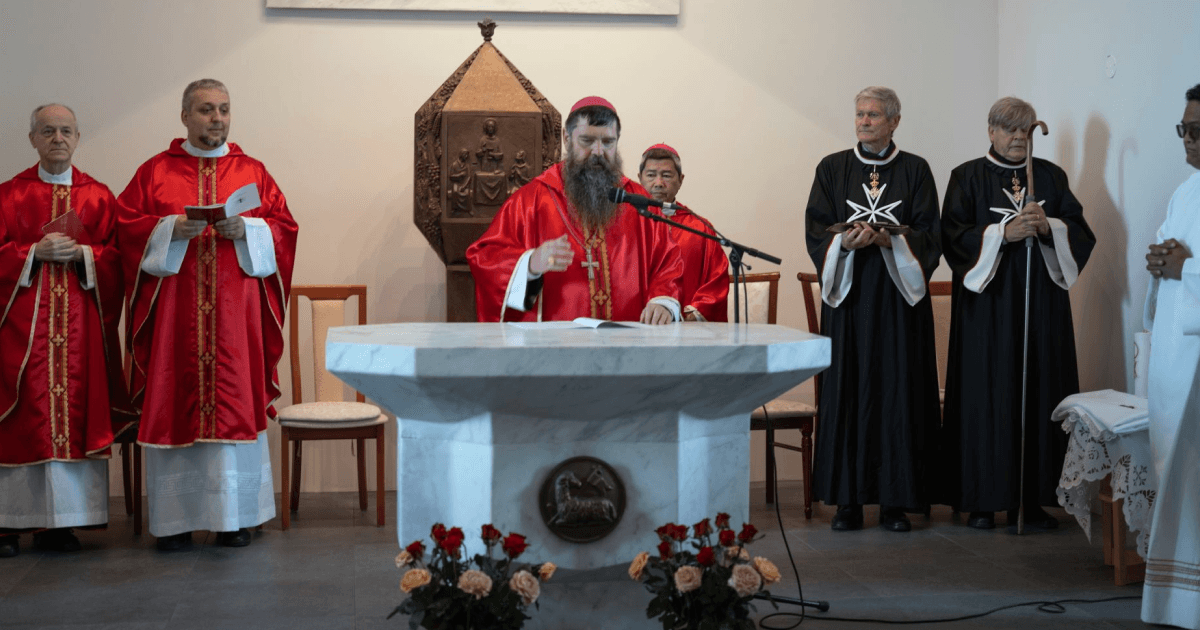
Meanwhile, one of the most telling details of the encyclical’s launch is one that has attracted insufficient comment. Among the speakers invited by Leo to present and contextualise Magnifica Humanitas was Christopher Olah, co-founder of Anthropic. According to reports, Anthropic has previously been labelled a “supply chain risk” by the Pentagon – the first time such a designation has applied to a US AI company – after it allegedly refused to loosen safeguards preventing its models from being used for lethal autonomous warfare or mass surveillance without human oversight.
Olah is a Thiel Fellow: he received sponsorship from Thiel’s foundation at an early stage of his career. He now leads a company whose apparent refusal to place its technology at the disposal of the military-tech complex puts it at odds with the administration Thiel helped to elect. His presence at the Vatican was a signal that the Pope’s interlocutor in the tech world is not the faction Thiel represents.
To understand why Leo’s encyclical lands with such precision on Thiel’s world-view, one must first understand what that world-view comprises. It is more coherent, and more theologically self-conscious, than Thiel’s critics on the secular Left have appreciated.
Thiel has stated that “the one part of the Christian view that I believe more strongly than anything is that death is evil, that it’s wrong and we should not accept it and fight it any way we can”. He believes early science was inspired by this Christian rejection of death, arguing that “if Christianity promised you a physical resurrection, science was not going to succeed unless it promised you the exact same thing”. This is not the naive techno-optimism of your average Silicon Valley entrepreneur. Thiel’s is a competing soteriology: a novel and naturalistic account of salvation, locating redemption in the laboratory and the algorithm over grace and the redemptive Passion.
On transhumanism – a key and named target of the encyclical – Thiel has been explicit: “The ideal was this radical transformation where your human, natural body gets transformed into an immortal body … we want more than cross-dressing or changing your sex organs. We want you to be able to change your heart and change your mind and change your whole body.” The ambition, in other words, is to go far beyond simply improving the human experience of its own nature. Rather, the Thiel ambition is to escape the limits of embodied existence entirely.
Thiel has also identified what he calls “the Antichrist”: “a bad singularity – a one-world totalitarian state”, in his formulation, that would come to power by exploiting fears around AI, climate change or nuclear war. Problematically for Catholics – and the Pope, who was in all likelihood made aware of these lectures – it is a framework in which the Church’s moral authority, exercised universally, would itself constitute a candidate for suspicion. The leaked audio in which he urged Vance to disregard the Pope on AI ethics is consistent with his wider thought.
In a 2011 New Yorker profile, Thiel surmised that “probably the most extreme form of inequality is between people who are alive and people who are dead” – a remark that recasts mortality itself as an injustice to be overcome rather than a condition to be sanctified. From this premise, the transhumanist programme follows with a kind of internal logic.
It is worth clarifying that this ideology does not exist only in the abstract. Thiel’s company Palantir Technologies has become, in the years since October 2023, perhaps the most consequential and least examined private actor in modern warfare.
Palantir’s work illustrates why Pope Leo’s warnings about private technological power and modern warfare have attracted attention. In January 2024, the company agreed a strategic partnership with Israel’s Ministry of Defense to provide technology for what was described as “war-related missions”. The announcement followed a visit to Israel by Palantir co-founders Peter Thiel and Alex Karp, and came amid wider debate about the role of artificial intelligence and data systems in contemporary conflict.
The company has also become increasingly prominent in the US defence ecosystem. In June 2025, a Palantir executive was among several senior technology figures commissioned into the US Army Reserve as part of a new initiative intended to bring Silicon Valley expertise into military innovation. Palantir’s own financial results point to the scale of this relationship: in Q3 2025, the company reported revenue of $1.18 billion, including $486 million from its US government business.
For critics, such developments exemplify the very concerns raised by Magnifica Humanitas: the fusion of private technological capacity, military power and public decision-making in areas where democratic scrutiny and moral accountability are essential. The Pope did not name Palantir, Thiel or any other company, but his warning about technologies that are “dramatically changing how war is waged” and weapons systems “practically beyond any human reach to govern them effectively” clearly speaks to the wider world in which such companies now operate.
Against this backdrop, Magnifica Humanitas reads as a carefully constructed theological counter-offensive more than a general meditation on technology.
The encyclical’s core anthropological claim directly contradicts Thiel’s soteriology. Leo writes that “building for the common good means accepting the limits and weakness of humanity without considering them an error to be corrected. Today, the human desire for fullness of life is at risk of being misled by deceitful goals, such as the prospect of a technology that promises to free us from all weakness.” Where Thiel sees mortality as the enemy, Leo sees limitation as a condition of love, solidarity and the encounter with God.
The encyclical warns explicitly against what it calls the “Babel syndrome”: the “idolatry of profit that sacrifices the weak, a uniformity that neutralises differences, and the pretence that a single language – even a digital one – can translate everything, including the mystery of the person, into data and performance”. This description, too, fits Palantir’s operational model with a rather certain precision.
On the concentration of private power, Leo is unusually direct for a reigning Pontiff: “In the past, it was largely up to the State to guide and direct innovation. Today, however, the main drivers of development are private, often transnational, parties that are endowed with resources and the capacity to intervene that surpass those of many Governments. Technological power thus takes on an unprecedented, predominantly ‘private’ aspect, which makes it even more challenging to discern, govern and direct such power towards the common good.”
The Pope told the encyclical’s launch conference that he had been consulting “very troubling voices” about weapons systems “practically beyond any human reach to govern them effectively”. He was forthright: the normalisation of algorithmic warfare and the substitution of conscience by machine represent a civilisational rupture and the prospect of amoral horrors the Church cannot endorse.
Thiel is perhaps the enabler of this transformation par excellence, even if his speeches show theological and philosophical engagement and suggest that he possesses an active conscience that observers could judge unusual for a billionaire investor of his stature.
Yet the text itself takes care to offer counterbalance rather than pure condemnation, keenly recognising that technology can have positive applications and that its use often depends on its designers, safeguards and those who choose to use it. Statements made surrounding its launch also recognise that the widespread use of technology is inevitable, though it does not permit this as justification for abuse.
Against the transhumanist impulse, Leo states: “humanity flourishes not despite limitations, but often through them”. The text critiques the notion that ageing, frailty or inefficiency are errors to be engineered away: “the human desire for fullness of life is at risk of being misled by deceitful goals, such as the prospect of a technology that promises to free us from all weakness”. It distinguishes the integration of tools within a relational, human-centred vision from outlooks that “devalue human limits and promise a purely technical form of ‘salvation’”.
His section on “Technology and Dominance” develops this at length. It examines the “technocratic paradigm and digital power”, noting how AI, while a “valuable tool that requires vigilance”, can amplify underlying narratives of transhumanism and posthumanism. These interpret progress as “surpassing the human condition”, treating limits – including illness, disability, old age and vulnerability – as defects. The encyclical insists: “It is one thing to integrate technology within a human-centred, relational vision; it is quite another to be guided by an outlook that devalues human limits.” Such views risk justifying “necessary sacrifices” of the vulnerable in pursuit of species optimisation.
The tech-libertarianism of technology giants such as Thiel Capital, which sees ageing, frailty and inefficiency as weaknesses to be eliminated rather than realities to be accepted and endured with the help of grace, is explicitly addressed. Leo argues that “building for the common good means accepting the limits and weakness of humanity without considering them an error to be corrected”. He goes on: “the human desire for fullness of life is at risk of being misled by deceitful goals, such as the prospect of a technology that promises to free us from all weakness”.
The encyclical’s call for transparency, accountability and orientation towards truth, work and freedom counters this. It rejects outsourcing conscience to machines or treating persons as resources. Prof Anna Rowlands noted at the launch that innovation’s power now rests with “a few wealthy individuals … whose cultures are concealed from common good scrutiny – and risk appearing as a new imperium”. It is hard not to see this as a reference to Thiel’s wealth and technological power beginning to extend to political influence.
Thiel’s network illustrates why the encyclical’s warnings about private technological power have contemporary force. Through Palantir’s defence and intelligence work, his political funding, fellowships and advisory networks, Thiel has become associated with precisely the kind of overlap between technology, state power and moral decision-making that Magnifica Humanitas asks Catholics to scrutinise.
His lectures on the Antichrist, including those delivered in Rome, also show that his interest in technology is not merely commercial. He has framed debates over technological acceleration, global governance and the fear of catastrophe in explicitly theological and eschatological terms. That makes the contrast with Pope Leo XIV’s argument especially striking: where Thiel often presents restraint as a danger that may empower coercive global control, the Pope presents moral limits as essential to preserving human dignity, freedom and the common good.
Critics may dismiss Magnifica Humanitas as anti-progress. Yet its realism aligns with the Church’s century-long engagement with modernity; given its strong precedents, it cannot be rightly accused of a knee-jerk Luddite rejection of tools. Leo has simply refused to baptise unchecked acceleration. He has called for oversight, perspective, humanity, transparency and a “civilisation of love” over a culture of power.
In an age of private empires wielding god-like capacities – surveillance, autonomous weapons, engineered transcendence – such discernment is not unreasonable. Is it possible for two conceptually immortal, ecstatic beings, hooked up to the cloud in an artificial reality, to love one another? I imagine not. The saga of human endeavour – the sincerity and value of which is, this side of the veil, marked by danger, cost and sacrifice in the face of difficulty – would be erased. After all, why exile yourself from your self-imposed dreamland where all is safe and you are self-sufficient?
As Magnifica Humanitas argues, the excitement of reality is that the human person, created in the image of the Triune God, is called to communion with a real and beloved person. This stands in contrast with an individualism that satiates with artificiality and meaningless projected illusions. The Church’s vision of personhood conflicts with the insidious modern notion that a person’s worth can and should be measured according to his economic productivity, a view that reduces people to means rather than ends in themselves.
From the dignifying view of personhood proceeds the legal notion of universal and inalienable human rights. The Pope warns that rights may be formally proclaimed while covertly violated through the processes of technological progress in the workplace and the private realm, and that without a firm defence of human nature, rights could be stripped away by those in power.
If technology threatens such an outcome, has valuable progress been achieved? Was this Faustian bargain worth it? These are worthwhile and serious questions for our coming century.
The encyclical does not name Peter Thiel. Yet its critique of transhumanism, private technological power, algorithmic warfare and the dream of technological salvation clearly raises questions about the world he has helped to shape. Thiel has publicly argued that mortality should be resisted rather than accepted; he has spoken in radical terms about transforming the human body; he has funded and advised political and technological networks with growing influence in American public life; and he has delivered lectures on the Antichrist that interpret technological restraint, global governance and fears of catastrophe in explicitly theological terms.
That does not mean Magnifica Humanitas should be read as a personal rebuke. It is better understood as a theological challenge to a broader technological culture in which Thiel is one of the most visible and intellectually serious figures. For that reason, he may recognise in the encyclical not an attack on himself, but a direct challenge to the assumptions underlying much of his public thought.


x02.jpg)
.jpg)