


The Vatican won’t be winning a Best Places to Work award any time soon. At least according to Cardinal Gerhard Müller, who was released as prefect of the Congregation for the Doctrine of the Faith this summer. He has claimed that curial officials are “living in great fear”. “If they say one small or harmless critical word,” he told an interviewer last week, “some spies will pass the comments directly to the Holy Father, and the falsely accused people don’t have any chance to defend themselves.” The cardinal’s comments came shortly after Libero Milone, the ex-Vatican auditor general, broke his silence over his departure in June. Milone alleged that he was forced out by an “old guard” which panicked when it realised what he had uncovered. We should, of course, be cautious about the testimonies of aggrieved former Vatican employees: they may have an interest in depicting the Vatican as a snake pit. But let’s give them the benefit of the doubt for a moment. How could the Holy See still be a den of gossip and financial intrigue after four years of energetic reform by Pope Francis? The answer is that, despite piecemeal changes, the Roman Curia remains essentially the same as it was at Francis’s election in 2013. The Council of Cardinals has been preparing a total overhaul of the Curia since it was founded that year. But it has discovered how hard it is to turn one of the world’s oldest bureaucracies into a modern administration serving a global body of more than a billion people. The task is so complex that the last big shake-up was in the 1960s, when Paul VI reorganised Vatican departments. Neither of Francis’s immediate predecessors were overly preoccupied with curial reform. Instead, John Paul II poured his energy largely into missionary journeys and Benedict XVI into teaching the flock. It is to Francis’s credit that he is tackling the Curia when he would clearly rather spend the time outside Vatican walls. Bishop Marcello Semeraro, secretary of the Council of Cardinals, says the long-awaited blueprint for reform is almost ready. But expectations are perhaps too high: the cardinals are likely to recommend gradual change, rather than a “shock and awe” approach. In a few years the Vatican may be more streamlined, but it is unlikely to have eliminated its besetting sins. The reason is that the Curia is, at heart, a kind of royal court (the meaning of curia in Latin). Gossip and intrigue are in its DNA. Even if a pope were to shut down the Curia and create a new one in, say, Nairobi, it would soon take on the character of a court, with officials jostling for the papal ear. That doesn’t mean we should be cynical. Partial reform is better than no reform. The Vatican may never be as transparent as a Scandinavian government. But we can hope that it will be closer to the ideal in 2020 than it is today. With this kind of realism, we can spend less time worrying about Rome and more on the most important task of all: evangelisation.
1:00 PM
Is Rome reformable?
The Catholic Herald

5 min read



Already a subscriber? Sign in
5freearticles every month
Continue reading with a free account. No card needed.
- Five free articles every thirty days, on any device you sign in on
- The Catholic Herald newsletter, every morning
- Subscribe whenever you like for everything: every article and the magazine
Related articles
 Newsroom
Church leaders urge Drumcree dialogue: ‘Too much is at stake’
The Catholic and Church of Ireland Archbishops of Armagh have urged a renewed commitment to peace and reconciliation amid the Drumcree stand-off
Corrie Douglas-Young Newsroom
Thousands of Irish children to join global Rosary campaign
Corrie Douglas-Young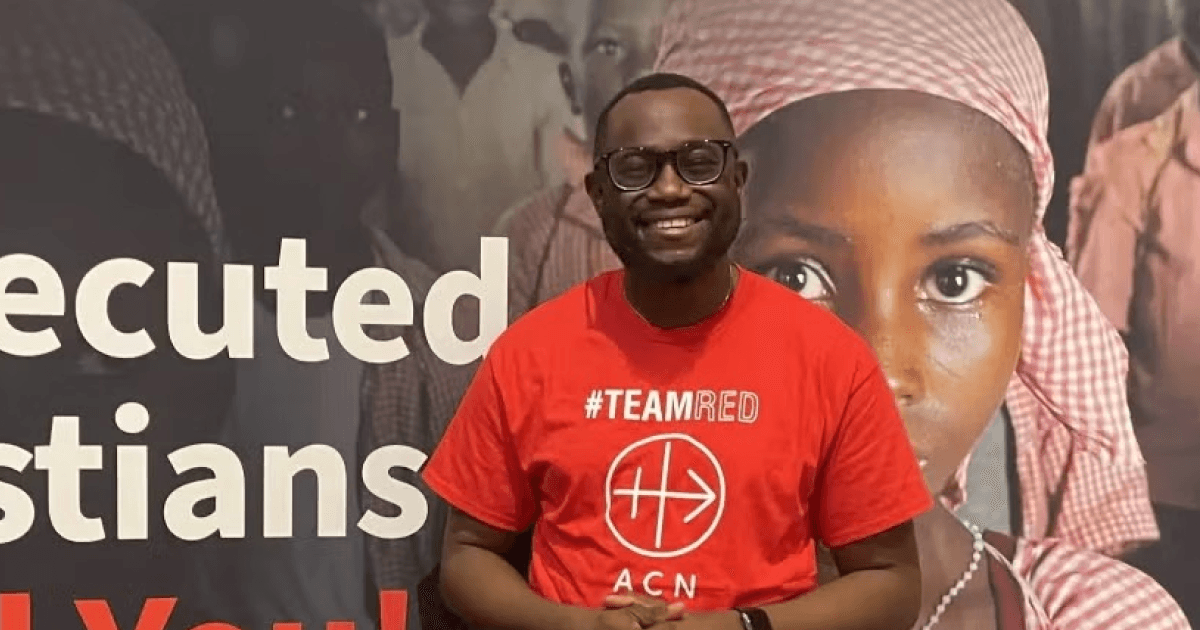 Newsroom
TikTok priest urges young people to stand with persecuted Christians
Nathalie Raffray Newsroom
Baby born at 25 weeks reunites with neonatologist two years after leaving hospital
The Catholic Herald Newsroom
Joe Biden honoured by Planned Parenthood after defending abortion rights
Christine Rousselle
subscribe to the catholic herald today
Our best content is exclusively available to our subscribers. Subscribe today and gain instant access to expert analysis, in-depth articles, and thought-provoking insights—anytime, anywhere. Don’t miss out on the conversations that matter most.
Subscribe



