




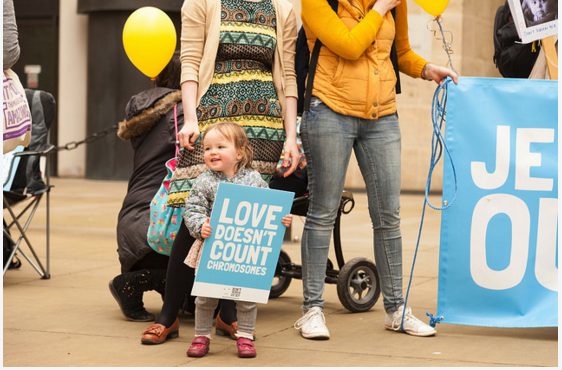
Dennis Sewell writes this week that a new, non-invasive pre-natal testing technique has been developed to detect whether unborn babies have Down's Syndrome. He reports that "the Government is considering incorporating it into its routine screening regime during pregnancy, making this a matter of some urgency. In recent weeks campaigners have been lobbying Westminster with the aim of persuading the Health Secretary, Jeremy Hunt, not to proceed." The technique has been hailed for reducing the risk of miscarriage but campaigners worry it will simply lead to more abortions. I telephoned Right To Life campaigner, Peter D Williams, to find out more about the implications of the Government's decision. 1:00: What is the current screening programme used in the UK and how does it differ to what is being considered now? 3:01: What is cfDNA and why should we be worried about it? 5:25: How likely is it that this proposal will be put into place? 6:08: Are we about to see eugenics unleashed on our society? 6:56: The case of Catherine MacMillan 8:22: What do campaigners want? 9:33: Do doctors always assume that women with Down's babies will want an abortion? 12:29: Why are Governments so keen to embrace this technology? 14:48: What can you do to help? Websites mentioned: dontscreenusout.org
4:27 PM
Podcast: Is the UK Government about to introduce a major threat to the existence of Down's babies?
Madeleine Teahan talks to Peter D Williams of Right to Life about a new screening test that would pave the way for more abortions
Madeleine Teahan

2 min read



Already a subscriber? Sign in
5freearticles every month
Continue reading with a free account. No card needed.
- Five free articles every thirty days, on any device you sign in on
- The Catholic Herald newsletter, every morning
- Subscribe whenever you like for everything: every article and the magazine
Related articles
 Newsroom
Church leaders urge Drumcree dialogue: ‘Too much is at stake’
The Catholic and Church of Ireland Archbishops of Armagh have urged a renewed commitment to peace and reconciliation amid the Drumcree stand-off
Corrie Douglas-Young Newsroom
Thousands of Irish children to join global Rosary campaign
Corrie Douglas-Young Newsroom
TikTok priest urges young people to stand with persecuted Christians
Nathalie Raffray Newsroom
Baby born at 25 weeks reunites with neonatologist two years after leaving hospital
The Catholic Herald Newsroom
Joe Biden honoured by Planned Parenthood after defending abortion rights
Christine Rousselle
subscribe to the catholic herald today
Our best content is exclusively available to our subscribers. Subscribe today and gain instant access to expert analysis, in-depth articles, and thought-provoking insights—anytime, anywhere. Don’t miss out on the conversations that matter most.
Subscribe



