


February 12, 2026

Is there any stopping the surrogacy revolution?

Ben Sixsmith
More
Related
Min read
share

One way to keep up with the state of progressive thought is to browse the new releases from Verso Books. This year they promise titles such as Radical Happiness; Revolting Prostitutes; The Xenofeminist Manifesto; and Collected Works, Volume 3 from a curious author called VI Lenin. Another interesting book is Full Surrogacy Now.

Full Surrogacy Now: Feminism Against Family has been written by the feminist author Sophie Lewis, and is due to be published in May. “Rather than making surrogacy illegal or allowing it to continue as it is,” Lewis argues, “we should be looking to radically transform it.” This entails improving the conditions of surrogate mothers but also normalising and popularising surrogacy in order to “break down our assumptions that children necessarily belong to those whose genetics they share”.

“Expanding our idea of who children belong to would be a good thing,” Lewis announces. “Taking collective responsibility for children, rather than only caring for the ones we share DNA with, would radically transform notions of kinship.”

Yes, I am sure it would. For the better? That I doubt.

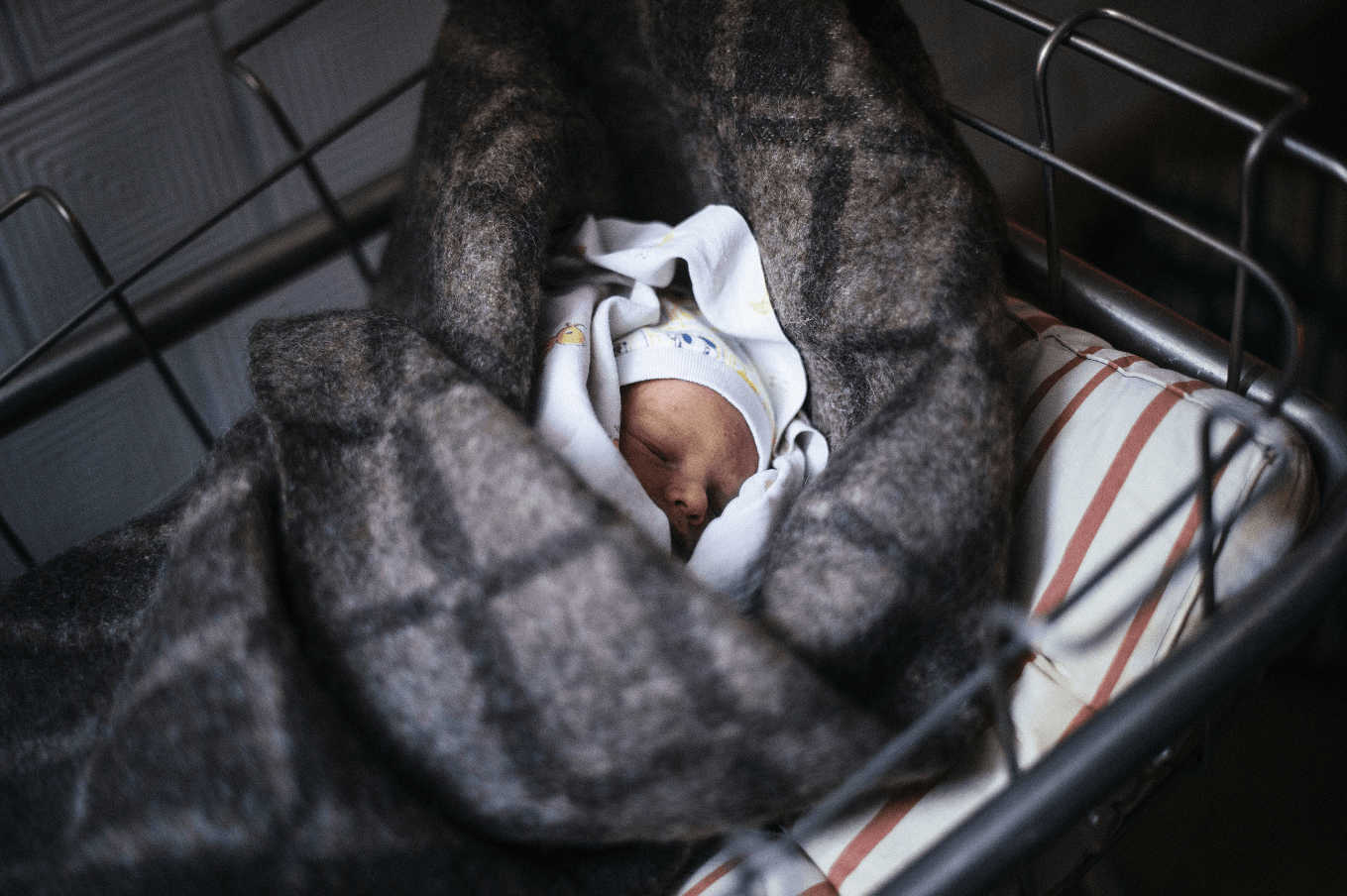
Lewis’s book might sound a little extreme, but progressives often do before their opinions become widespread. A keen culture-watcher will have noticed a disturbing trend towards the institutionalised acceptance of surrogacy. Commercial surrogacy has been banned in Britain, and willing volunteers can be hard to come across, but every year thousands of Westerners descend on countries like Ukraine to pay poor women to bear children on their behalf. (Under Ukrainian law, the BBC reported last year, a woman must have her own children before becoming a surrogate. “If you have your own child, you are less likely to become attached to the one you must give away.”)

The desire to equalise gay, trans and traditional couples, meanwhile, has led the media to obscure the not-so-subtle differences between forms of parenthood. This year, the Daily Mirror excitedly announced that a “trans power couple” had revealed their “plans to have a baby”. How they are to “have” a baby when a separate woman will carry and give birth to the child is mysterious. The diver Tom Daley and his husband, meanwhile, according to the Daily Mail, were “seen out with their new-born son” last year. There is no reason to doubt Mr Daley and his husband’s devotion to the boy but it is not mere pedantry to observe that there is a difference between a child being “yours” in a contractual sense and “yours” in a biological sense.

There are numerous concerns to raise about the rise in surrogacy. Women can be exploited, like the poor Ukrainian mothers, and feel the pain of loss, like the British woman who tried to keep, and was ordered to give up, the child she had agreed to carry for a gay couple. Children live with the confusion of being separated from at least one person who was integral to their birth. Children who could have been adopted are overlooked.

These problems are secondary to an overall threat, however, which Lewis is eagerly applauding: the separation of the link between biological parenthood and the family. This trend has been developing over recent decades. The emergence of reliable contraception directed sex away from conception. The acceptance of abortion directed contraception away from childbirth. The acceptance of surrogacy directs childbirth away from parenthood.

I think Lewis will be surprised by the extent to which economic liberalism will be accepting of the end of the traditional family. Social progressives and economic liberals both advocate choice and innovation in life, sometimes out of principle and sometimes with an eye to profit. If there is a demand for mothers, then there will be entrepreneurs who are willing to market them. The Adam Smith Institute has long campaigned for the legalisation of commercial surrogacy. “People use their hands and brains for profit,” an essay on its website says, “What, then, is so immoral about gestating someone’s child for a fee?” I am using my hands and brain for profit as I type but somehow doubt that the act can be compared to motherhood.

Of course one can empathise with people who seek surrogates. In tragic cases where childbearing has become impossible it offers men and women a path to parenthood. Just as abortion was promoted as “safe, legal and rare” yet became an industry of vast proportions, surrogacy could become more common as it appears more normal and what we have known as motherhood for millennia is revolutionised.

It would be futile to resist this with scattershot consequentialism. Only a philosophical revolution could avert this course for our society, which, at present, is drifting with cheerful complacence not just towards surrogacy but also the artificial womb, designer children, gene editing and an ever more ambiguously human future.

Ben Sixsmith is an English writer living in Poland. He is the author of Kings & Comedians: A Brief History of British-Polish Relations

One way to keep up with the state of progressive thought is to browse the new releases from Verso Books. This year they promise titles such as Radical Happiness; Revolting Prostitutes; The Xenofeminist Manifesto; and Collected Works, Volume 3 from a curious author called VI Lenin. Another interesting book is Full Surrogacy Now.

Full Surrogacy Now: Feminism Against Family has been written by the feminist author Sophie Lewis, and is due to be published in May. “Rather than making surrogacy illegal or allowing it to continue as it is,” Lewis argues, “we should be looking to radically transform it.” This entails improving the conditions of surrogate mothers but also normalising and popularising surrogacy in order to “break down our assumptions that children necessarily belong to those whose genetics they share”.
“Expanding our idea of who children belong to would be a good thing,” Lewis announces. “Taking collective responsibility for children, rather than only caring for the ones we share DNA with, would radically transform notions of kinship.”

Yes, I am sure it would. For the better? That I doubt.

Lewis’s book might sound a little extreme, but progressives often do before their opinions become widespread. A keen culture-watcher will have noticed a disturbing trend towards the institutionalised acceptance of surrogacy. Commercial surrogacy has been banned in Britain, and willing volunteers can be hard to come across, but every year thousands of Westerners descend on countries like Ukraine to pay poor women to bear children on their behalf. (Under Ukrainian law, the BBC reported last year, a woman must have her own children before becoming a surrogate. “If you have your own child, you are less likely to become attached to the one you must give away.”)

The desire to equalise gay, trans and traditional couples, meanwhile, has led the media to obscure the not-so-subtle differences between forms of parenthood. This year, the Daily Mirror excitedly announced that a “trans power couple” had revealed their “plans to have a baby”. How they are to “have” a baby when a separate woman will carry and give birth to the child is mysterious. The diver Tom Daley and his husband, meanwhile, according to the Daily Mail, were “seen out with their new-born son” last year. There is no reason to doubt Mr Daley and his husband’s devotion to the boy but it is not mere pedantry to observe that there is a difference between a child being “yours” in a contractual sense and “yours” in a biological sense.

There are numerous concerns to raise about the rise in surrogacy. Women can be exploited, like the poor Ukrainian mothers, and feel the pain of loss, like the British woman who tried to keep, and was ordered to give up, the child she had agreed to carry for a gay couple. Children live with the confusion of being separated from at least one person who was integral to their birth. Children who could have been adopted are overlooked.

These problems are secondary to an overall threat, however, which Lewis is eagerly applauding: the separation of the link between biological parenthood and the family. This trend has been developing over recent decades. The emergence of reliable contraception directed sex away from conception. The acceptance of abortion directed contraception away from childbirth. The acceptance of surrogacy directs childbirth away from parenthood.

I think Lewis will be surprised by the extent to which economic liberalism will be accepting of the end of the traditional family. Social progressives and economic liberals both advocate choice and innovation in life, sometimes out of principle and sometimes with an eye to profit. If there is a demand for mothers, then there will be entrepreneurs who are willing to market them. The Adam Smith Institute has long campaigned for the legalisation of commercial surrogacy. “People use their hands and brains for profit,” an essay on its website says, “What, then, is so immoral about gestating someone’s child for a fee?” I am using my hands and brain for profit as I type but somehow doubt that the act can be compared to motherhood.

Of course one can empathise with people who seek surrogates. In tragic cases where childbearing has become impossible it offers men and women a path to parenthood. Just as abortion was promoted as “safe, legal and rare” yet became an industry of vast proportions, surrogacy could become more common as it appears more normal and what we have known as motherhood for millennia is revolutionised.

It would be futile to resist this with scattershot consequentialism. Only a philosophical revolution could avert this course for our society, which, at present, is drifting with cheerful complacence not just towards surrogacy but also the artificial womb, designer children, gene editing and an ever more ambiguously human future.

Ben Sixsmith is an English writer living in Poland. He is the author of Kings & Comedians: A Brief History of British-Polish Relations

subscribe to
the catholic herald

Continue reading your article with a subscription.
Read 5 articles with our free plan.
Subscribe

subscribe to the catholic herald today

Our best content is exclusively available to our subscribers. Subscribe today and gain instant access to expert analysis, in-depth articles, and thought-provoking insights—anytime, anywhere. Don’t miss out on the conversations that matter most.
Subscribe