



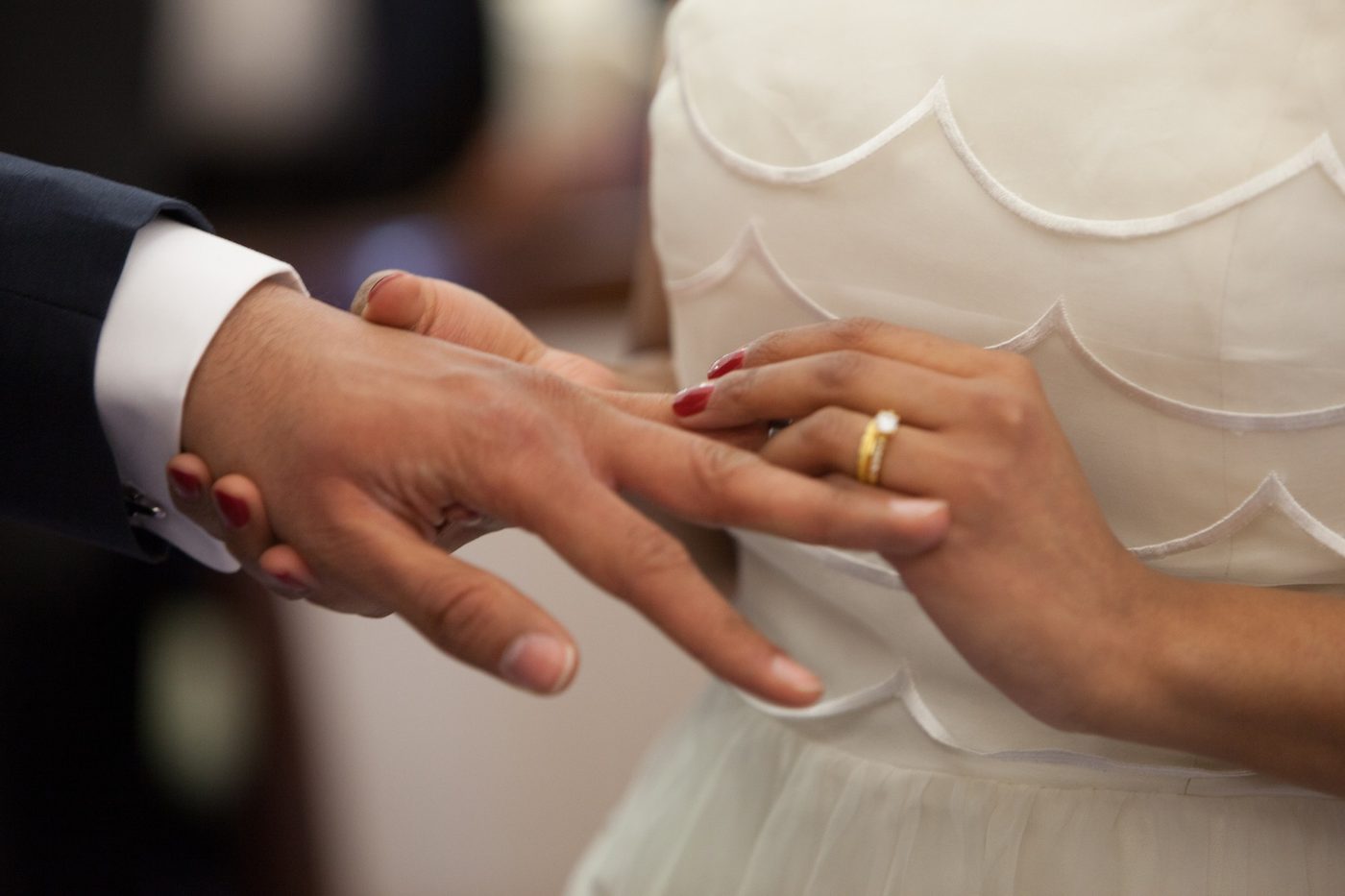
The International Theological Commission published a paper on Tuesday tackling what the ITC theologians involved in the colloquies consider to be a thorny issue that could bear on the validity of marriages, especially those among so-called “baptized non-believers”. Titled, The Reciprocity between Faith and Sacraments in the Sacramental Economy, the lengthy and highly technical document details the conclusions of its five-year study period dedicated to faith and the Sacraments. The paper begins with a general overview of the issue, and proceeds by five subdivided chapters to discuss the sacraments of Christian initiation — Baptism, Confirmation, Holy Communion — and then the Sacrament of Matrimony. “The document,” explained theologian and ITC member Fr Gabino Uribarri Bilbao SJ to Vatican News in an interview accompanying the release of the document, “wants to focus in its five chapters on the fact that reciprocity between faith and sacraments today finds itself in crisis in pastoral practice.” The ITC theologians are at some pains to bring theological thinking to bear on what they perceive to be serious pastoral concerns, which arise primarily from the secularised social environment. Their concern is to recover a sense of the importance of faith in Christian life, including sacramental life: to say, in other words, that God’s initiative requires a real human response not only in the general work of living, but also specifically where the Sacraments are concerned. This is especially true when it comes to marriage. Fr Uribarri said, “The question we pose ourselves is whether the consistent absence of faith, proper to those who can be called ‘baptized non-believers’, undermines their understanding of marriage[?]” He went on to note how, in many societies, the three goods associated with marriage — natural marriage — which are indissolubility, fidelity, and openness to life (procreation) are not generally recognized as constitutive of marital union as such, and are even ignored or discounted. “We argue,” Fr Uribarri explains, “that in the case of ‘baptized non-believers’, the intention to contract a true natural marriage is not guaranteed.” In the absence of natural marriage, “[T]here is no reality that can be elevated to sacramental marriage: there is no sacramental marriage.” In short: the disintegration of marriage as a natural social institution is in some places so far advanced and general, that people — baptized or not — are — or at least might be — incapable of contracting marriage. The claim of the ITC is, in layman’s terms, that people might not be able to marry even if they try. According to reasonably settled theological and canonical understanding, two baptized Christians have the Sacrament of Matrimony when they have a valid marriage contract. When they do not have a valid contract, they do not have the Sacrament. That’s it – and that’s all of it. Marriage as such is not different in quality when two Christians enter it together. Marriage is a natural social institution. Christ did not institute marriage, as He did the other Sacraments. He only raised Christian marriage in dignity. Marriage qua marriage is in the natural order: the order of creation, which God establishes from the beginning. The idea that a misunderstanding of what permanence or indissolubility means might vitiate marital consent is one Pope Francis has floated publicly. “[T]he culture of the provisional,” Francis told the faithful taking part in Rome’s 2016 ecclesial convention, “is why a large majority of our sacramental marriages are null: because they say, ‘Yes, all my life,’ but they do not know what it is they are saying, because they have another culture.” From a canonical point-of-view, however, at least one of the contracting parties would need to be completely ignorant of the very notion of permanence, or else specifically exclude permanence by a positive act of the will. Not only would a person attempting marriage need to lack utterly an existential understanding of permanence; but, he or she would but have no practical idea what the word ‘permanent’ even means; otherwise, such a one would need to mean — really and positively — not to enter into a permanently binding obligation. Said simply: imperfect understanding of what you’re getting into won’t get you out of marriage, nor will a post hoc protestation of the “I didn’t sign up for this!” variety. As long as one does not actively exclude one of the goods of marriage, one gets married when one gets married. The ITC theologians argue that “a lack of disposition to believe” is the functional equivalent of a lack of faith. How that squares with the idea of faith as a supernatural gift received in Baptism is at first blush not entirely clear. Fr Uribarri adduced a 1977 document of the ITC, Propositions on the Doctrine of Christian Marriage, in which the Commission “has already said that the lack of faith, understood as a disposition to believe, compromises the validity of the sacrament, especially if there is no desire for grace and salvation.” He went on to cite Pope St John Paul II, who wrote in Familiaris consortio: “[W]hen in spite of all efforts, engaged couples show that they reject explicitly and formally what the Church intends to do when the marriage of baptized persons is celebrated, the pastor of souls cannot admit them to the celebration of marriage.” That, however, is a very particular circumstance: manifest rejection of what the Church intends. Uribarri did not mention what follows that sentence from FC 68: “In spite of [the pastor’s] reluctance to do so, he has the duty to take note of the situation and to make it clear to those concerned that, in these circumstances, it is not the Church that is placing an obstacle in the way of the celebration that they are asking for, but themselves.” Here are the lines that precede the portion Fr Uribarri quotes:
6:12 PM
ITC weighs in on marriage question, faith and sacraments
The International Theological Commission published a paper on Tuesday tackling what the ITC theologians involved in the colloquies consider to be a thorny issue that could bear on the validity of marriages, especially those among so-called “baptized non-believers”.
Christopher R. Altieri

8 min read



Already a subscriber? Sign in
5freearticles every month
Continue reading with a free account. No card needed.
- Five free articles every thirty days, on any device you sign in on
- The Catholic Herald newsletter, every morning
- Subscribe whenever you like for everything: every article and the magazine
Related articles
 Vatican Dispatch
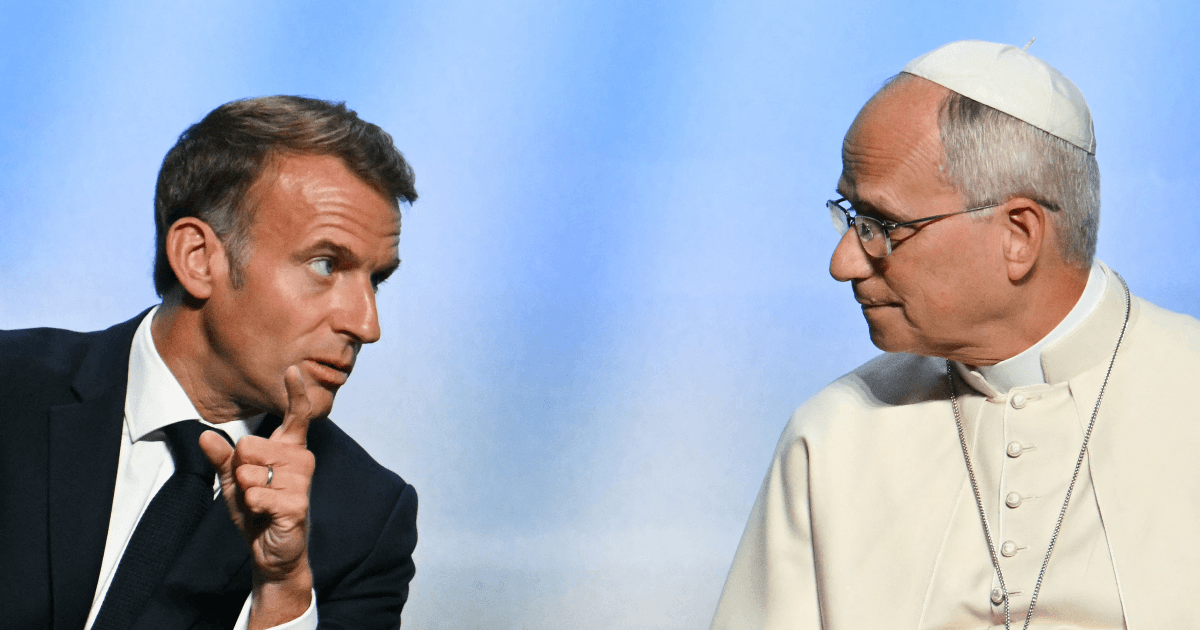
Macron will attend Leo’s final Mass in France
The President has changed his plans and will be present in Metz cathedral after skipping the previous religious ceremonies of Leo's trip.
Michael Haynes Vatican Dispatch
Hundreds of thousands greet Leo in Paris before he lands in Lourdes
Michael Haynes Vatican Dispatch
Pope Leo: Society measured by the ‘care we show for the littlest’
Michael Haynes Vatican Dispatch
Leo warns Macron and French parliament to defend sanctity of life
Michael Haynes Vatican Dispatch
Syriac Patriarch accuses Vatican of fostering ‘rebellion’ to oust him
Michael Haynes
subscribe to the catholic herald today
Our best content is exclusively available to our subscribers. Subscribe today and gain instant access to expert analysis, in-depth articles, and thought-provoking insights—anytime, anywhere. Don’t miss out on the conversations that matter most.
Subscribe



