March 4, 2026

Jimmy Lai’s imprisonment raised with Pope Leo XIV

The Catholic Herald
More
Related
Min read
share

The imprisonment of Hong Kong Catholic media mogul Jimmy Lai has again drawn international attention after Pope Leo XIV declined to comment on his case.

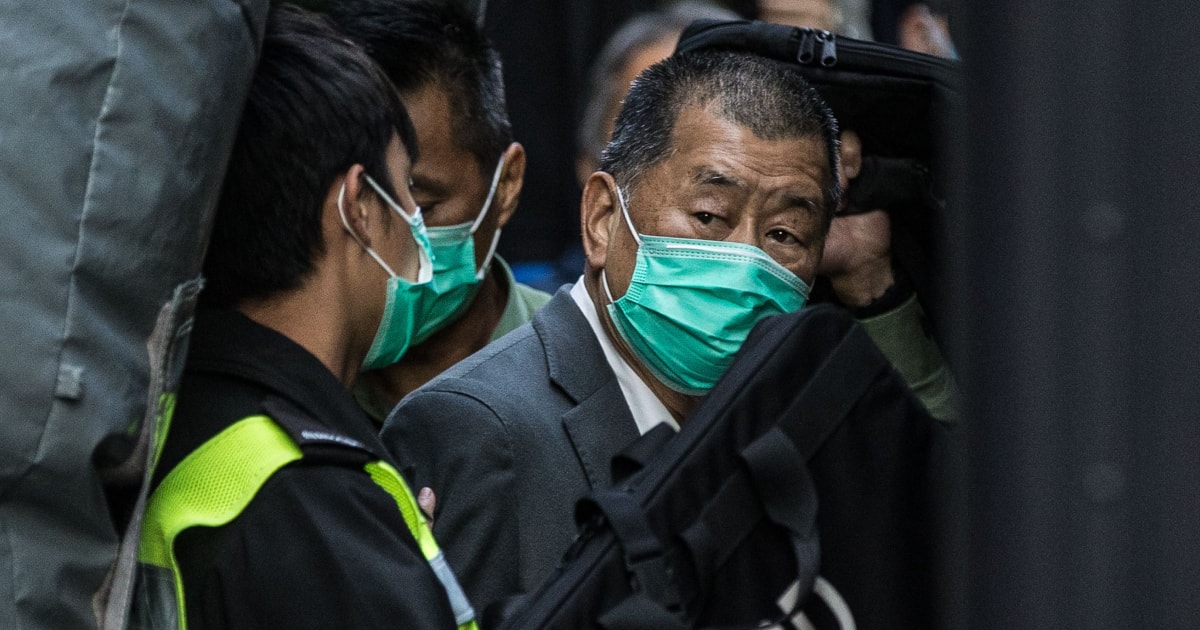
Jimmy Lai, the founder of the now-closed pro-democracy newspaper Apple Daily, is serving a 20-year sentence after being convicted under Hong Kong’s national security law of collusion and sedition. The 77-year-old convert to Catholicism has spent more than five years in custody and now faces what critics describe as an effective life sentence.

Asked directly about Lai’s imprisonment as he left Villa Barberini in Castel Gandolfo last night, Pope Leo XIV replied: “I can’t comment on that.” He added: “We must pray for peace, work for peace and reduce hatred. Hatred is constantly increasing in the world. We must seek to promote dialogue and find solutions.”
The Pope’s brief remarks came as he was asked about the renewed conflict in the Middle East. His Holiness has previously insisted that “stability and peace are not achieved through mutual threats, nor through the use of weapons, which sow destruction, suffering and death, but only through reasonable, sincere and responsible dialogue”.

Lai’s prosecution has become one of the most high-profile tests of the sweeping national security legislation imposed on Hong Kong by Beijing in June 2020. The law, enacted by the Standing Committee of China’s National People’s Congress, created new offences of secession, subversion, terrorism and collusion with foreign forces, carrying penalties of up to life imprisonment.

A long-standing supporter of Hong Kong’s pro-democracy movement, Lai had been arrested several times during the mass protests of 2019. In August 2020 police detained him at his home on suspicion of colluding with foreign powers, while around 200 officers raided the headquarters of Apple Daily. The paper, which for decades had been a vocal critic of the Chinese Communist Party, ceased publication that year after its assets were frozen.

In December 2025 Hong Kong’s High Court found Lai guilty of conspiring with others to undermine national security. On February 9, 2026 he was sentenced to 20 years in prison. Prosecutors cited public statements, media interviews and social media posts in which he had called for international support and sanctions in response to the erosion of Hong Kong’s freedoms.

The sentence prompted strong reactions abroad. The US State Department renewed its call for Lai’s release, urging Beijing and Hong Kong authorities to respect press freedom. Britain’s Foreign Office has previously described the charges as politically motivated. International advocacy groups including Human Rights Watch and the Committee to Protect Journalists have condemned the ruling, arguing that it demonstrates the collapse of media freedom in the territory.

Beijing has defended the conviction as lawful and necessary. A spokesman for China’s foreign ministry described Lai as “a key planner and participant in a series of anti-China and disruptive activities in Hong Kong” and insisted that there was “no room for argument” over the court’s decision.

Lai’s Catholic faith has also attracted attention. Baptised in 1997, the year of Hong Kong’s handover from Britain to China, he has spoken publicly about drawing strength from his beliefs. Members of his legal team have alleged that he has faced restrictions in prison, including limited exercise and difficulty receiving Holy Communion. His Hong Kong lawyers have stated that he is receiving appropriate medical treatment and that arrangements can be made for him to attend Mass under supervision.

The imprisonment of Hong Kong Catholic media mogul Jimmy Lai has again drawn international attention after Pope Leo XIV declined to comment on his case.

Jimmy Lai, the founder of the now-closed pro-democracy newspaper Apple Daily, is serving a 20-year sentence after being convicted under Hong Kong’s national security law of collusion and sedition. The 77-year-old convert to Catholicism has spent more than five years in custody and now faces what critics describe as an effective life sentence.

Asked directly about Lai’s imprisonment as he left Villa Barberini in Castel Gandolfo last night, Pope Leo XIV replied: “I can’t comment on that.” He added: “We must pray for peace, work for peace and reduce hatred. Hatred is constantly increasing in the world. We must seek to promote dialogue and find solutions.”
The Pope’s brief remarks came as he was asked about the renewed conflict in the Middle East. His Holiness has previously insisted that “stability and peace are not achieved through mutual threats, nor through the use of weapons, which sow destruction, suffering and death, but only through reasonable, sincere and responsible dialogue”.

Lai’s prosecution has become one of the most high-profile tests of the sweeping national security legislation imposed on Hong Kong by Beijing in June 2020. The law, enacted by the Standing Committee of China’s National People’s Congress, created new offences of secession, subversion, terrorism and collusion with foreign forces, carrying penalties of up to life imprisonment.

A long-standing supporter of Hong Kong’s pro-democracy movement, Lai had been arrested several times during the mass protests of 2019. In August 2020 police detained him at his home on suspicion of colluding with foreign powers, while around 200 officers raided the headquarters of Apple Daily. The paper, which for decades had been a vocal critic of the Chinese Communist Party, ceased publication that year after its assets were frozen.

In December 2025 Hong Kong’s High Court found Lai guilty of conspiring with others to undermine national security. On February 9, 2026 he was sentenced to 20 years in prison. Prosecutors cited public statements, media interviews and social media posts in which he had called for international support and sanctions in response to the erosion of Hong Kong’s freedoms.

The sentence prompted strong reactions abroad. The US State Department renewed its call for Lai’s release, urging Beijing and Hong Kong authorities to respect press freedom. Britain’s Foreign Office has previously described the charges as politically motivated. International advocacy groups including Human Rights Watch and the Committee to Protect Journalists have condemned the ruling, arguing that it demonstrates the collapse of media freedom in the territory.

Beijing has defended the conviction as lawful and necessary. A spokesman for China’s foreign ministry described Lai as “a key planner and participant in a series of anti-China and disruptive activities in Hong Kong” and insisted that there was “no room for argument” over the court’s decision.

Lai’s Catholic faith has also attracted attention. Baptised in 1997, the year of Hong Kong’s handover from Britain to China, he has spoken publicly about drawing strength from his beliefs. Members of his legal team have alleged that he has faced restrictions in prison, including limited exercise and difficulty receiving Holy Communion. His Hong Kong lawyers have stated that he is receiving appropriate medical treatment and that arrangements can be made for him to attend Mass under supervision.

subscribe to
the catholic herald

Continue reading your article with a subscription.
Read 5 articles with our free plan.
Subscribe

subscribe to the catholic herald today

Our best content is exclusively available to our subscribers. Subscribe today and gain instant access to expert analysis, in-depth articles, and thought-provoking insights—anytime, anywhere. Don’t miss out on the conversations that matter most.
Subscribe