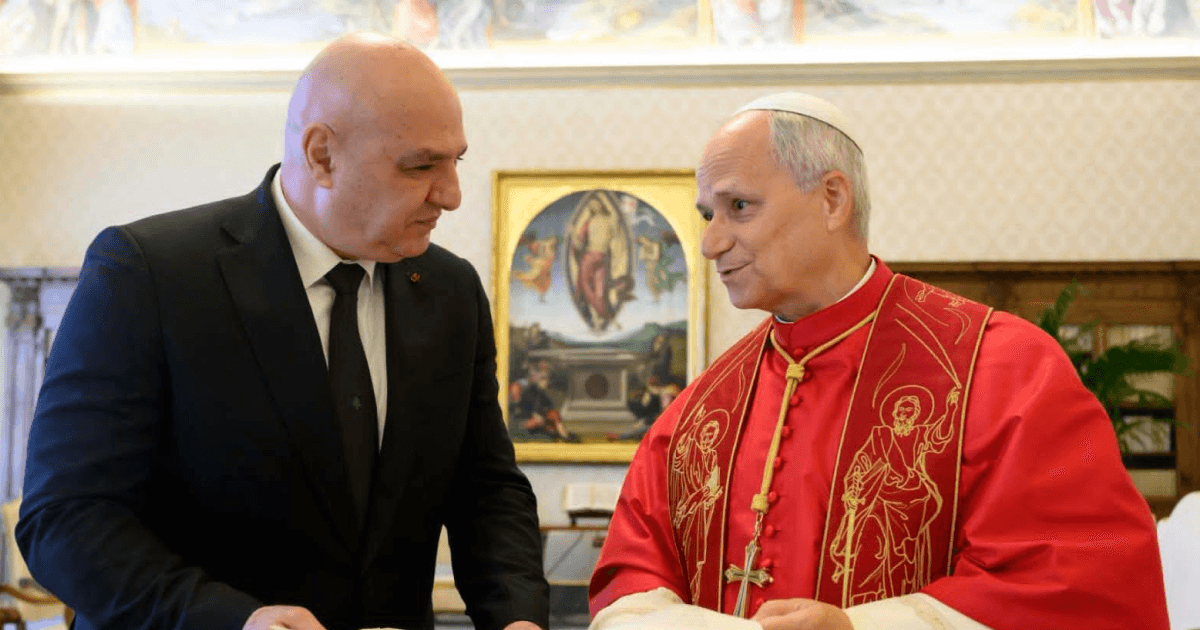
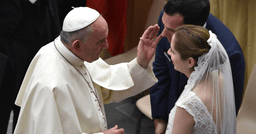
Meeting Pope Leo today, Lebanon’s president thanked the Pontiff for his support of the nation and asked him to back Lebanon’s goal of a “complete Israeli withdrawal from occupied Lebanese territory”.
Leo XIV met with President Joseph Aoun for the fourth time on August 20, as the Pope hosted the Lebanese President at the Vatican for a private audience. The pair have met previously at the Vatican twice, and then most extensively during Leo’s apostolic voyage to Turkey and Lebanon in November and December last year.
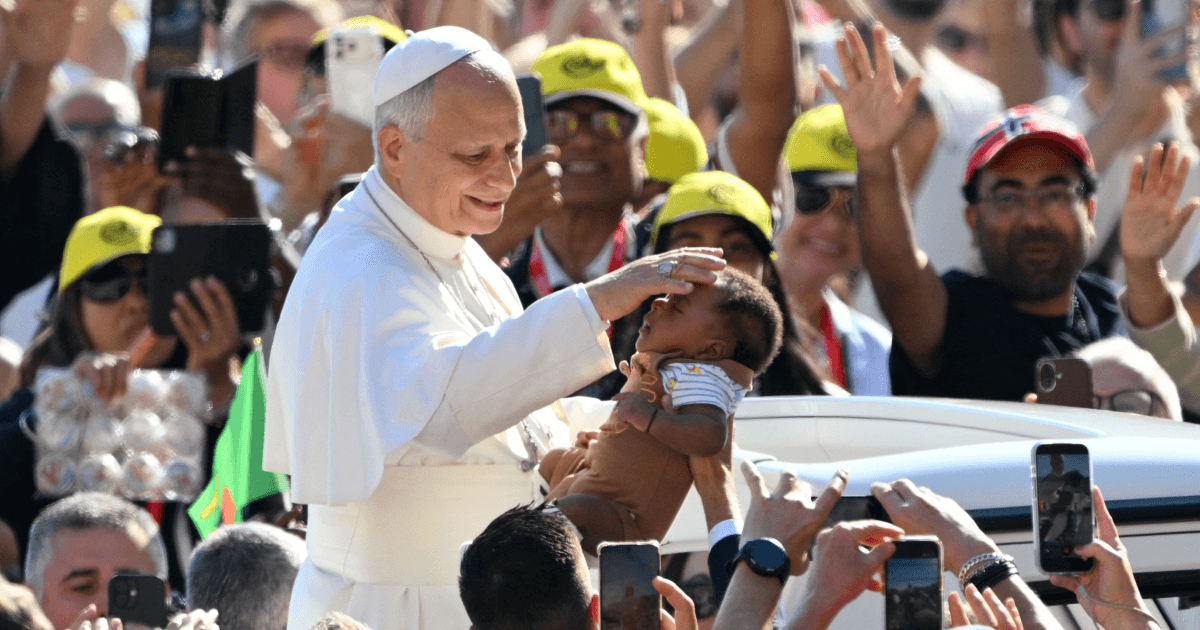
The half hour meeting between the Pope and Aoun was followed – as normal – by a separate meeting between Aoun and the Cardinal Secretary of State Pietro Parolin, and the Vatican’s foreign minister Archbishop Richard Gallagher.
Speaking to Pope Leo, Aoun renewed his thanks to the Holy See for its support of Lebanon. This support included assisting the nation “in achieving its demands to end the Israeli occupation and attacks on its territory, and called on him to continue supporting these demands, foremost among which is compelling Israel to implement the provisions of the framework agreement, immediately cease its attacks on villages and infrastructure in the south as well as on civilians, and withdraw from the areas it occupies.”
The President also issued an appeal for the Pope and the Holy See to continue such diplomatic work “in all international forums” in order to assist Lebanon in its national “demands”. These include, according to Aoun, the primary goal of “compelling Israel to implement the provisions of the framework agreement”, which was signed in the U.S. on June 26.
He also asked Leo to publicly back Lebanon in urging Israel to “halt its daily attacks, which specifically target civilians, civilian facilities, infrastructure, and villages in the south.”
Aoun further asked Leo to support Lebanon “in achieving a complete Israeli withdrawal from occupied Lebanese territory, paving the way for the reconstruction of what Israel has destroyed and the return of displaced persons to their lands and villages.”
According to a statement issued by the President’s office, the goals he outlined to Pope Leo are also to be accompanied by Lebanon’s “assertion of authority over its entire territory and its sole authority over decisions regarding war and peace, as the only way to achieve security and stability along the borders.”
The Holy See commented that the private discussions focussed chiefly on the framework agreement. While the Holy See is please with the development of the agreement being signed, it noted today its “serious concerns about the difficulties being encountered in its implementation and assured its support for efforts toward that end.”
President Aoun’s visit to the Holy See comes against the backdrop of continued instability in the Holy Land region. The latest round of Israeli strikes into Lebanon on August 15 killed eleven people, including women and children.
Both Aoun and Lebanon’s Prime Minister Nawaf Salam roundly condemned the strikes, reiterating that Lebanon alone retains responsibility for “dealing with any military structures, if they exist on Lebanese territory”. The existence of any military in Lebanon “does not grant Israel the right to violate Lebanese territory or endanger civilians,” Salam said.
For his part, Aoun said the continued strikes demonstrate “a clear message” regarding Israel’s commitment to the “negotiation track and to the American efforts aimed at implementing this agreement.”
The framework agreement signed between representatives of both Lebanon and Israel in Washington D.C. on June 26 would see Israeli forces withdraw from Lebanon, and the border patrolled by both nations. Lebanon would be solely responsible for tackling the presence of the Islamic militia Hezbollah, which has pockets of residence in the nation.
The latest round of negotiations regarding the agreement began in Rome on August 4, being facilitated by the U.S. More talks are scheduled to take place in Rome next month, with the U.S. State Department insisting it is happy with the progress being made.
Lebanon has expressed its firm commitment to the framework agreement, but Israel has stated it will not cease its own military operation until Hezbollah is disarmed.
The Holy See has been a particularly close ally to Lebanon, although such action has largely flown under the radar.
Interviewed by this correspondent in May, the Lebanese Ambassador to the Holy See said the nation regards the Pope as “a moral authority and a genuine partner – one of the rare partners who asks nothing in return and is always ready to help.”
The Holy See, said Ambassador Fadi Assaf, “is constantly advocating for Lebanon, engaging with both allies and adversaries to mobilize international support in the country’s interest.”
Pope Leo’s visit to Lebanon at the end of last year was a poignant moment for the nation, and a chance for the new Pope to highlight his particular fondness for “beloved Lebanon”.
Issuing an impromptu appeal at the end of Mass in Lebanon on December 2, Leo called for “new approaches” in the Middle East, in order to escape the “path of mutual hostility and destruction”. He urged international powers also to “spare no effort in promoting processes of dialogue and reconciliation.”
Michael Haynes is an English journalist in the Holy See Press Corps. He serves as Vatican Correspondent for the Catholic Herald, while readers can follow him at Per Mariam and on X @MLJHaynes.