

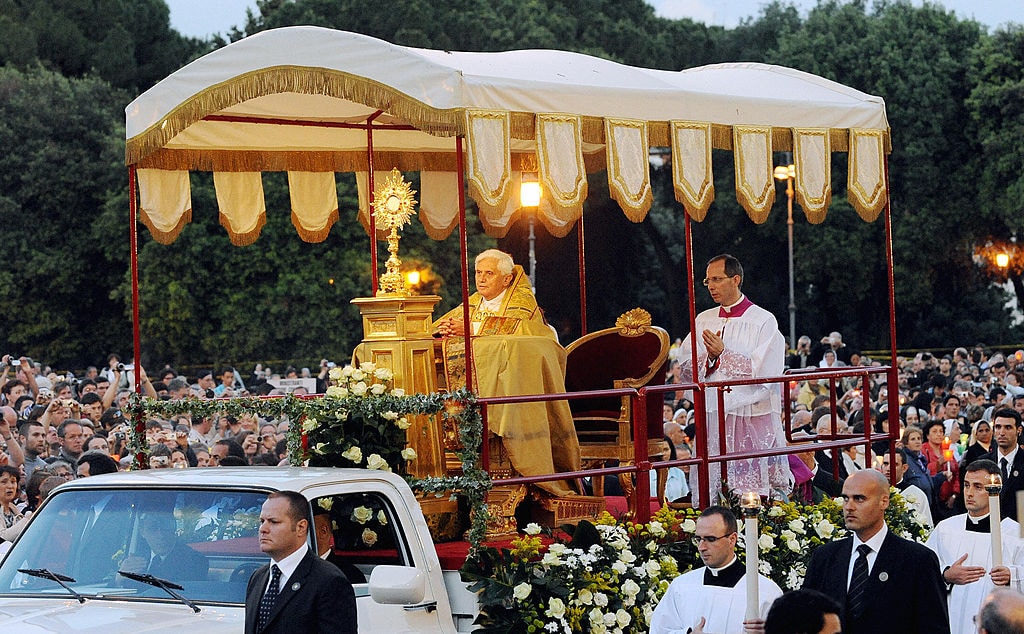
In the 13th century a priest on pilgrimage to Rome was suffering doubts about the Eucharist. During a Mass his Host become flesh and bled upon the linen corporal. Hearing about this, Pope Urban IV desired that a feast of the Body and Blood of Christ should be celebrated everywhere to honour this Eucharistic miracle. St Thomas Aquinas (d 1274) composed the Mass and Office texts. Nowadays, the feast’s celebration is often transferred from its Thursday to the following Sunday. The Collect, assumed unchanged into all editions of the Missale Romanum, is magnificent:
2:00 PM
Little devotions help us become better Catholics
in the 13th century a priest on pilgrimage to rome was suffering doubts about the eucharist. during a mass his host become flesh and bled up...
Fr John Zuhlsdorf

3 min read



Already a subscriber? Sign in
5freearticles every month
Continue reading with a free account. No card needed.
- Five free articles every thirty days, on any device you sign in on
- The Catholic Herald newsletter, every morning
- Subscribe whenever you like for everything: every article and the magazine

subscribe to the catholic herald today
Our best content is exclusively available to our subscribers. Subscribe today and gain instant access to expert analysis, in-depth articles, and thought-provoking insights—anytime, anywhere. Don’t miss out on the conversations that matter most.
Subscribe



