
March 21, 2026

Louis Theroux’s missed opportunity on the ‘manosphere’

Daniel Turner
More
Related
Min read
share

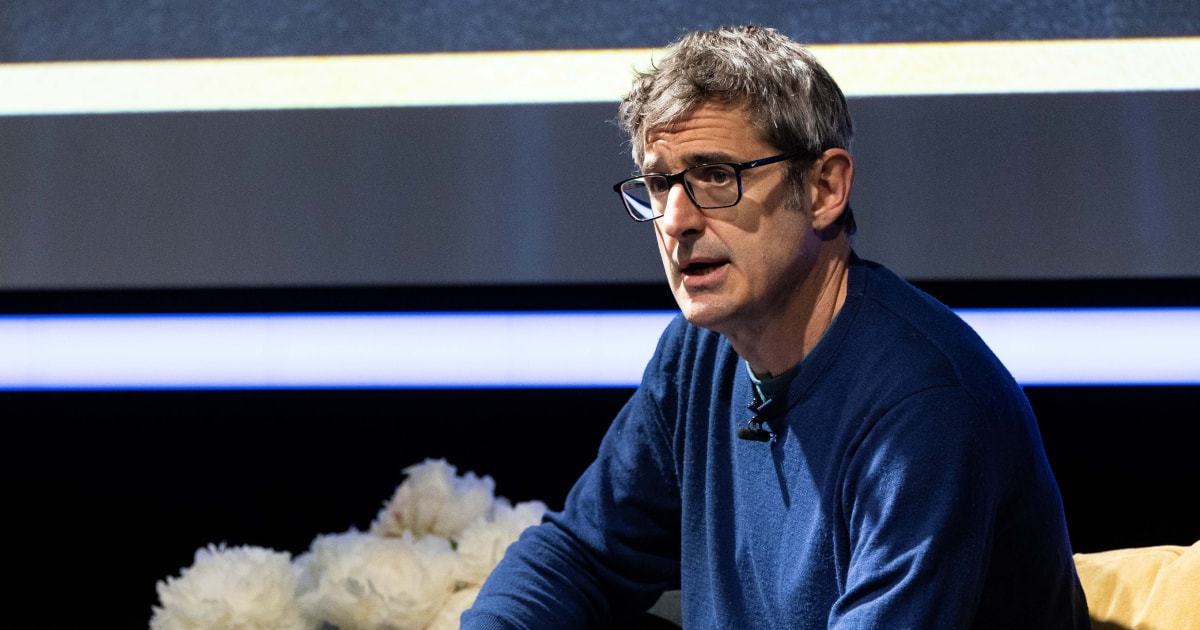
While largely uninterested in the much-discussed topic of the ‘manosphere’, hearing the news that documentary legend Louis Theroux would be tackling the subject certainly piqued my interest. I knew that, at a minimum, should his investigative skills fail to uncover any new insights I would at least find the usual enjoyment in his famed awkward stare. Sadly, my low expectations of Inside the Manosphere seemed largely to have been proved correct: the 90-minute documentary failed to add any new insights to what has been one of the most dominant conversation topics of the past few years. Theroux, like many other commentators, tackled the topic three years too late, and without the depth, freshness or investigative courage he has otherwise built his career around. It feels more like a flat reiteration of what has already been observed a thousand times: the lead figures of the manosphere are deplorable degenerates who should not have any sway over young men in society. And yet they do. Upon reflection, it was the questions not asked by Theroux, the curious, non-condemning ‘why’ of their success, that was needed.

Later that day, in a rather serendipitous moment, I found myself sitting with my children watching the 1953 Disney classic Peter Pan. As with so many films of its kind, the story spoke to our modern situation and revealed, perhaps, some roots of the crisis we see occurring amongst the cohort subject to Theroux’s investigation. Where manosphere influencers spoke of rejecting ‘the matrix’ and instead living young and free in Marbella, Disney presented us with a young boy who rejected maturity in favour of adventures in Neverland. In J M Barrie’s original novel, we discover that Peter ran away from his parents as a baby to avoid growing up. This lack of healthy parental guidance is something Theroux also picks up on as a formative force behind influencers Justin Waller and Harrison Sullivan, known as HSTikkyTokky. Moreover, after speaking with fans of Sullivan, it would seem troubled upbringings among the young are the overarching theory of how the manosphere has come to be – a theory there is certainly truth to.

Richard Reeves, founder and president of the American Institute for Boys and Men, has made a strong case through his work in recent years that the increase in fatherless homes, and the subsequent decrease in coming-of-age rites and passages, has led to many young men wandering the earth, unsure of how to make their life purposeful. To paraphrase the comedian Steve Harvey, they have become ‘explorers without maps’. For most, as a recent Centre for Social Justice report highlighted, this leads to falling behind in education, work opportunities and meaningful relationships, with too many choosing to end their own lives rather than exist in the world as they experience it.

It is impossible to narrow down all of the problems men face to one single diagnosis. One convincing aspect presented by Reeves, however, is in how the liberalising world of the 20th century shifted gender roles drastically, leaving women drawn towards independence and men left without a purpose. As the role and needs of women in society changed, in some ways for the better, the role and needs of men failed to adapt. However, what Reeves fails to cover is how this shift goes beyond the economic liberation of women.

Here is perhaps where the simple story of Peter Pan has most to tell us. At the beginning of the story, we are met by Wendy’s father informing her that that night was to be her last in the nursery. One might interpret this as Father Time imposing himself on Wendy in the form of her having her first period. This hard-wiring of maturity into girls’ bodies means that, in many ways, growing up has been less of a progressive unfolding and more a blunt transition: one day you cannot conceive, the next you can. The matter-of-factness about this jump into womanhood is depicted in the film by Wendy’s quick adoption of the maternal role when in Neverland. Returning from their visit to the Indian tribe, we see the fullness of their divergence as Wendy, tucking the Lost Boys into bed, convinces them of their need for a mother. Here, Peter’s response demonstrates his ongoing wrestling with the inevitability of adulthood. He is at a crossroads: no longer young enough to be enticed by the coddling of a mother, nor ready to face the responsibilities of manhood. Instead, Peter remains fearfully avoidant, and storms off shouting: ‘Go on! Go back and grow up. But I’m warning ya, once you’re grown up, you can never come back.’

Where the internal battle against the call to maturity can be seen in the manosphere influencers, what we have lost in our modern world is Wendy’s acceptance. When did this happen? As the writer Mary Harrington explains in her book Feminism Against Progress, ‘the material incentive to maintain sexual constraints on women fell away abruptly with the arrival of the birth control pill in the 1960s’. She goes on to explain this in terms of the changing dating advice given to her mother as she became a teenager in the 1960s, and to her when she came of age in the 1990s. In the case of her mother, she writes: ‘The grave consequences of unplanned and unsupported pregnancy provided an overwhelming individual and social incentive to insist on reserving sexual access only for men who were at minimum willing to provide economic support.’ Thirty years later, we see how the pill – and the normalisation of abortion for that matter – radically altered social norms around dating and sex for 1990s teens. Jump another 30 years to the sex-obsessed world of 2026, and it would seem that, for many young women, the standards exercised by their grandmothers as gatekeepers to sex, and therefore the standards expected of their grandfathers, have been entirely erased from their minds.

Maturation, like all human developmental stages, does not occur in isolation. As social beings, changes in behaviour and expectations for one subsection of the population are bound to have an impact on the behaviours of neighbouring groups. The idea, then, that we can entirely upend one half of the population’s relationship to sex – and, from that, career and home life – and not have it impact the other half is ridiculous. 

In many regards, it was this gatekeeping of sex in the past which served as the motive for boys to grow up and become men, as they had to prove themselves dependable and ready to take on the responsibilities of family life. Looking at the end of another household-favourite Disney film, The Jungle Book, we see this symbiotic maturation occur when Mowgli leaves his animal friends in the jungle to follow a girl who had been sent to fetch water back to the village – a twist to the story my four-year-old son, in his innocence, was absolutely outraged by.

This fact is sadly absent from too many conversations about the manosphere, and was certainly lacking in Theroux’s documentary. It is all very well critiquing the actions of young men and calling out their infantile cosplaying of manhood, but to do so without any criticism of the many women on OnlyFans who also appear in the documentary displays a conscious naivety to how interrelated the two phenomena are. The truth is that, for as much as the manosphere can be understood to be a pushback against liberal society, it is the philosophies and technologies of liberal society that birthed it to begin with. The lowering of standards and push towards individualism for young women in society has likewise seen the degradation of many young men, as they pursue fulfilment in the satisfying of their base passions rather than in service and sacrificial love.

Understanding this mutual responsibility for where we are as a society, we can then begin to encourage our Peters and Wendys to take the leap into adulthood. We can remind them of the blessings of a chaste and committed married life. That the crosses of motherhood and fatherhood which we nail ourselves to are ultimately redemptive. That the paths most trodden are not to be wandered from carelessly, and that the calls of London are not a trap to be avoided. Neverland is child’s play – the true adventure lies in growing up.

While largely uninterested in the much-discussed topic of the ‘manosphere’, hearing the news that documentary legend Louis Theroux would be tackling the subject certainly piqued my interest. I knew that, at a minimum, should his investigative skills fail to uncover any new insights I would at least find the usual enjoyment in his famed awkward stare. Sadly, my low expectations of Inside the Manosphere seemed largely to have been proved correct: the 90-minute documentary failed to add any new insights to what has been one of the most dominant conversation topics of the past few years. Theroux, like many other commentators, tackled the topic three years too late, and without the depth, freshness or investigative courage he has otherwise built his career around. It feels more like a flat reiteration of what has already been observed a thousand times: the lead figures of the manosphere are deplorable degenerates who should not have any sway over young men in society. And yet they do. Upon reflection, it was the questions not asked by Theroux, the curious, non-condemning ‘why’ of their success, that was needed.

Later that day, in a rather serendipitous moment, I found myself sitting with my children watching the 1953 Disney classic Peter Pan. As with so many films of its kind, the story spoke to our modern situation and revealed, perhaps, some roots of the crisis we see occurring amongst the cohort subject to Theroux’s investigation. Where manosphere influencers spoke of rejecting ‘the matrix’ and instead living young and free in Marbella, Disney presented us with a young boy who rejected maturity in favour of adventures in Neverland. In J M Barrie’s original novel, we discover that Peter ran away from his parents as a baby to avoid growing up. This lack of healthy parental guidance is something Theroux also picks up on as a formative force behind influencers Justin Waller and Harrison Sullivan, known as HSTikkyTokky. Moreover, after speaking with fans of Sullivan, it would seem troubled upbringings among the young are the overarching theory of how the manosphere has come to be – a theory there is certainly truth to.

Richard Reeves, founder and president of the American Institute for Boys and Men, has made a strong case through his work in recent years that the increase in fatherless homes, and the subsequent decrease in coming-of-age rites and passages, has led to many young men wandering the earth, unsure of how to make their life purposeful. To paraphrase the comedian Steve Harvey, they have become ‘explorers without maps’. For most, as a recent Centre for Social Justice report highlighted, this leads to falling behind in education, work opportunities and meaningful relationships, with too many choosing to end their own lives rather than exist in the world as they experience it.

It is impossible to narrow down all of the problems men face to one single diagnosis. One convincing aspect presented by Reeves, however, is in how the liberalising world of the 20th century shifted gender roles drastically, leaving women drawn towards independence and men left without a purpose. As the role and needs of women in society changed, in some ways for the better, the role and needs of men failed to adapt. However, what Reeves fails to cover is how this shift goes beyond the economic liberation of women.

Here is perhaps where the simple story of Peter Pan has most to tell us. At the beginning of the story, we are met by Wendy’s father informing her that that night was to be her last in the nursery. One might interpret this as Father Time imposing himself on Wendy in the form of her having her first period. This hard-wiring of maturity into girls’ bodies means that, in many ways, growing up has been less of a progressive unfolding and more a blunt transition: one day you cannot conceive, the next you can. The matter-of-factness about this jump into womanhood is depicted in the film by Wendy’s quick adoption of the maternal role when in Neverland. Returning from their visit to the Indian tribe, we see the fullness of their divergence as Wendy, tucking the Lost Boys into bed, convinces them of their need for a mother. Here, Peter’s response demonstrates his ongoing wrestling with the inevitability of adulthood. He is at a crossroads: no longer young enough to be enticed by the coddling of a mother, nor ready to face the responsibilities of manhood. Instead, Peter remains fearfully avoidant, and storms off shouting: ‘Go on! Go back and grow up. But I’m warning ya, once you’re grown up, you can never come back.’

Where the internal battle against the call to maturity can be seen in the manosphere influencers, what we have lost in our modern world is Wendy’s acceptance. When did this happen? As the writer Mary Harrington explains in her book Feminism Against Progress, ‘the material incentive to maintain sexual constraints on women fell away abruptly with the arrival of the birth control pill in the 1960s’. She goes on to explain this in terms of the changing dating advice given to her mother as she became a teenager in the 1960s, and to her when she came of age in the 1990s. In the case of her mother, she writes: ‘The grave consequences of unplanned and unsupported pregnancy provided an overwhelming individual and social incentive to insist on reserving sexual access only for men who were at minimum willing to provide economic support.’ Thirty years later, we see how the pill – and the normalisation of abortion for that matter – radically altered social norms around dating and sex for 1990s teens. Jump another 30 years to the sex-obsessed world of 2026, and it would seem that, for many young women, the standards exercised by their grandmothers as gatekeepers to sex, and therefore the standards expected of their grandfathers, have been entirely erased from their minds.

Maturation, like all human developmental stages, does not occur in isolation. As social beings, changes in behaviour and expectations for one subsection of the population are bound to have an impact on the behaviours of neighbouring groups. The idea, then, that we can entirely upend one half of the population’s relationship to sex – and, from that, career and home life – and not have it impact the other half is ridiculous. 

In many regards, it was this gatekeeping of sex in the past which served as the motive for boys to grow up and become men, as they had to prove themselves dependable and ready to take on the responsibilities of family life. Looking at the end of another household-favourite Disney film, The Jungle Book, we see this symbiotic maturation occur when Mowgli leaves his animal friends in the jungle to follow a girl who had been sent to fetch water back to the village – a twist to the story my four-year-old son, in his innocence, was absolutely outraged by.

This fact is sadly absent from too many conversations about the manosphere, and was certainly lacking in Theroux’s documentary. It is all very well critiquing the actions of young men and calling out their infantile cosplaying of manhood, but to do so without any criticism of the many women on OnlyFans who also appear in the documentary displays a conscious naivety to how interrelated the two phenomena are. The truth is that, for as much as the manosphere can be understood to be a pushback against liberal society, it is the philosophies and technologies of liberal society that birthed it to begin with. The lowering of standards and push towards individualism for young women in society has likewise seen the degradation of many young men, as they pursue fulfilment in the satisfying of their base passions rather than in service and sacrificial love.

Understanding this mutual responsibility for where we are as a society, we can then begin to encourage our Peters and Wendys to take the leap into adulthood. We can remind them of the blessings of a chaste and committed married life. That the crosses of motherhood and fatherhood which we nail ourselves to are ultimately redemptive. That the paths most trodden are not to be wandered from carelessly, and that the calls of London are not a trap to be avoided. Neverland is child’s play – the true adventure lies in growing up.

subscribe to
the catholic herald

Continue reading your article with a subscription.
Read 5 articles with our free plan.
Subscribe

subscribe to the catholic herald today

Our best content is exclusively available to our subscribers. Subscribe today and gain instant access to expert analysis, in-depth articles, and thought-provoking insights—anytime, anywhere. Don’t miss out on the conversations that matter most.
Subscribe