




As had been widely anticipated, in September the sainthood of Mother Teresa of Calcutta will be officially - and infallibly - recognised by the Church militant (Ecclesia militans). That is, I'm afraid, a rather cumbersome way of phrasing it. But it is, strictly speaking, the correct way. For of course, canonisation doesn't move a person into eternal Beatitude - or, given that Teresa is already beatified, rubber stamp her status at the end of a celestial probationary period. It is simply a confirmation that she is already there. Hence, of course, the requirement of miracles: proof of her ability to intercede with whom she now "sees face to face" (1 Corinthians 13.12). The whole process is thus purely for our benefit here on earth: the Ecclesia triumphans, or the Church in heaven, needs no reminding of the fact that Teresa is one of their own. Which raises the question, of course, of what precisely the act of canonisation is for: it is, after all, a notoriously (and no doubt necessarily) resource-heavy, long, and costly process. In one sense, of course, it is all rather practical. The fact that someone is a bona-fide saint means that they are, now, with God, and thus in a position to intercede for us. Of course, that doesn't stop us praying to non-canonised people that we hope are in heaven too; if we didn't, there wouldn't any - or rather, almost not any - new saints. (Incidentally, if you're casting about for a new intercessor, might I recommend our very own Ven. Mary Potter: if I had my way, she'd be as synonymous with Nottingham as Brian Clough and Robin Hood.) But 'St' is, if you like, a kind of kitemark endorsement: a guarantee of a previous track record. More broadly and importantly, however, by declaring certain Christians to be saints, the Church is holding up these individuals to us as examples: models for inspiration or, indeed, imitation. Viewed like this, the saints are those who incarnate the gospel in real, concrete lives - and who prove to us, that we can (and should strive to) do so too. As Benedict XVI once put it:
1:24 PM
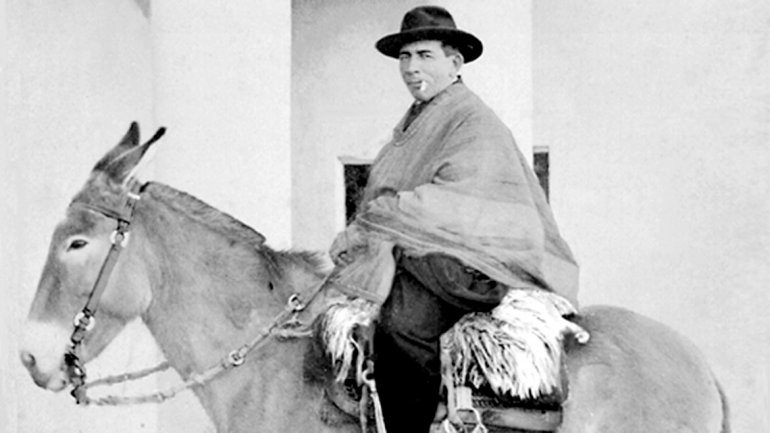
Meet the cowboy, samurai and surfer saints
From Mother Teresa to Blessed Jose Brochero, the sheer diversity of the saints should inspire us to follow their example
Stephen Bullivant

4 min read



Already a subscriber? Sign in
5freearticles every month
Continue reading with a free account. No card needed.
- Five free articles every thirty days, on any device you sign in on
- The Catholic Herald newsletter, every morning
- Subscribe whenever you like for everything: every article and the magazine
Related articles
 Newsroom
Church leaders urge Drumcree dialogue: ‘Too much is at stake’
The Catholic and Church of Ireland Archbishops of Armagh have urged a renewed commitment to peace and reconciliation amid the Drumcree stand-off
Corrie Douglas-Young Newsroom
Thousands of Irish children to join global Rosary campaign
Corrie Douglas-Young Newsroom
TikTok priest urges young people to stand with persecuted Christians
Nathalie Raffray Newsroom
Baby born at 25 weeks reunites with neonatologist two years after leaving hospital
The Catholic Herald Newsroom
Joe Biden honoured by Planned Parenthood after defending abortion rights
Christine Rousselle
subscribe to the catholic herald today
Our best content is exclusively available to our subscribers. Subscribe today and gain instant access to expert analysis, in-depth articles, and thought-provoking insights—anytime, anywhere. Don’t miss out on the conversations that matter most.
Subscribe



