



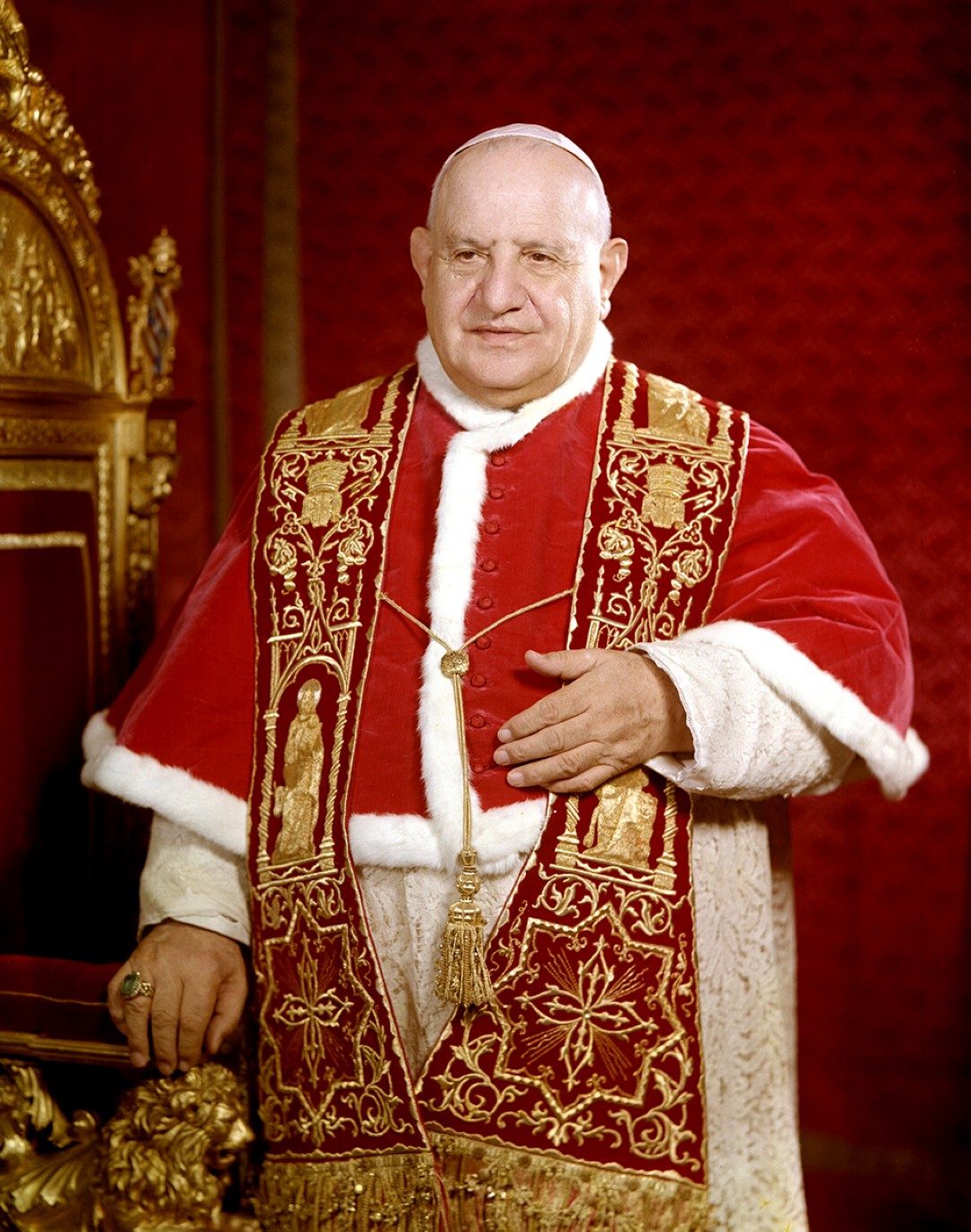
Vatican II was intended as a call to unity and evangelism, but its legacy has been an escalation of intra-Catholic wars. It is time to embrace John XXIII’s original vision GEORGE WEIGEL Fifty years after the conclusion of the Second Vatican Council, the Church is still bedevilled by competing and often mutually antagonistic answers to the question, “What was it all about?” The international media has its favourite answer: Vatican II was the Catholic Church’s “opening to the modern world” – an opening that should have led Catholicism down the path of accommodation to the zeitgeist pioneered by liberal Protestantism, but didn’t because Pope Paul VI lost his nerve and issued Humanae Vitae, a grave error then followed by the “conservative” pontificates of John Paul II and Benedict XVI. In this interpretive scheme, Pope Francis is typically presented as the leader who will rescue Vatican II from the depredations of his immediate predecessors and get on with the job of remaking the Catholic Church in the image and likeness of secular postmodernity. That international media trope has, to be sure, its adherents inside the Church, too. In the Anglosphere, their ageing, dwindling but recently re-energised numbers read The Tablet and the National Catholic Reporter, where their yearning for the revolution that never was (but which they devoutly hope might now be) is regularly reinforced. Catholic traditionalists, mollified for decades by the interpretation of Vatican II taught by John Paul II and Benedict XVI, also seem to share the progressives’ sense that The Revolution is at hand, but loathe the very idea of it. Thus the traditionalists are confirmed in their long-held suspicion that the Council was a very bad idea from the start, and that any Catholic engagement with modernity is, to borrow from a heathen, nonsense on stilts. Meanwhile, for most Anglosphere Catholics over 50 who are not regular combatants in the intra-Catholic wars, the Council remains the event that “changed the Mass”, altered the expectations of Catholic practice in which they had been raised, disposed of the catechisms from which they had been taught, made them more acceptable to their Protestant and Jewish neighbours, relieved them of the pangs of guilt from which they once suffered for minor offences, and led to vast ecclesiastical bureaucracies which pester them from time to time. But what, one wonders, does any of this have to do with what Pope St John XXIII had in mind in summoning the Council? To which the answer must be: not much. Not very much at all. As he said in his opening address to the Council on October 11, 1962, John XXIII regarded the idea of an ecumenical council, which came to his mind unbidden, as an inspiration from Providence. Yet Providence works through human instruments, and it may help to understand the inspiration that struck John XXIII during his first weeks in office, and his intention for the Council, if we remember that Angelo Giuseppe Roncalli was a historian.
12:46 PM
Mission abandoned
George Weigel

10 min read



Already a subscriber? Sign in
5freearticles every month
Continue reading with a free account. No card needed.
- Five free articles every thirty days, on any device you sign in on
- The Catholic Herald newsletter, every morning
- Subscribe whenever you like for everything: every article and the magazine
Related articles
 Newsroom
Church leaders urge Drumcree dialogue: ‘Too much is at stake’
The Catholic and Church of Ireland Archbishops of Armagh have urged a renewed commitment to peace and reconciliation amid the Drumcree stand-off
Corrie Douglas-Young Newsroom
Thousands of Irish children to join global Rosary campaign
Corrie Douglas-Young Newsroom
TikTok priest urges young people to stand with persecuted Christians
Nathalie Raffray Newsroom
Baby born at 25 weeks reunites with neonatologist two years after leaving hospital
The Catholic Herald Newsroom
Joe Biden honoured by Planned Parenthood after defending abortion rights
Christine Rousselle
subscribe to the catholic herald today
Our best content is exclusively available to our subscribers. Subscribe today and gain instant access to expert analysis, in-depth articles, and thought-provoking insights—anytime, anywhere. Don’t miss out on the conversations that matter most.
Subscribe



