


February 12, 2026

Music: Oxford is entranced by songs of forbidden love

Michael White
More
No items found.
Related
Min read
share

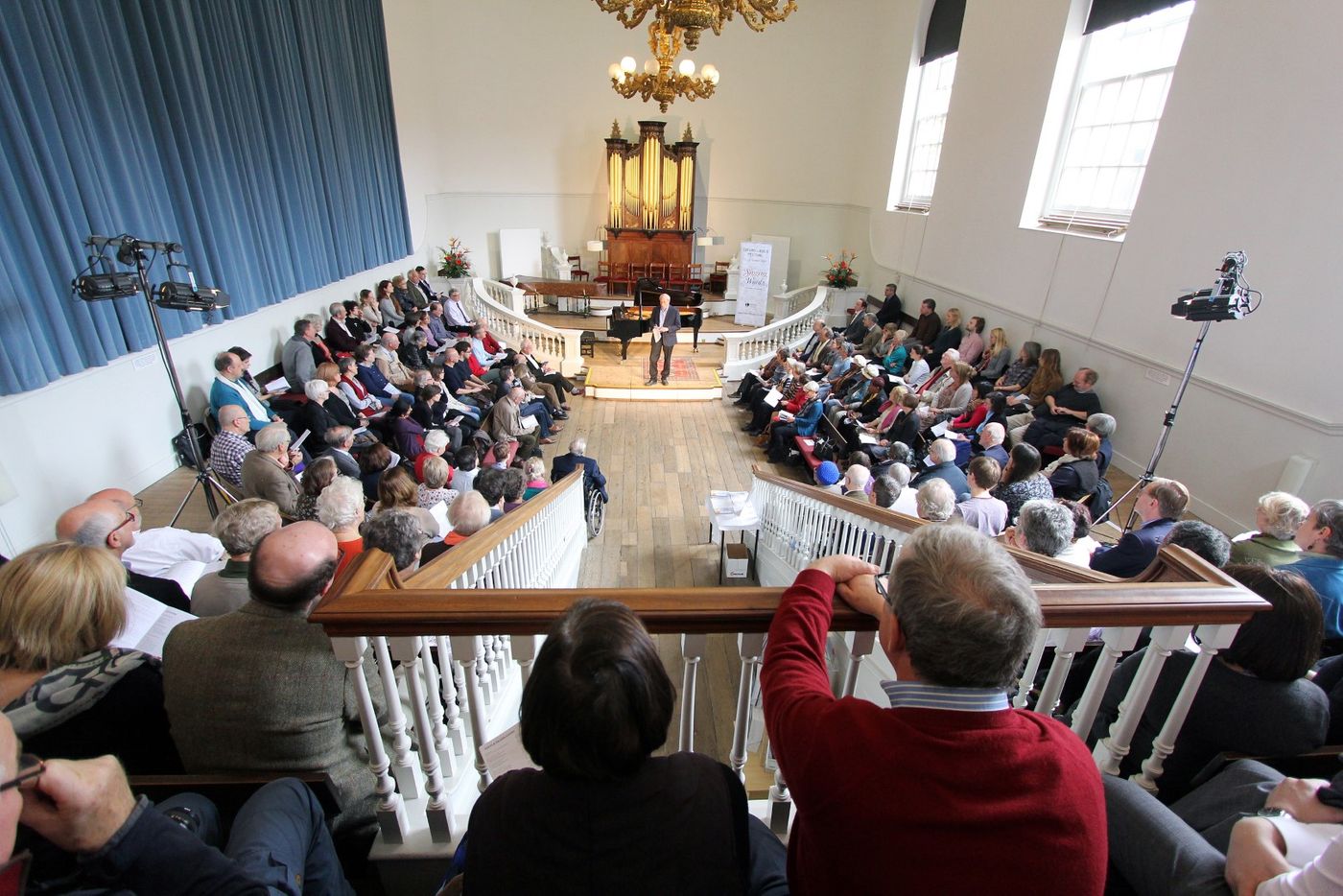
There was a time when serious song recitals seemed like an endangered species. Audiences didn’t want to struggle with the usually French or German texts, and stayed away. But last week the impressive Oxford Lieder Festival, a major fixture of the autumn music season, played to sold-out halls. At least, they sold out for the opening weekend, as people flocked to hear a roster of outstanding singers and accompanists in songs by Robert Schumann.

This year’s festival was wholly given over to the Schumann songs, packaged with talks and workshops. Truly an immersion, it was introduced by probably the finest Lieder singer of his generation, Christian Gerhaher, and settled down to business with a study day devised by the most erudite of all accompanists, Graham Johnson.

Reminiscent of the old Songmakers’ Almanac recitals Johnson used to lead at Wigmore Hall, the study day was a seamless flow of talk and performance that set Schumann’s greatest song cycles – the two Liederkreis, Myrthen, Dichterliebe, Frauenliebe und -leben – in the context of his life. Or more particularly, the context of his battle, through the German courts, to marry Clara Wieck against the wishes of her father.

It’s a well known story. But I hadn’t realised how well the German public knew about it at the time: it was a 19th-century approximation of what happens now with rock stars, with every detail seized on by the press.

That young love triumphed over the parental prohibition didn’t make for a happy ending: Clara’s father wasn’t wrong to be concerned about his daughter marrying a suicidal drunkard. But the anxiously uncertain ardour of their courtship certainly steered Schumann’s choice of texts in all the songs he wrote during the court proceedings – celebrating victory with the Frauenliebe cycle which depicts devoted female love, albeit in a servile way.

The bright and glistening fervour with which mezzo Anna Huntley dipped into the Frauenliebe settings was, for me, the vocal highlight of the study day. And from the weekend overall I won’t forget the sheer class of another mezzo, Sarah Connolly, dueting with soprano Sophie Karthäuser; or baritone Christopher Maltman, fierce with full-on muscular attack in a distinctly macho set of Schumann’s longer, narrative ballads.

Macho wasn’t quite the word for Boys of Paradise, a newish chamber opera set in a gay nightclub and, last week, performed in one: Egg nightclub, a shabby hole near Pentonville, forlornly out of hours.

It had a certain camped-up energy and the idea of staging the production on the dancefloor, in among the audience, was good. But for the most part of its mercifully short duration, it was vacuous and desperate: at best a sort of third-rate Sondheim, and at worst ... don’t ask.

There was a time when serious song recitals seemed like an endangered species. Audiences didn’t want to struggle with the usually French or German texts, and stayed away. But last week the impressive Oxford Lieder Festival, a major fixture of the autumn music season, played to sold-out halls. At least, they sold out for the opening weekend, as people flocked to hear a roster of outstanding singers and accompanists in songs by Robert Schumann.

This year’s festival was wholly given over to the Schumann songs, packaged with talks and workshops. Truly an immersion, it was introduced by probably the finest Lieder singer of his generation, Christian Gerhaher, and settled down to business with a study day devised by the most erudite of all accompanists, Graham Johnson.

Reminiscent of the old Songmakers’ Almanac recitals Johnson used to lead at Wigmore Hall, the study day was a seamless flow of talk and performance that set Schumann’s greatest song cycles – the two Liederkreis, Myrthen, Dichterliebe, Frauenliebe und -leben – in the context of his life. Or more particularly, the context of his battle, through the German courts, to marry Clara Wieck against the wishes of her father.

It’s a well known story. But I hadn’t realised how well the German public knew about it at the time: it was a 19th-century approximation of what happens now with rock stars, with every detail seized on by the press.

That young love triumphed over the parental prohibition didn’t make for a happy ending: Clara’s father wasn’t wrong to be concerned about his daughter marrying a suicidal drunkard. But the anxiously uncertain ardour of their courtship certainly steered Schumann’s choice of texts in all the songs he wrote during the court proceedings – celebrating victory with the Frauenliebe cycle which depicts devoted female love, albeit in a servile way.

The bright and glistening fervour with which mezzo Anna Huntley dipped into the Frauenliebe settings was, for me, the vocal highlight of the study day. And from the weekend overall I won’t forget the sheer class of another mezzo, Sarah Connolly, dueting with soprano Sophie Karthäuser; or baritone Christopher Maltman, fierce with full-on muscular attack in a distinctly macho set of Schumann’s longer, narrative ballads.

Macho wasn’t quite the word for Boys of Paradise, a newish chamber opera set in a gay nightclub and, last week, performed in one: Egg nightclub, a shabby hole near Pentonville, forlornly out of hours.

It had a certain camped-up energy and the idea of staging the production on the dancefloor, in among the audience, was good. But for the most part of its mercifully short duration, it was vacuous and desperate: at best a sort of third-rate Sondheim, and at worst ... don’t ask.

subscribe to
the catholic herald

Continue reading your article with a subscription.
Read 5 articles with our free plan.
Subscribe

subscribe to the catholic herald today

Our best content is exclusively available to our subscribers. Subscribe today and gain instant access to expert analysis, in-depth articles, and thought-provoking insights—anytime, anywhere. Don’t miss out on the conversations that matter most.
Subscribe